Worn Out: moment and letters
He is not describing suffering. He wants to know what to call that thing.
-
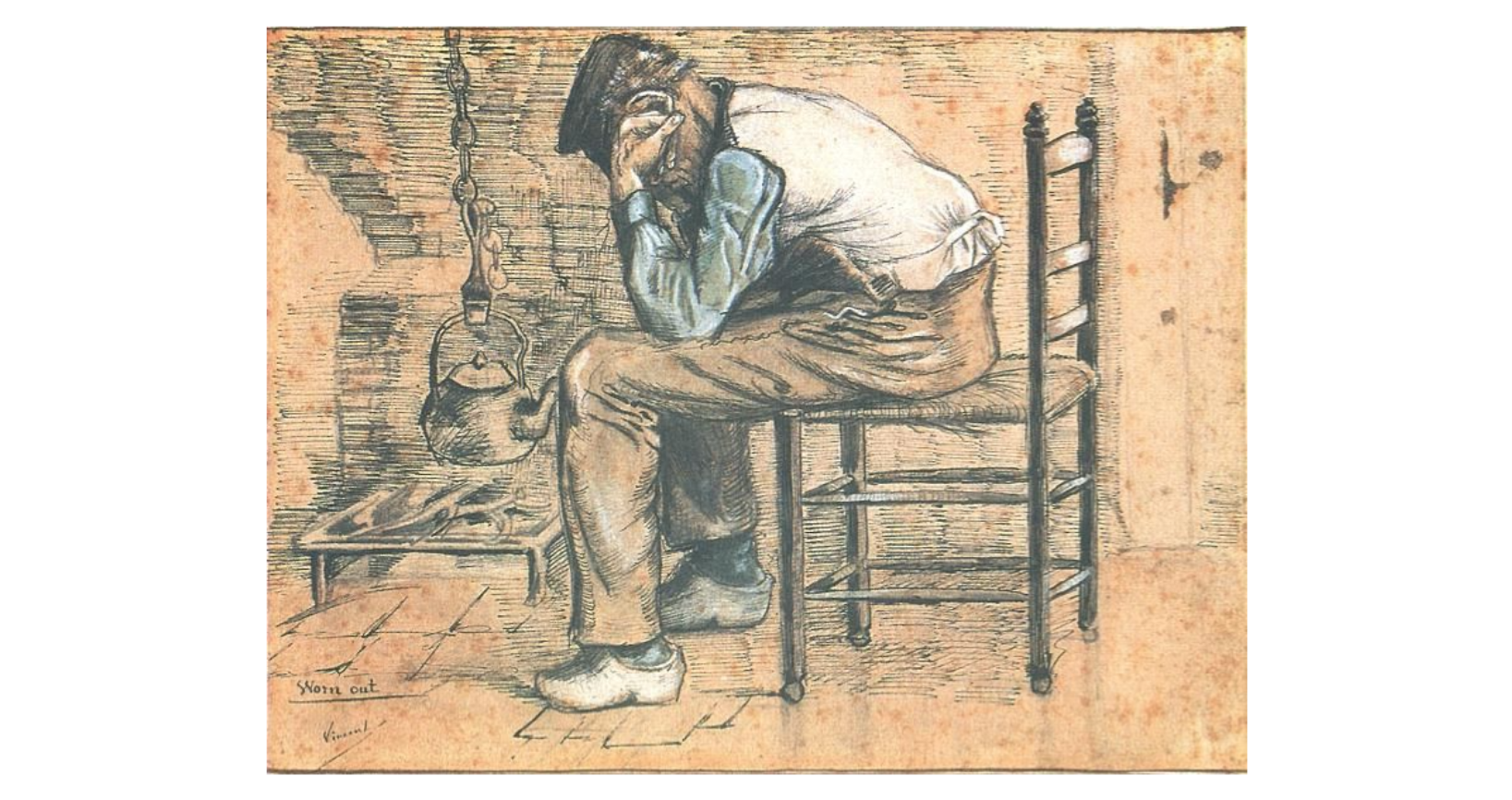
F863 Worn Out 1881
The Hague, 1882. He began to study drawing in earnest, using people from the margins of society as models — the kind he was willing to sit with.
The old man sits with his face in his hands. In a letter to Theo, Vincent wrote that the expression of such an old man could be "unutterably moving"; he saw in it evidence of "something on high."
He did not answer the question in words; he went on answering it in paint, all the way to Auvers.
Events
- The Ferocious Reader · Letter 224
In The Hague he began using poor people, workers and old men as models. After Dickens, attention to poverty was no longer only moral sympathy; it became a subject for repeated visual study
- Synaesthetic Precision · Letter 224
He returned to the pose of an old man with his head buried in his hands: the body folding inward, the face hidden, feeling carried by posture rather than expression
- The Copyist · Letter 252
Made the drawings around Worn Out. The mature oil-paint language was not there yet, but the structure was: bent back, lowered head, heavy shoes, fatigue turned into a stable composition
- The Ferocious Reader · Letter 252
He connected the pose with something difficult to name, something elevated. Reading gave him words, but the real answer stayed not in a sentence but in the body's structure on paper
- Synaesthetic Precision
The early pose did not disappear. In later Auvers figures, old men, peasants and bent bodies still carry the Hague rule: suffering is not explained, but compressed into shape
Letter Sources
Van Gogh letter records referenced on this page, linked to the Van Gogh Letters Project. vangoghletters.org