1890 · F671 · JH1891
Almond Blossom
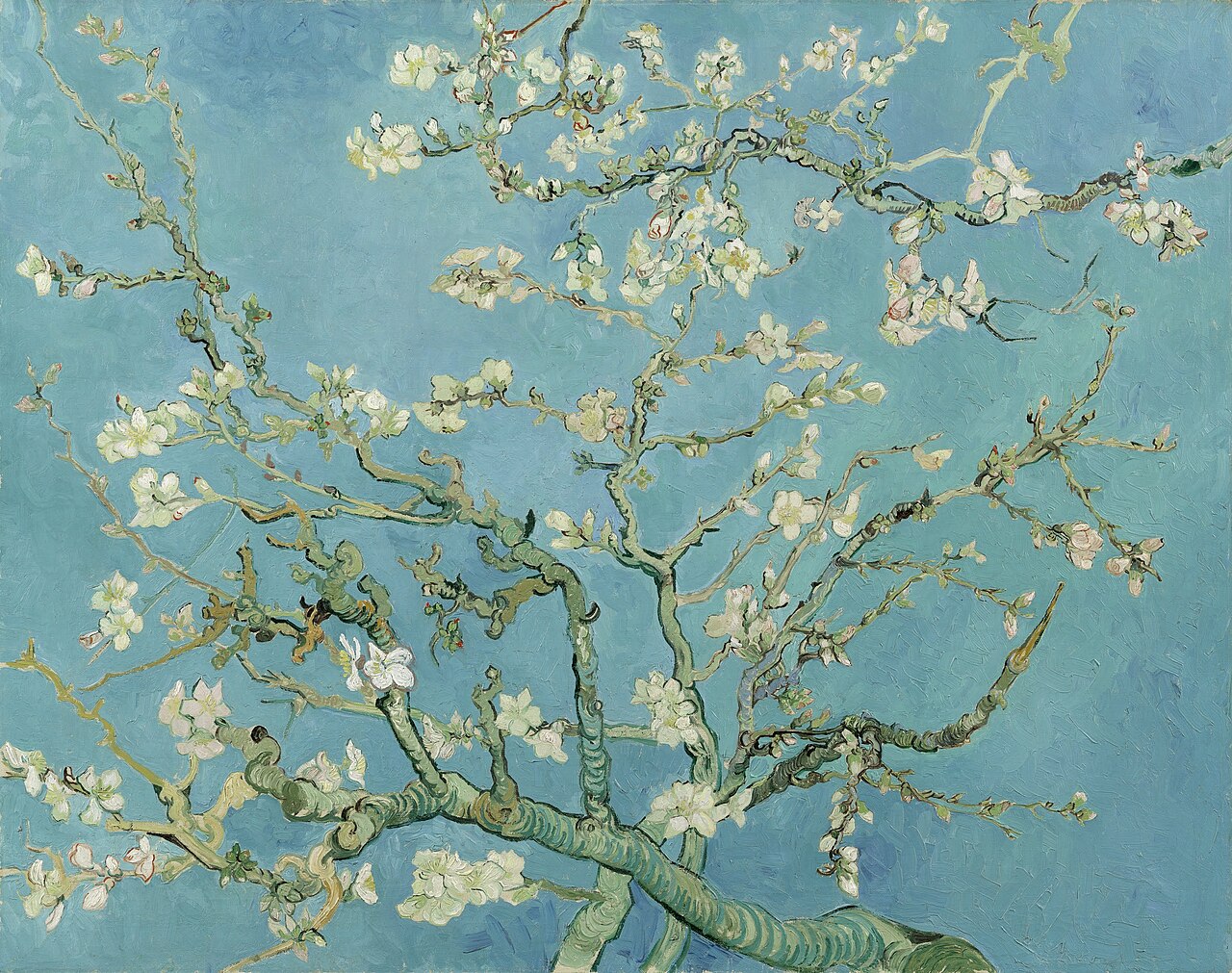
Almond Blossom is a Saint-Remy painting of new growth, made in 1890 to celebrate the birth of Van Gogh's nephew, Vincent Willem. Its close branches and clear blue ground turn a familiar spring motif into a deliberately constructed image of renewal.
Almond Blossom meaning and analysis
Almond Blossom is a Saint-Remy painting of new growth, made in 1890 to celebrate the birth of Van Gogh's nephew, Vincent Willem. Its close branches and clear blue ground turn a familiar spring motif into a deliberately constructed image of renewal.
Continue with this work in the context of Almond Blossom.
Meaning
Blossom naturally suggests beginning and fragile life, but the painting is not sentimental decoration. The cropped branches make renewal feel immediate and physical.
The work connects family news with an artistic language Van Gogh had developed through flowers, Japanese prints and flat colour.
Visual Analysis
Dark branches cut across a flat blue field, bringing the viewer unusually close to the tree. There is little conventional depth or horizon to withdraw into.
Each cluster of flowers interrupts the branching rhythm, making the image feel both patterned and alive.
Symbolism
The almond blossom is associated with spring and new life, an association strengthened by the occasion of the nephew's birth.
Its open blue background makes the branches feel suspended rather than rooted in a particular place, keeping the image between observation and emblem.
Technique
The composition reflects Van Gogh's sustained interest in Japanese prints: bold cropping, decorative branches and clear colour areas rather than atmospheric recession.
The paint is handled with enough variation to keep the flowers individual, even as the overall pattern remains flat and graphic.
Period Context
Painted in 1890 at Saint-Remy, Almond Blossom belongs to Van Gogh's late flower paintings but has a distinct family occasion behind it.
It looks forward to the Auvers works in its freshness, while remaining connected to the Saint-Remy attention to gardens, trees and seasonal change.
Related Letters
The birth of Theo and Johanna van Gogh-Bonger's son gave the painting its immediate occasion. The gift links Vincent's family relationship with his ability to turn a small piece of news into a concentrated visual idea.
FAQ
- Why did Van Gogh paint Almond Blossom?
- He painted it in 1890 to celebrate the birth of his nephew, Vincent Willem.
- What does Almond Blossom mean?
- It is often read through spring, new life and family renewal, while its branches and blue ground also show Van Gogh's decorative design thinking.
- Is Almond Blossom influenced by Japanese art?
- Yes. The close cropping, flat blue background and decorative branch pattern show Van Gogh's continuing interest in Japanese prints.