1889 · F504 · JH1655
La Berceuse (Augustine Roulin)
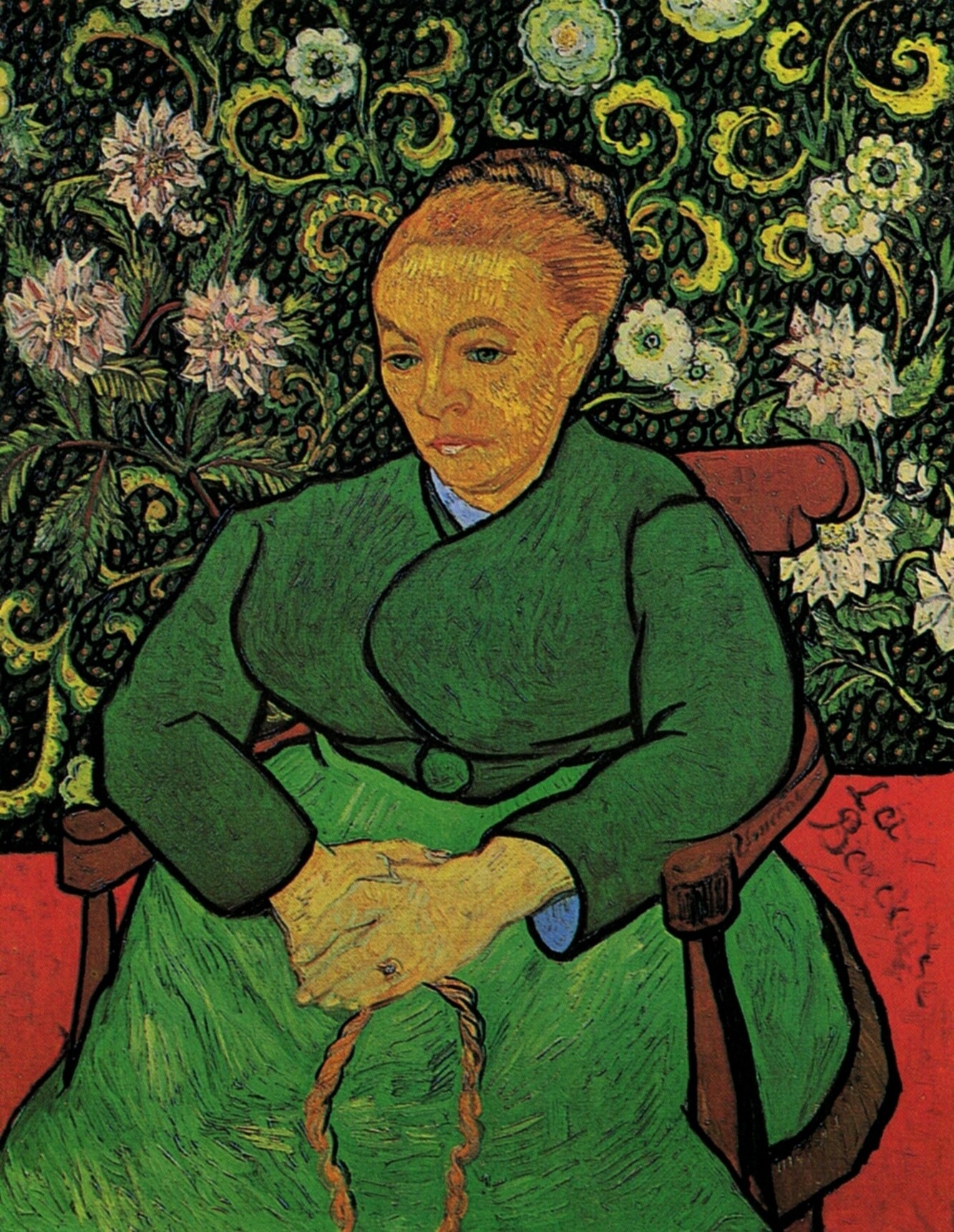
La Berceuse presents Augustine Roulin as a woman rocking a cradle, surrounded by a deliberately decorative field of colour.
La Berceuse (Augustine Roulin) meaning and analysis
La Berceuse presents Augustine Roulin as a woman rocking a cradle, surrounded by a deliberately decorative field of colour.
Continue with this work in the context of The Roulin Family.
Meaning
The portrait joins care, music and domestic labour without reducing Roulin to a passive symbol.
Visual Analysis
The seated figure, rope and patterned wallpaper flatten the space into a strong frontal arrangement.
Symbolism
The cradle rope suggests lullaby and care, while the flowers make the setting feel ceremonial.
Technique
Bold outlines and saturated complementary colours give the portrait poster-like force.
Period Context
Painted in Arles in 1889, it belongs to Van Gogh's Roulin-family series.
Related Letters
Van Gogh imagined the painting as a consoling image that could travel beyond the family portrait.
FAQ
- Who is La Berceuse?
- She is Augustine Roulin, wife of postman Joseph Roulin.
- What is she holding?
- She holds the rope used to rock a cradle.
- Why is the background patterned?
- The decorative colour and pattern make the portrait feel intentionally flat and ceremonial.
La Berceuse shows the postman's wife, Augustine Roulin, holding the cord of a cradle outside the frame. Van Gogh made several versions. In a letter he imagined that sailors on an Icelandic fishing boat might feel a lullaby if the painting were placed there. Floral wallpaper fills the background.