1889 · F527 · JH1657
Self-Portrait with Bandaged Ear
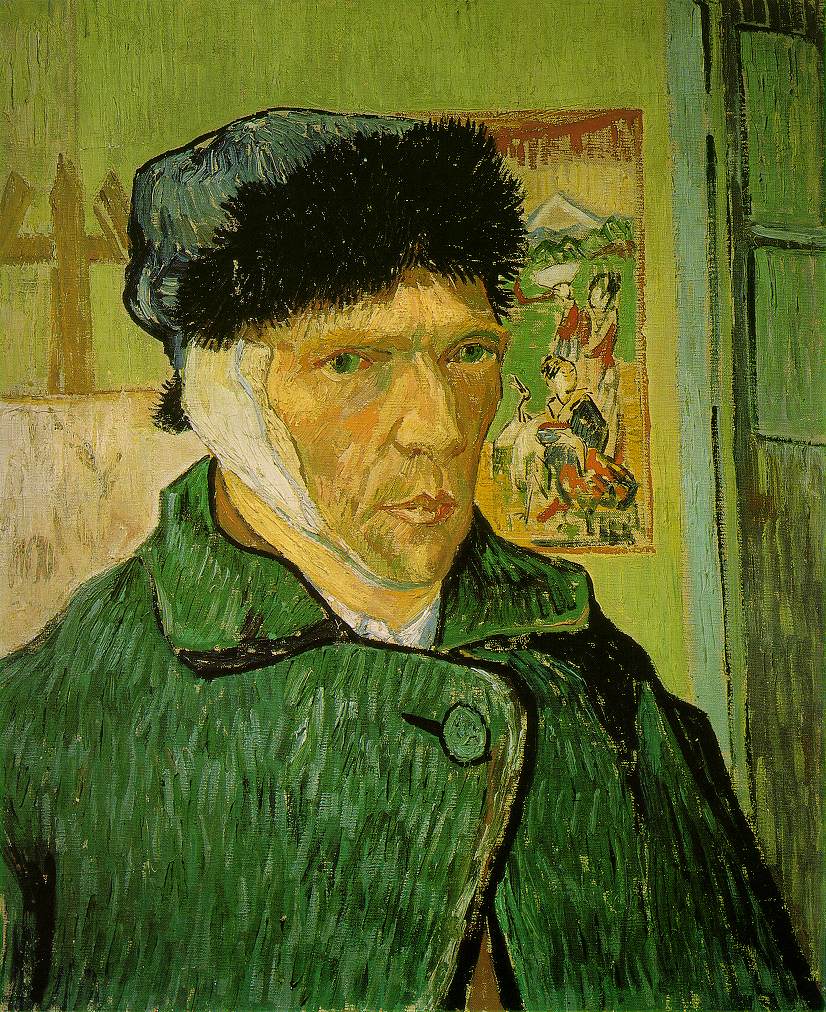
Self-Portrait with Bandaged Ear was painted in Arles after the crisis of December 1888. Its force comes from restraint: Van Gogh presents injury, a room and the tools of work without turning the image into a scene of spectacle.
Self-Portrait with Bandaged Ear meaning and analysis
Self-Portrait with Bandaged Ear was painted in Arles after the crisis of December 1888. Its force comes from restraint: Van Gogh presents injury, a room and the tools of work without turning the image into a scene of spectacle.
Continue with this work in the context of Gauguin Leaves.
Meaning
The bandage makes the recent injury impossible to ignore, yet the painter stands upright and meets the viewer with concentration. Vulnerability and continued work occupy the same image.
The portrait should not be used as proof of a simple 'tortured genius' story. It is also a carefully composed act of returning to painting.
Visual Analysis
The head is turned in three-quarter view and set against a room with strong vertical and horizontal divisions. The composition feels orderly even when the subject matter is not.
The Japanese print and easel-related objects in the interior extend the portrait beyond the face. They place the painter inside a working visual world.
Symbolism
The bandage is an index of a real event, but the painting gives it no melodramatic explanation. Its meaning comes from the tension between damage, self-presentation and persistence.
The Japanese print can be read as a reminder of the visual culture that continued to matter to Van Gogh in Arles.
Technique
Large colour areas are held apart by clear contours: pale bandage, green coat, orange hair and the cool wall. The controlled palette makes the image unusually direct.
Brushwork is firm rather than agitated. This restraint is part of the portrait's emotional effect.
Period Context
The work belongs to early 1889, at the end of the Arles period and shortly before Van Gogh entered the institution at Saint-Remy.
It should be read with the Yellow House, Gauguin-related works and later Saint-Remy self-portraits, which together show a changing artistic and personal situation.
Related Letters
Van Gogh was reluctant to make the incident the center of his correspondence. The more useful context is his repeated belief that work could restore order and his continuing attention to painting after the crisis.
FAQ
- Why did Van Gogh paint Self-Portrait with Bandaged Ear?
- He painted it after the 1888 ear injury, presenting himself as injured but still committed to painting.
- Which ear is bandaged in the self-portrait?
- The portrait was painted from a mirror image, so the visible side is reversed from the side injured in the real event.
- What is in the background of Self-Portrait with Bandaged Ear?
- The interior includes a Japanese print and studio-related elements that place the painter inside his working environment.
Self-portrait with bandaged ear. The bandage wraps his right ear (mirrored, so it appears left). Background: a blank wall and a Japanese print. His gaze is unnervingly calm — the most violent thing has just happened, but the painting holds only silence.