Miners in the Snow at Dawn: moment and letters
White snow, black figures. He lets shape speak before language does.
-
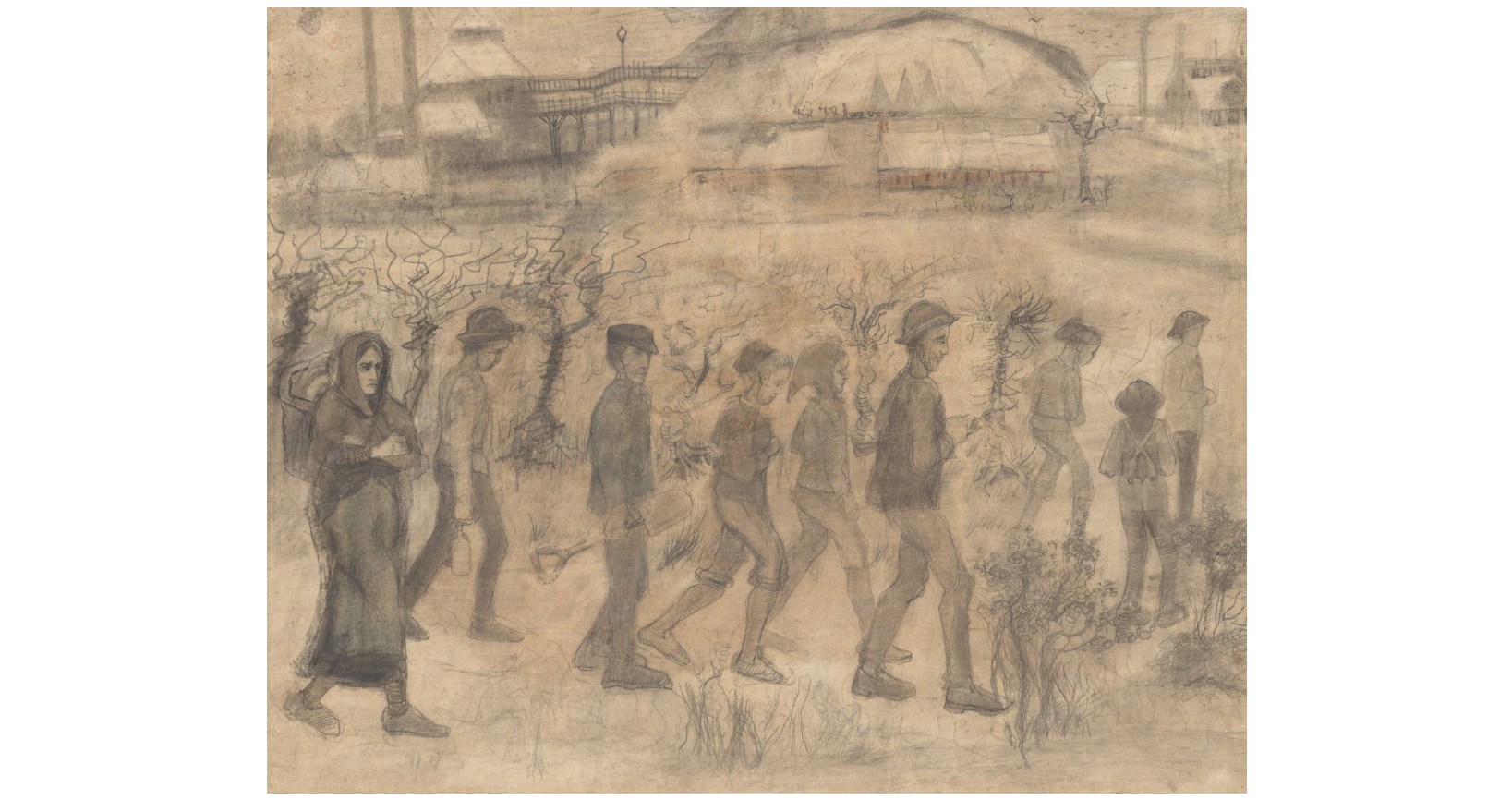
F831 Miners in the Snow at Dawn 1880
After the failure of his ministry, drawing was how he began to speak again. He did not care whether it came out beautiful; he wanted to know whether he could organize what was in front of him onto a sheet of paper.
Black silhouettes crossing a white field of snow, miners going to the early shift. This is not a chance moment but the way every day is — what he draws is the body pressed by life into habit.
There is no colour yet in the image, no psychological analysis, only the shape of labour. But one question stays behind: how to paint weight honestly, without letting it slide into pity.
Events
- The Ferocious Reader · Letter 133
After the failed mission in the Borinage, he remained near the mining district. The religious mission had collapsed, but miners' lives, cold and darkness became things he could not stop observing
- Synaesthetic Precision · Letter 155
He began organizing labourers into images: white snow, black silhouettes, a line of men going to the mine at dawn. There is little plot; the weight comes from direction and rhythm
- The Copyist · Letter 155
Millet became an essential model. Vincent was not copying the outer shell of rural subject matter; he was learning how labouring bodies could carry monumental order
- Synaesthetic Precision
Miners in the Snow at Dawn has almost no colour experiment, but it already has visual judgement: the fewer the details, the more poverty and cold become a shared shape
- The Ferocious Reader
The Nuenen peasant pictures did not appear from nowhere. The Borinage miners left the basic problem: how to paint heaviness honestly without turning it into cheap pity
Letter Sources
Van Gogh letter records referenced on this page, linked to the Van Gogh Letters Project. vangoghletters.org