1887 · F363 · JH1351
Pere Tanguy
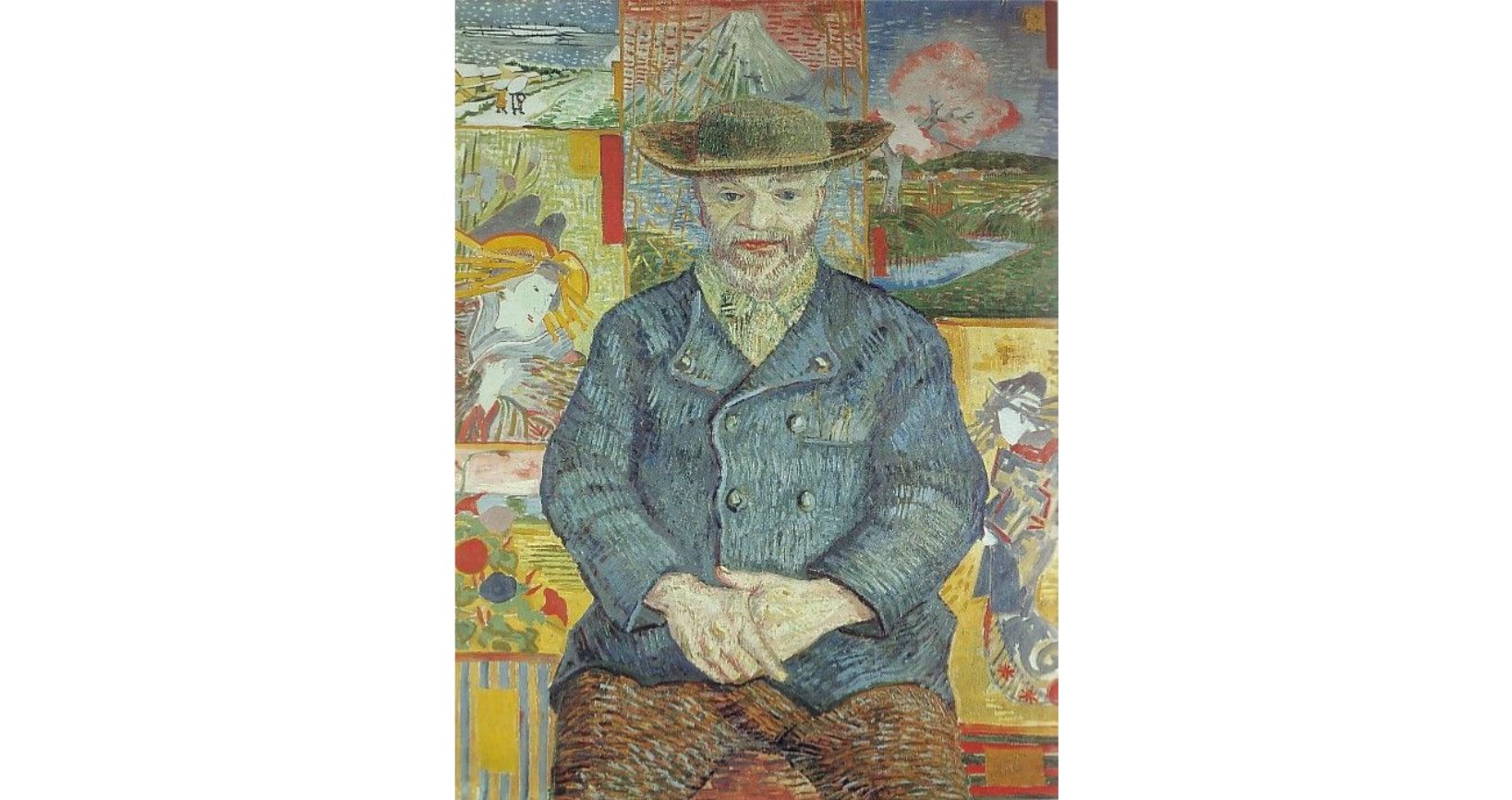
Portrait of Pere Tanguy places the Paris paint dealer Julien Tanguy before a wall of Japanese prints.
Pere Tanguy meaning and analysis
Portrait of Pere Tanguy places the Paris paint dealer Julien Tanguy before a wall of Japanese prints.
Continue with this work in the context of Pere Tanguy.
Meaning
The portrait records friendship and artistic exchange as well as an individual likeness.
Visual Analysis
Tanguy's calm face anchors a crowded, colourful backdrop of prints.
Symbolism
The prints point to the Japanese visual culture that helped reshape Van Gogh's Paris palette and composition.
Technique
Clear colour blocks and strong contours balance the dense decorative background.
Period Context
Painted in Paris in 1887, it belongs to Van Gogh's period of rapid colour experimentation.
Related Letters
Tanguy's shop gave artists a meeting place and sometimes access to materials on credit.
FAQ
- Who was Pere Tanguy?
- Julien Tanguy was a Paris paint dealer and supporter of avant-garde artists.
- Why are Japanese prints behind him?
- They show the Japanese print culture important to Van Gogh in Paris.
- When was the portrait painted?
- It was painted in Paris in 1887.
Tanguy sits before a background made of Japanese prints, like a quiet mediator. Pigments, credit, young painters, imported images and new Paris painting converge behind him. The odd hat swells into a snow-capped volcano—Fuji from the prints is set on a Paris colour-dealer's head, and the translation happens along the outline of the portrait. The portrait is not only of a person; it shows how the visual network of Paris entered Van Gogh's painting.