1890 · F753 · JH2007
Portrait of Dr. Gachet (first version)
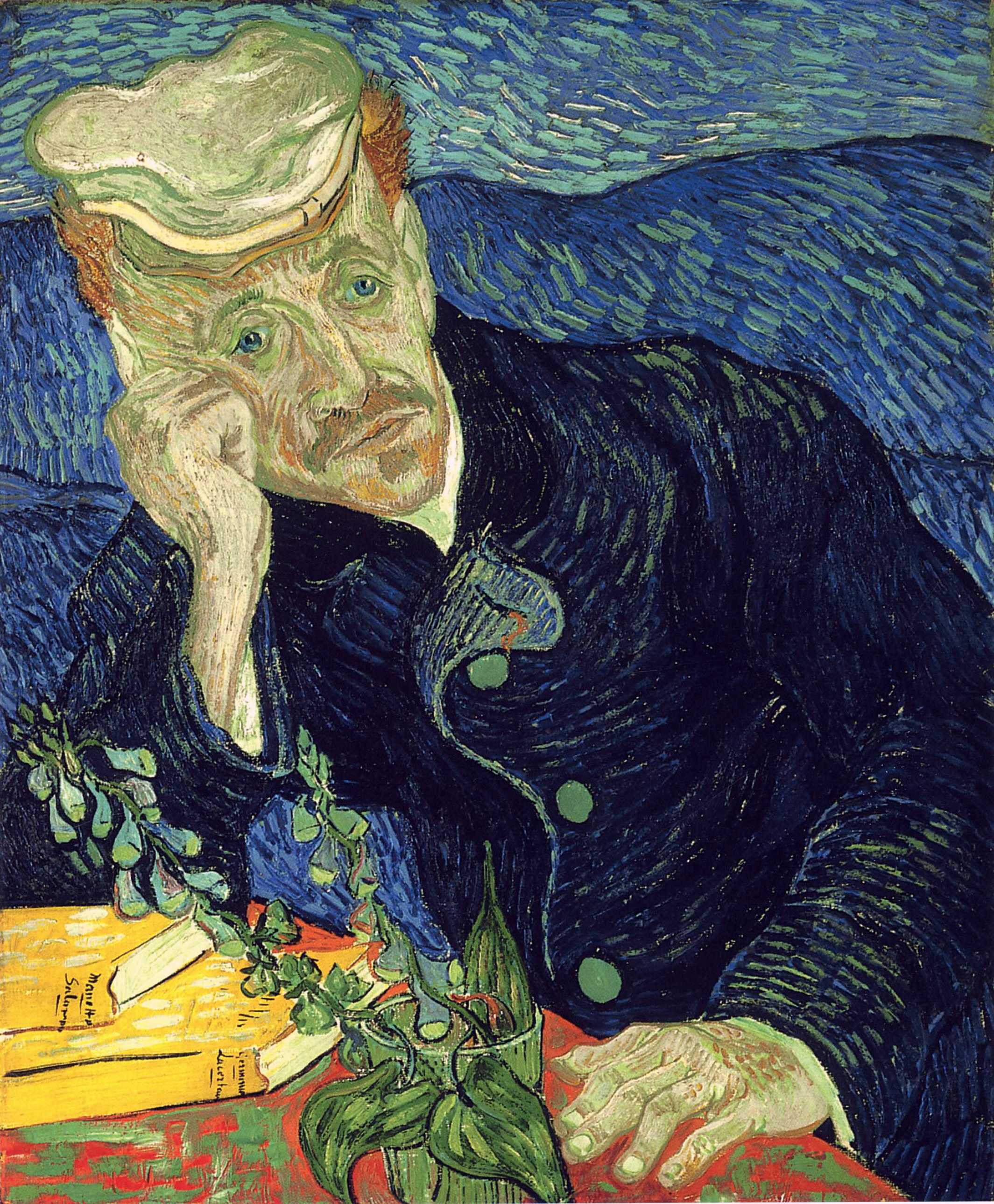
Portrait of Doctor Gachet turns a sitter into an image of attention, fatigue and companionship in Auvers.
Portrait of Dr. Gachet (first version) meaning and analysis
Portrait of Doctor Gachet turns a sitter into an image of attention, fatigue and companionship in Auvers.
Continue with this work in the context of The Seventy Days of Auvers.
Meaning
Gachet appears pensive, but the painting does not turn his mood into a diagnosis.
Visual Analysis
The tilted head, blue jacket and red table create a close, unstable triangle.
Symbolism
The foxglove can suggest medicine, while remaining a concrete object on the table.
Technique
Short directional marks keep the face, jacket and background visibly active.
Period Context
Painted in Auvers in 1890, it belongs to Van Gogh's intense final period.
Related Letters
Letters from Auvers place Gachet within Van Gogh's search for medical and personal support.
FAQ
- Who was Doctor Gachet?
- Paul Gachet was the doctor Van Gogh consulted in Auvers-sur-Oise.
- When was the portrait painted?
- The first version was painted in 1890.
- What is on the table?
- A foxglove plant appears beside the sitter.
Doctor Gachet. Blue coat, melancholy hand on cheek — a healer who himself suffers.