1890 · F633 · JH1974
The Good Samaritan (after Delacroix)
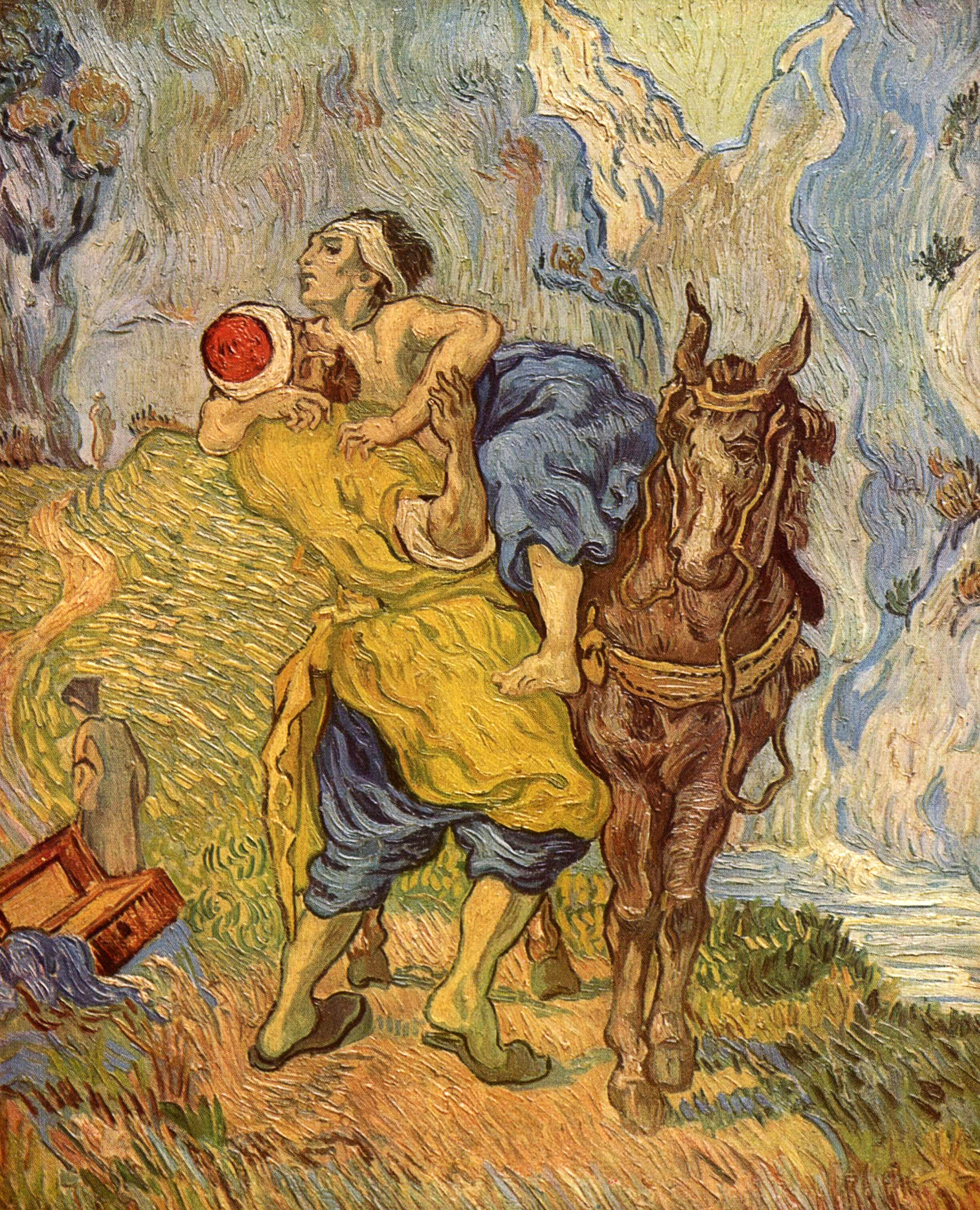
The Good Samaritan (after Delacroix), 1890. Meaning, analysis, themes, technique, period and related Van Gogh artworks connected from The Saint-Rémy Copies.
The Good Samaritan (after Delacroix) meaning and analysis
The Good Samaritan (after Delacroix) belongs to the site node The Saint-Rémy Copies. That node places the work inside Van Gogh's letters, places and changing painterly abilities rather than isolating it as a single image.
Its strongest period signal is Van Gogh Saint-Remy Period.
Technically, the page connects this work to Van Gogh Oil on Canvas , Van Gogh Brushstroke Analysis . The related map below shows these connections.
By the roadside a man bends to lift the wounded traveller onto his horse; the wounded man, his head bandaged and his chest bare, rests a hand on his rescuer’s shoulder. An opened chest lies at lower left, and further up the road a figure is seen from behind. Van Gogh had planned this copy after Delacroix since September 1889; in early May 1890 he wrote: “I’ve also attempted a copy of Delacroix’s Good Samaritan.”