1885 · F82 · JH764
The Potato Eaters
The Potato Eaters is Van Gogh's major Dutch-period statement. Before Paris colour, it argues that painting should carry the weight of labour, poverty and shared food.
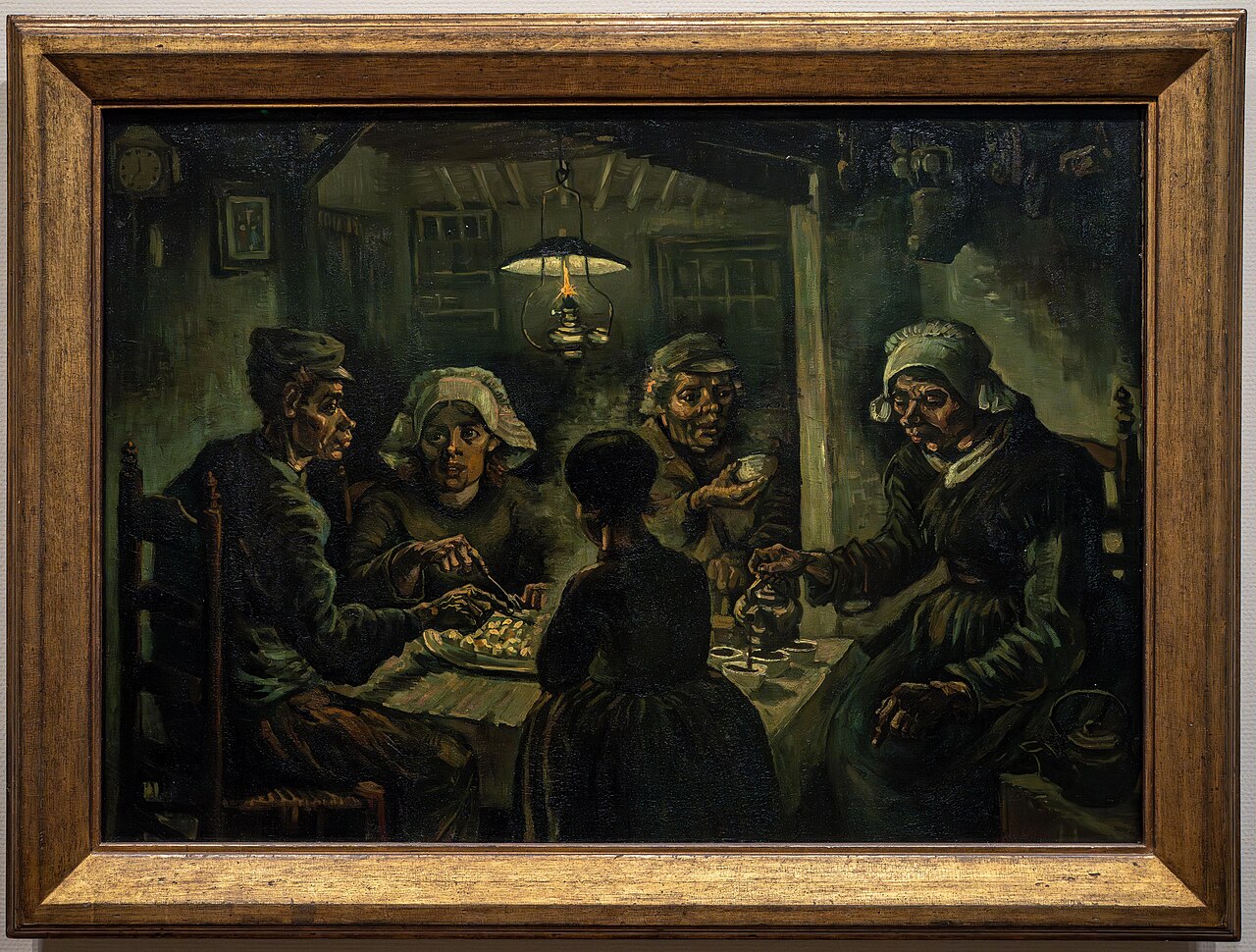
The Potato Eaters meaning and analysis
The Potato Eaters is Van Gogh's major Dutch-period statement. Before Paris colour, it argues that painting should carry the weight of labour, poverty and shared food.
Continue with this work in the context of The Potato Eaters.
Meaning
The painting is about peasant life seen from inside, not from a decorative distance. The rough faces and hands are meant to belong to the same earth as the potatoes.
Its meaning rests on dignity rather than prettiness. Van Gogh wanted the figures to look as if they had worked for the food they eat.
Visual Analysis
The lamp is the visual and moral centre. It gathers the figures around one table and turns the meal into a scene of pressure and dependence.
The palette is dark and earthen. Browns, greens and blackish tones make the people, room and food part of one material world.
Symbolism
The shared potato meal stands for labour returned to the body. Food, hands and soil belong together.
The interior becomes a social world: poor, cramped, but bound by work and necessity.
Technique
Van Gogh uses rough modelling and heavy dark tones rather than polished academic finish.
The painting depends on drawing, tonal compression and expressive distortion of faces and hands.
Period Context
It belongs to the Nuenen period, when Van Gogh focused on peasants, weavers and dark interiors.
The work comes before the colour revolution of Paris, making it the culmination of his Dutch ethical realism.
Related Letters
Van Gogh explained The Potato Eaters unusually directly in letters, especially his concern that the peasants appear to have honestly earned their meal.
FAQ
- What does The Potato Eaters mean?
- It presents peasant labour, poverty and shared food with dignity rather than decorative beauty.
- Why is The Potato Eaters so dark?
- The dark earth palette connects the peasants, room and potatoes to labour and rural material life.
- Is The Potato Eaters before Van Gogh's colourful style?
- Yes. It belongs to the Dutch Nuenen period before his Paris colour transformation.
The final version. He wrote: I want people to smell the steam of potatoes. This is not a rural genre painting — it is testimony to the dignity of labour. The lamp illuminates only food and hands; faces remain in half-darkness. He made it deliberately 'ugly,' because truth matters more than beauty.