The Potato Eaters: moment and letters
The picture brought him no success, but he finally knew what he was painting for.
-
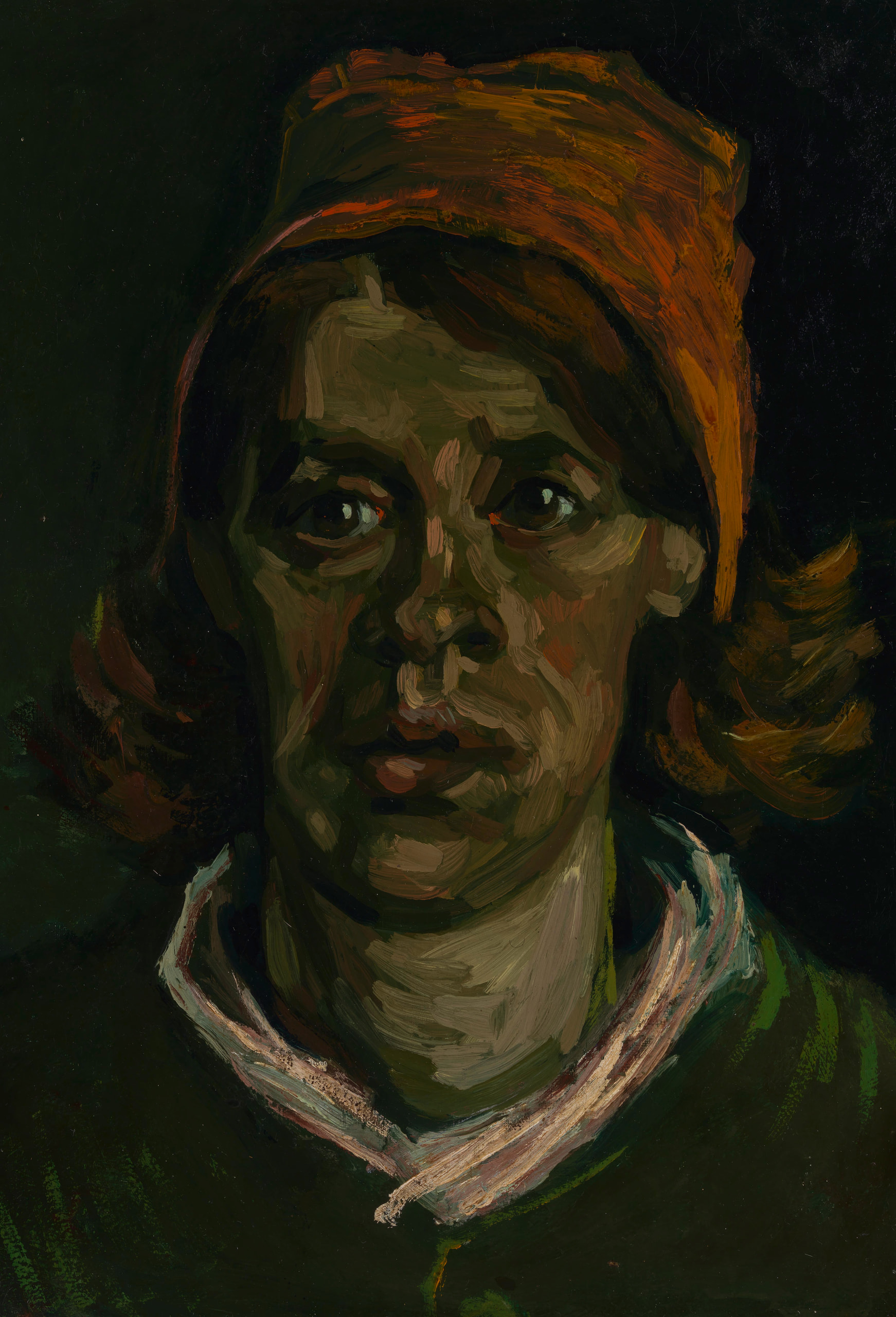
F160 Head of a Woman 1885 -
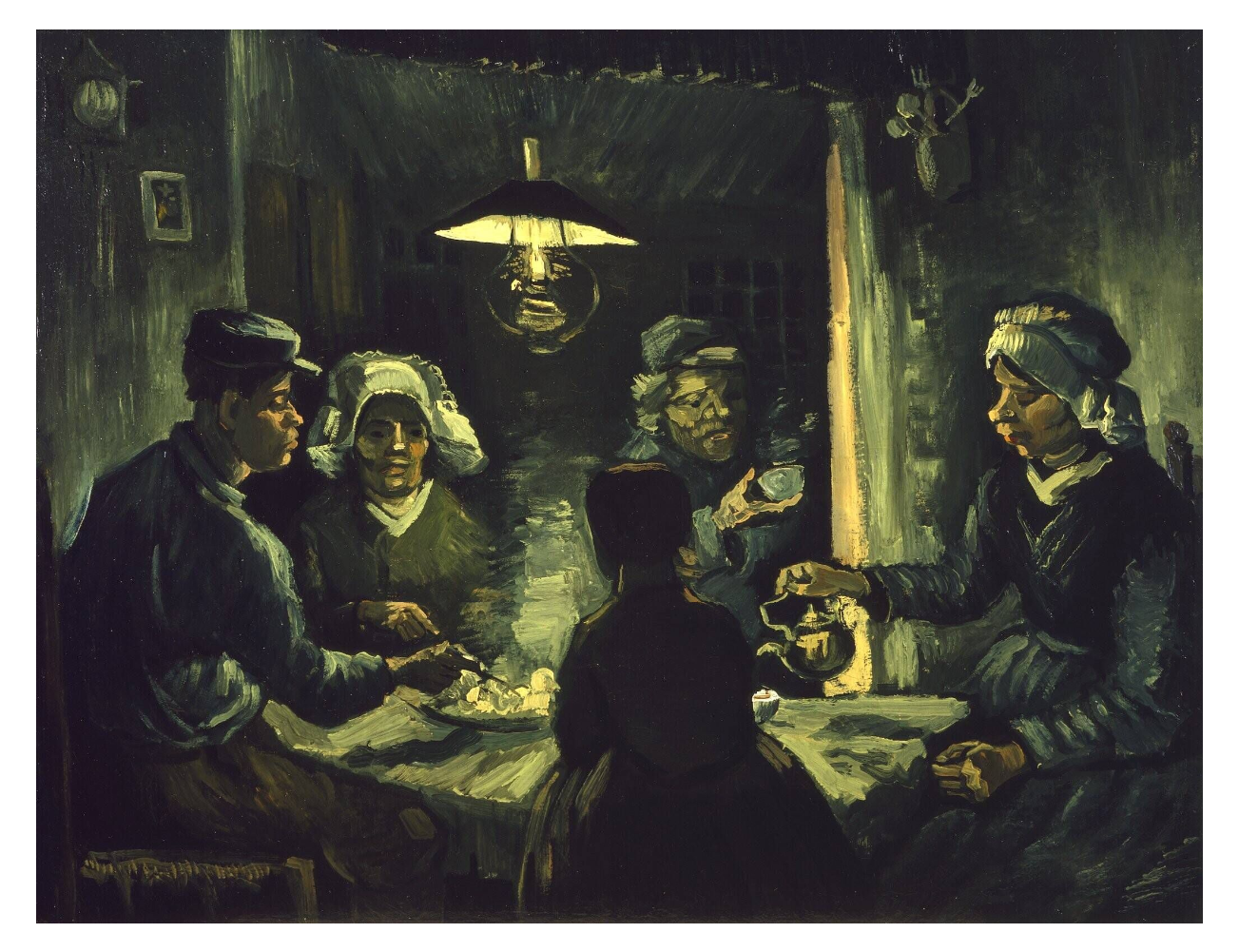
F78 The Potato Eaters (study) 1885 -
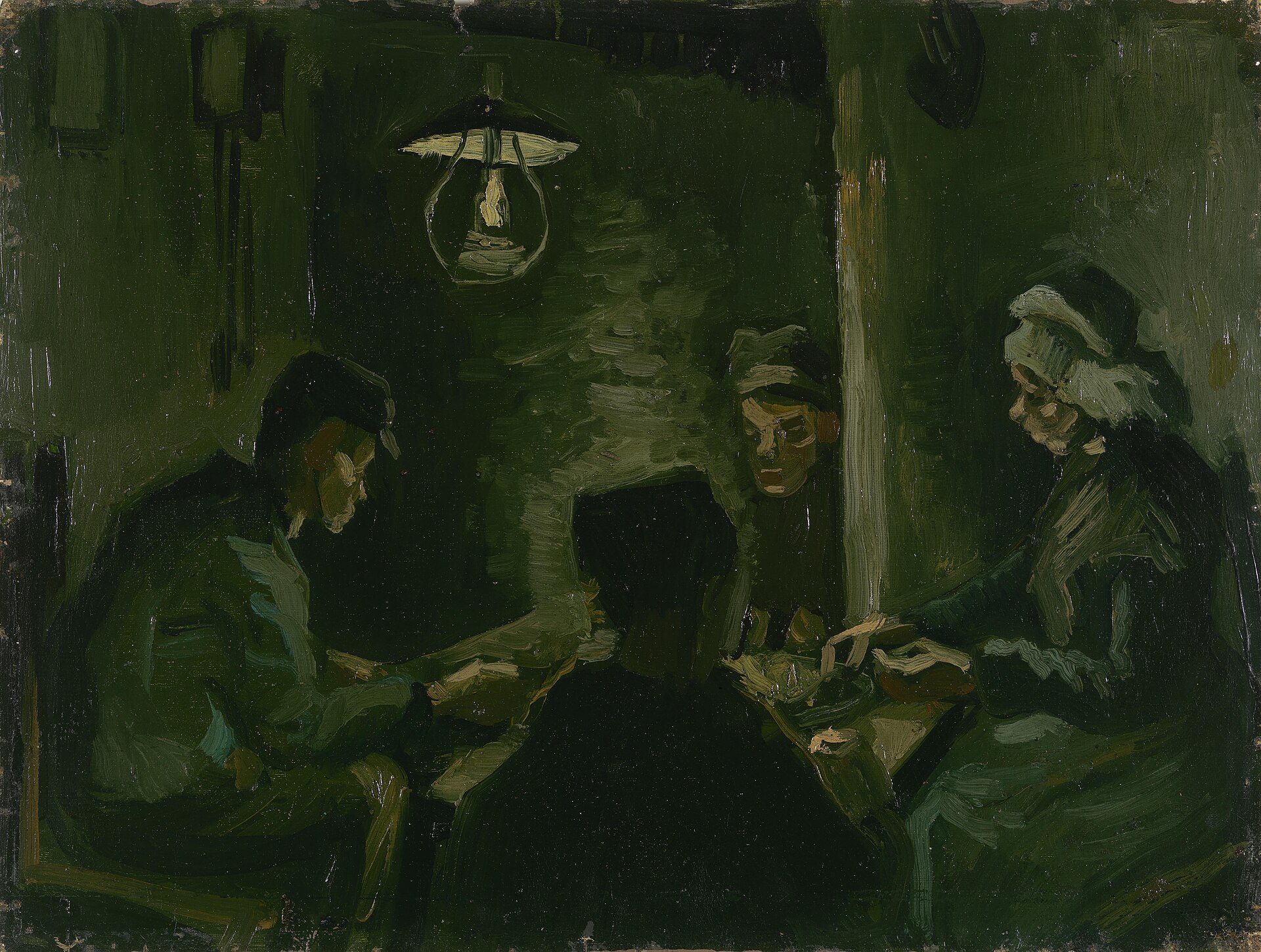
F77r Study for The Potato Eaters 1885 -
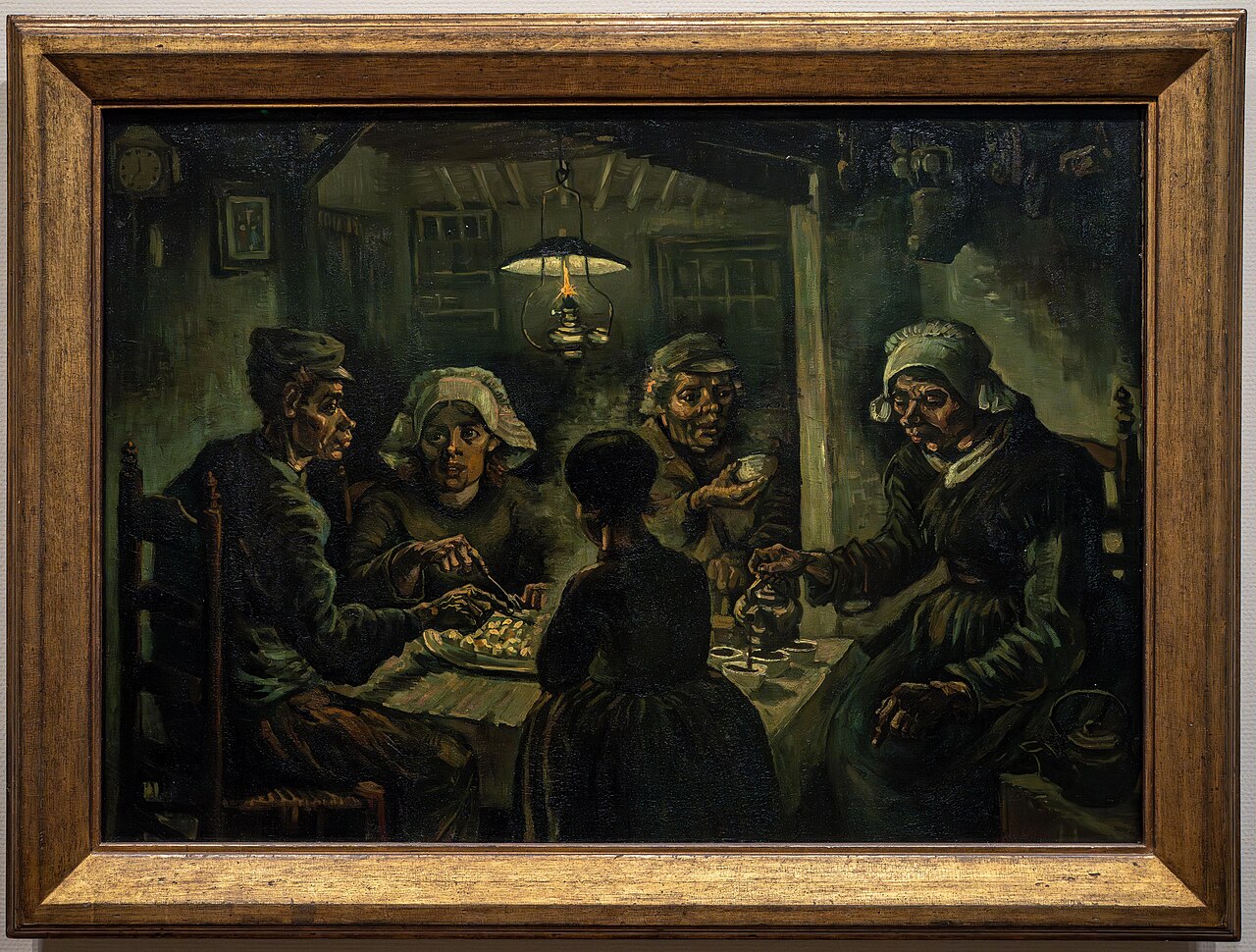
F82 The Potato Eaters 1885
Painting
Oil on canvas, 82 × 114 cm. Five people sit around a single oil lamp eating potatoes. Not one face is handsome — he made them rough, dark, like the soil itself. The pigments are earth-coloured: ochre, burnt umber, dark green. He refused to make peasants look clean. This was his manifesto: to paint peasants, use the colour of dirt.
What this work changed: it joined peasant subject matter, earth colours and the experience of labour into a clear realist position, while leaving a starting point for the later turn from Dutch dark tonality toward modernism.
In 1885, he also translated this group into a lithograph; the oil painting was not the only destination, but a composition that could continue to circulate and be tested in black and white. That spring he was training himself through a principle he took from Delacroix: begin not with the contour, but from the middle of the form, building an arm, a gesture and the general expression outward. The roughness here is therefore not an inability to draw correctly, but a choice to put a living gesture before a polished outline.
Letter
April 1885, Nuenen. He defended this painting repeatedly in his letters — because his friend Van Rappard criticized its inaccuracy. His reply: I don't want accuracy. I want people to see that these folk put in the dish the very hands with which they dug the earth. He said the painting "smells of bacon, smoke, and potato steam." He wanted the viewer to smell it.
Place
Nuenen, a Brabant village. His father was the pastor; Vincent lived in a room behind the parsonage, an arrangement that strained against everyone in it. He first used the laundry room as a place to paint, then moved his work space next door, near the pigsty — these peasant studies did not emerge from a tidy studio. Each evening he walked to the De Groot cottage — Gordina, on the right of the canvas, was a real woman who ate at that table. This was four years before Arles, before colour. He was thirty-two, had been painting for five years, and still believed his subject was darkness.
Five years of drawing — peasant heads, studies in dark tones — he had been preparing all along. He knew he wanted to make one "real" picture, by his own standard.
In letter 497 he explained it to Theo: he wanted people to see that these figures eating potatoes by lamplight had, with the very hands they now dip into the dish, themselves turned the earth — that this meal was honestly earned by manual labour. He knew some readers might find the painting ugly or crude, and he sent it anyway.
The picture did not bring him the recognition he needed. But it established what he had been trying to make: a peasant picture whose subject and making belonged together.
Events
- The Ferocious Reader · Letter 494
Reading Zola's Germinal — a novel about a miners' strike. 'After reading it I dared to paint peasants'
- The Copyist · Letter 495
Studying Millet's peasant paintings repeatedly — but deciding not to imitate his 'ennobling'
- The Colour Experimenter · Letter 496
Deliberately choosing a dark palette — ochre, burnt umber, dark green. 'Peasants should not be painted clean'
- Synaesthetic Precision · Letter 497
Going to the De Groot family daily to draw — observing them eating under the oil lamp
- Synaesthetic Precision · Letter 497
Began the final oil painting — 'it should smell of bacon, smoke, and potato steam'
- The Colour Experimenter · Letter 499
Completed The Potato Eaters — five people, one lamp, all in the colour of earth
- The Ferocious Reader · Letter 503
Van Rappard criticized the painting's inaccuracy. Vincent replied: 'I don't want accuracy, I want truth'
From the Letters
Ik heb getracht duidelijk te maken dat die mensjes, die bij hun lampje hun aardappelen eten met de handen, waarmee zij in de aarde gegraven hebben, eerlijk hun eten verdiend hebben. I have tried to make it clear how those people, eating their potatoes under the lamplight, have dug the earth with those very hands they put in the dish, and so it speaks of manual labour, and how they have honestly earned their food.
Ik heb er naar gestreefd om de gedachte er in te krijgen dat die lui die bij hun lampje aardappelen eten, diezelfde handen die zij in den schotel steken, de aarde hebben omgespit. I have tried to convey the idea that those people, eating their potatoes under the lamp — those same hands they put in the dish — have dug the earth.
Schilderen van boerenleven is iets ernstigs en ik zou mezelf verwijten als ik niet probeerde schilderijen te maken die ernstige gedachten opwekken. Painting peasant life is a serious thing, and I should reproach myself if I did not try to make pictures which will rouse serious thoughts.
Material Evidence
Facts that can be verified in the material and surface of the work.
-
Again a commercially primed cream ground, of medium thickness. The picture is famous for its darkness, yet the ground beneath is pale: the dark was put on, not let through.
Letter Sources
Van Gogh letter records referenced on this page, linked to the Van Gogh Letters Project. vangoghletters.org
Essays
Long-form reading connected to this node.