Daubigny's Garden
The cat was part of the plan, then it disappeared.
-
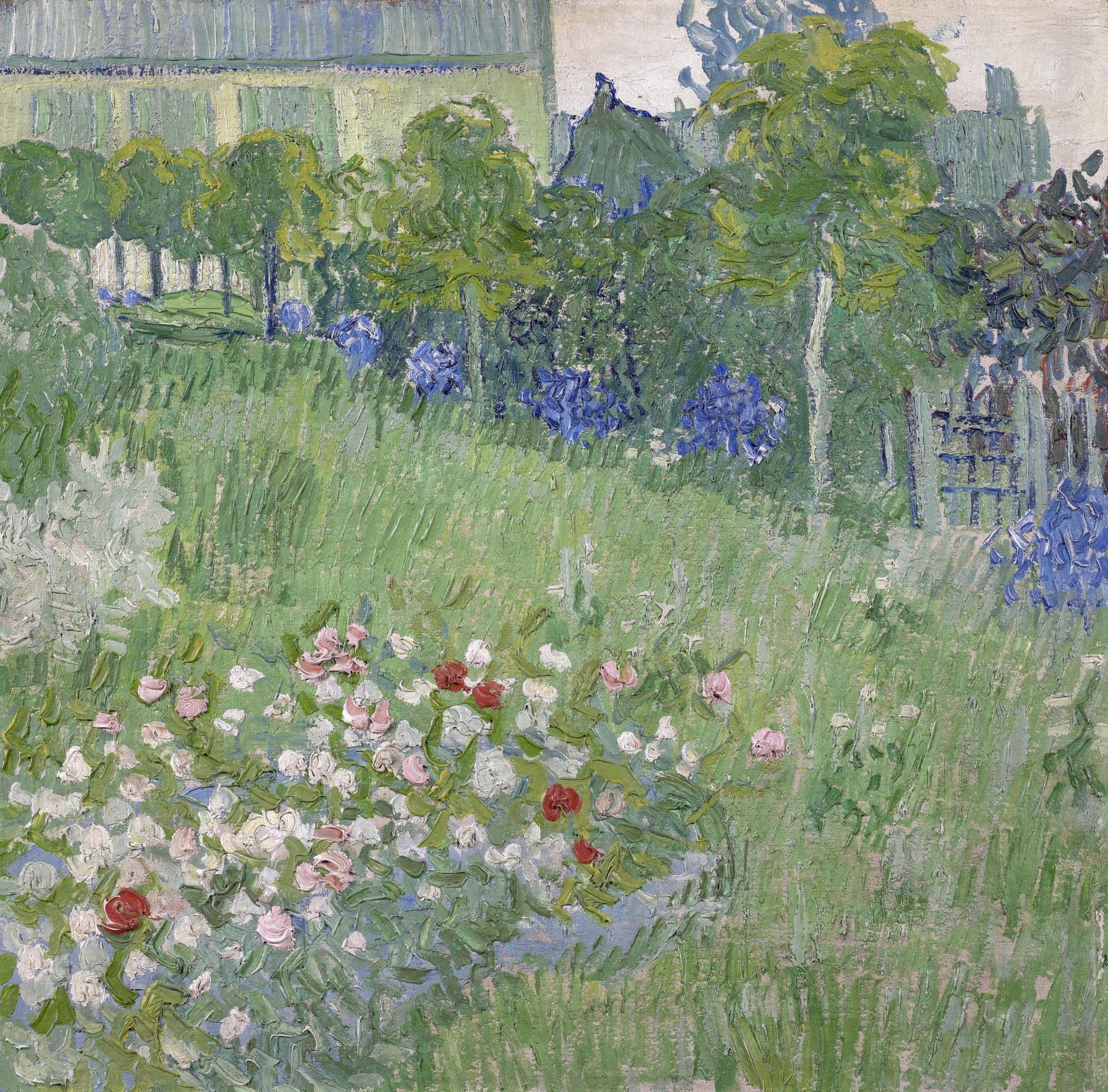
F765 Daubigny's Garden 1890 -
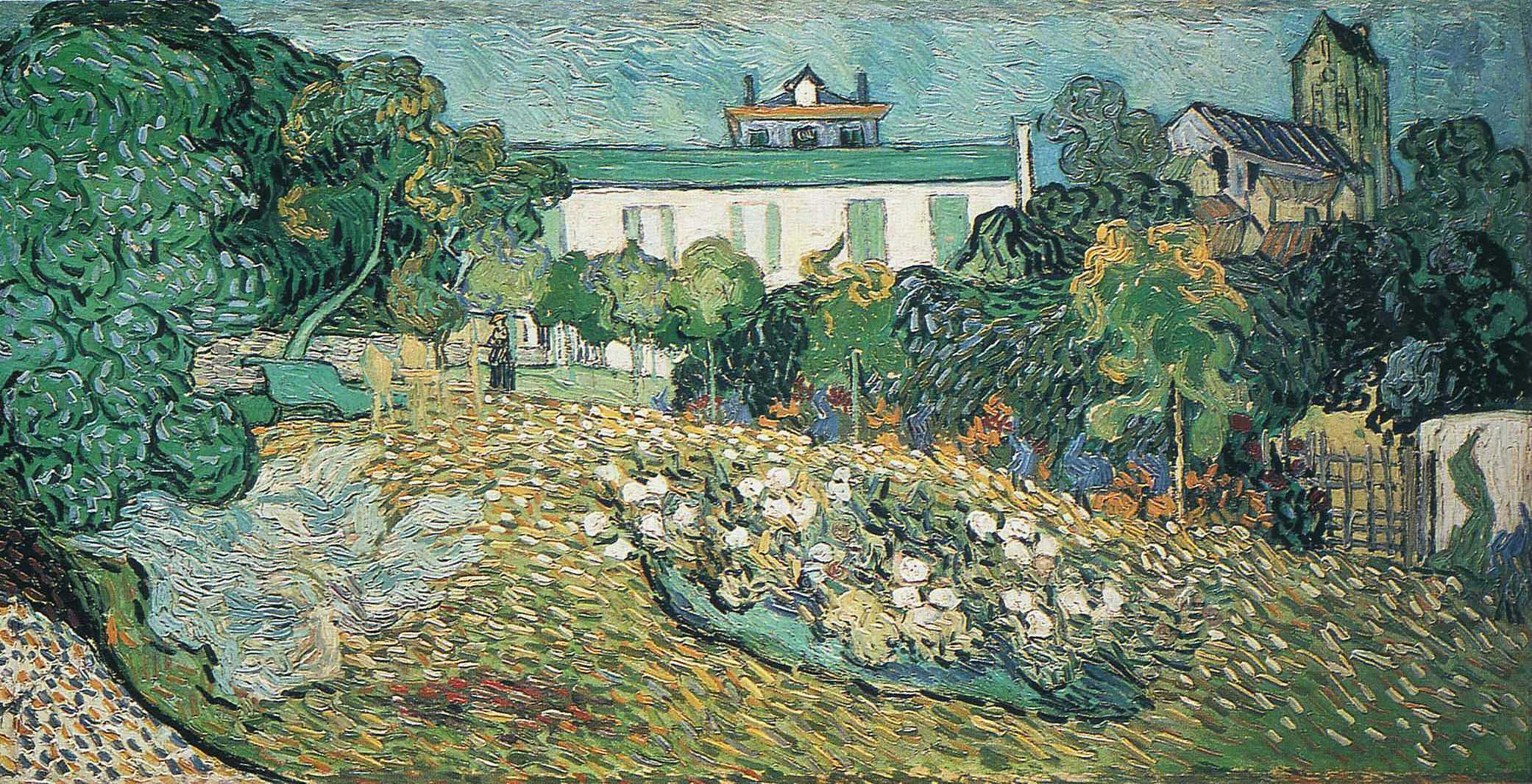
F776 Daubigny's Garden (large version) 1890 -
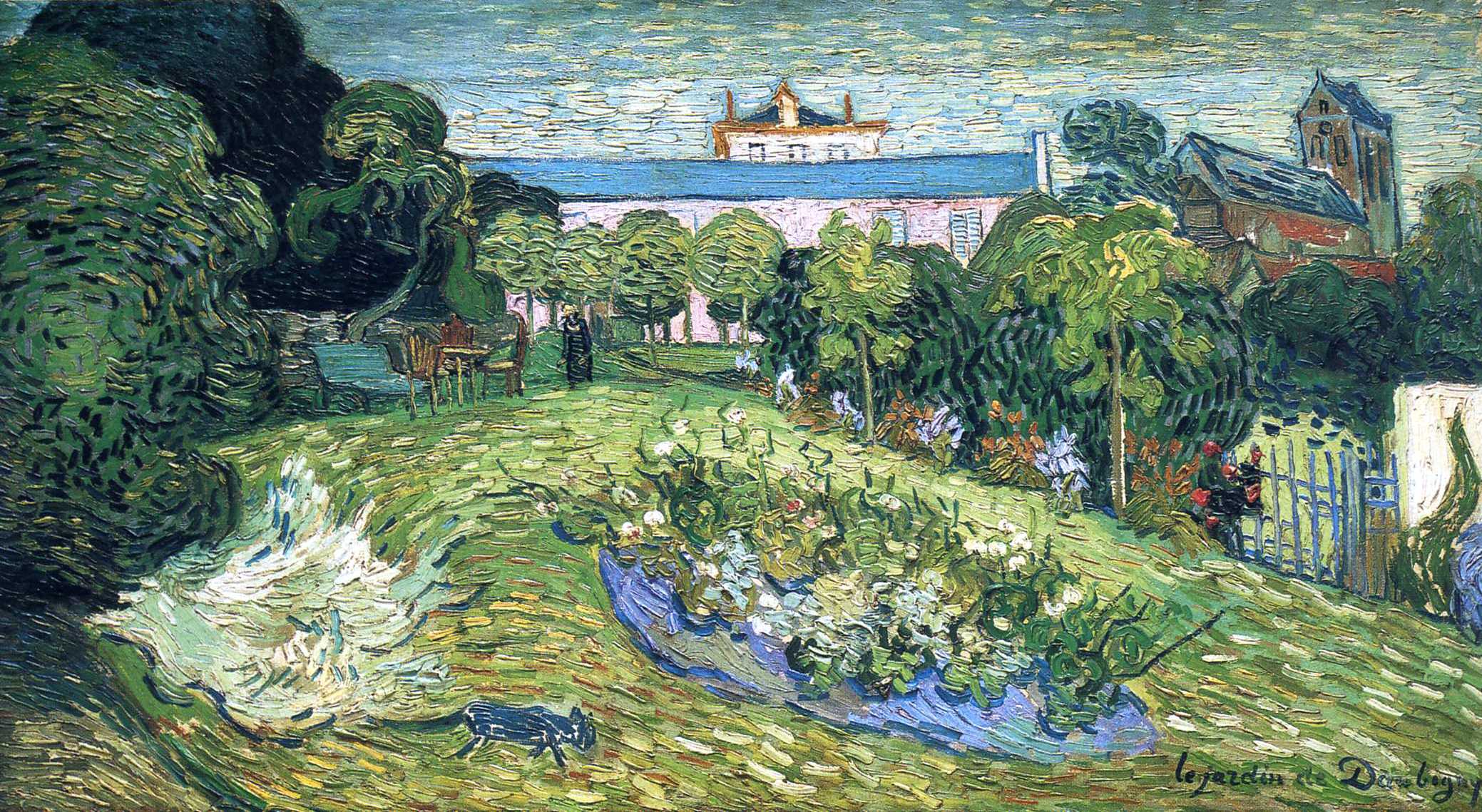
F777 Daubigny's Garden (large version) 1890
Painting
Three versions. While waiting for blank canvas to arrive from Paris, he first made the garden study on a tea towel; it then developed into two horizontal versions and one square version. The foreground is a stretch of grass, green and pink alternating; on the left, a green and lilac bush and a plant stem with whitish foliage. In the middle ground, flowerbeds and a path; in the distance, Daubigny's house. Painted early July 1890 — before the sky pressed down, before the rain. Saturated colour, clear composition. He himself said: "It is one of the most deliberately worked paintings I have done." The word voulu — willed, deliberately required — is rare in his vocabulary about his own work. This is not impulsive brushwork. It is a mature group of compositions built as a tribute.
Letter
July 1890. "It is one of the most deliberately worked paintings I have done." Another letter: "Daubigny's garden, foreground of green and pink grass. On the left a green and lilac bush and a plant stem with whitish foliage." He described his own painting in extremely precise colour terms. The letter also names a black cat in the foreground; the Van Gogh Letters technical note records that this cat was later painted out of F776. This was the least revised, most carefully designed painting of his Auvers period. He was using a tightly composed work to honour Daubigny — a painter he had admired since his Dutch years.
Place
Auvers-sur-Oise, Daubigny's house and garden. Daubigny — the Barbizon painter Vincent had revered since Holland — had died in 1878; his widow let Vincent in to paint the garden the old man had loved last. Vincent made this in early July 1890. He had perhaps three weeks left. He spent some of them standing exactly where a painter he loved had stood twelve years before he himself arrived.
Daubigny, the landscape painter who had lived in Auvers, had died before Vincent arrived. His garden was still there.
Vincent made a small painting of the garden, then two larger canvases. On 23 July he called one of them "one of my most deliberate canvases." His letter sketch also specifies a black cat in the foreground.
The editorial note to that letter records that the black cat was painted out later. The alteration is known; why Vincent removed it is not.
Events
- The Copyist · Letter 889
Daubigny's widow allowed Vincent into the garden. Charles-François Daubigny had died in 1878 — this garden was the subject he had loved most in his late years
- The Colour Experimenter · Letter 891
Completed the first Daubigny's Garden — foreground of green and pink grass, a bush of green and lilac on the left, a plant with whitish foliage. Colour atypical but balanced
- Synaesthetic Precision · Letter 891
'It is one of the most deliberately worked paintings I have done.' Rare for him to apply voulu — willed, deliberately required — to his own work
- The Colour Experimenter · Letter 893
Completed the larger Daubigny's Garden — bigger format, cooler tones. The same subject pushed into a second version
- The Copyist · Letter 893
The mature form of the copyist — no longer copying a painting, but standing where the painter had stood, looking again with his own eyes
From the Letters
C'est un des tableaux les plus voulus que j'aie faits. It is one of the most deliberately worked paintings I have done.
Le jardin de Daubigny, premier plan d'herbe verte et rose. À gauche un buisson vert et lilas et un tronc de plante aux feuillages blanchâtres. Daubigny's garden, foreground of green and pink grass. On the left a green and lilac bush and a plant stem with whitish foliage.
Letter Sources
Van Gogh letter records referenced on this page, linked to the Van Gogh Letters Project. vangoghletters.org
Technique Evidence
This work appears as evidence in this site’s technique-evolution axis.