London Heartbreak
The archive gives us museums, lodgings, and letters. It does not give us a complete love story.
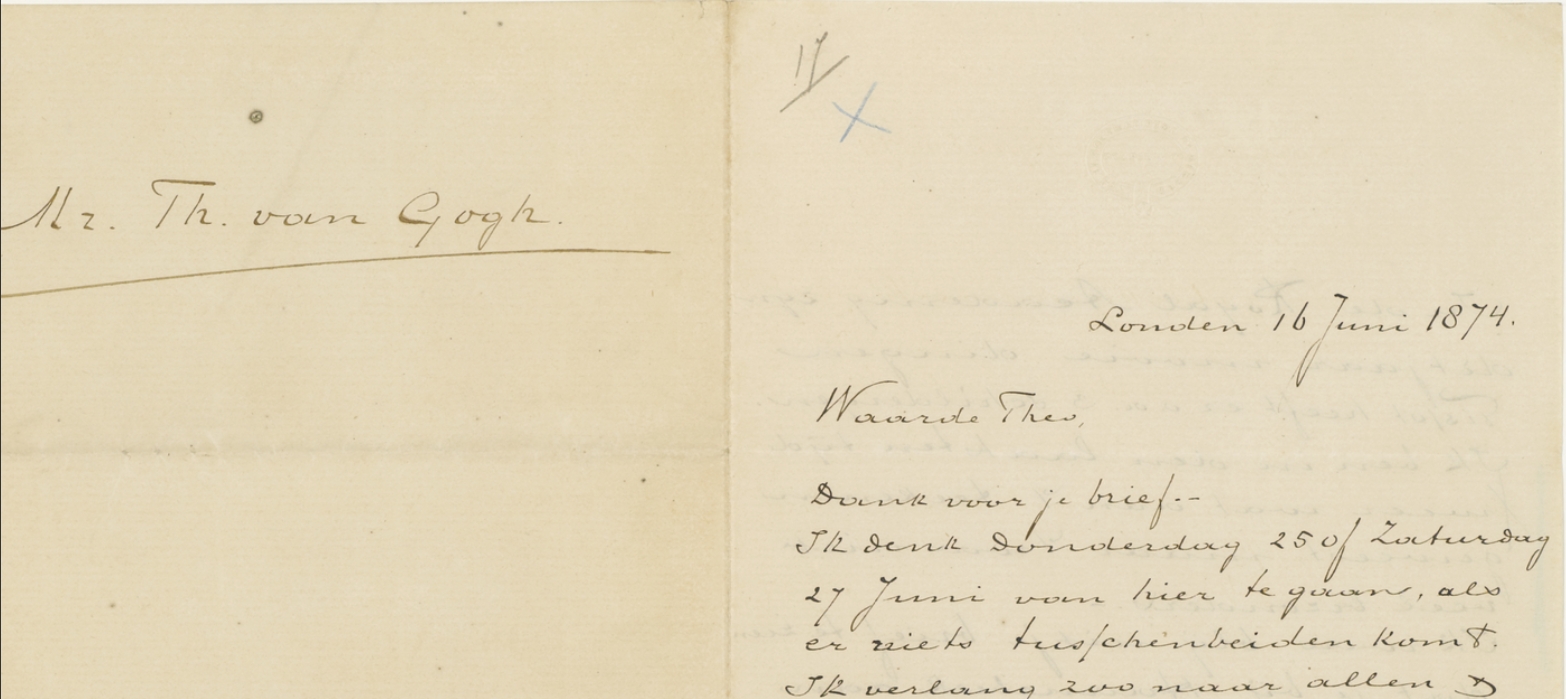
No painting at this knot — only a letter.
In May 1873, aged twenty, he was transferred by the Goupil gallery to its London branch. He lodged in Stockwell while working in central London.
The early letters and records place him at the National Gallery, Dulwich Picture Gallery, and the South Kensington Museum. He was learning to look while working among Goupil's prints and reproductions.
Later accounts connect his time in the Loyer household with an unhappy attachment to Eugénie. The surviving record does not allow the exact courtship, refusal, or its aftermath to be narrated with certainty. At this point he was an art dealer and an increasingly serious reader, not yet a practising artist.
London did not make him a painter in a straight line. It gave him years among pictures, English books, and a city he would later remember from a very different life.
Events
- The Ferocious Reader
Proposed to Eugenie Loyer and was refused. The heartbreak itself never appears directly in the letters — only as a sudden change in tone
- The Ferocious Reader · Letter 24
First long passages of quoted poetry and prose appear in his letters. He began sending sentences he had read to Theo
- The Ferocious Reader · Letter 35
Wrote: 'I have been reading a great deal lately.' A short summary, but it is the opening statement of the ferocious reader
- The Ferocious Reader · Letter 36
Reading George Eliot's Adam Bede. Copied lines into his letter again and again: 'What a beautiful book that is, Adam Bede.'
- Synaesthetic Precision · Letter 23
Wrote: 'We share not only the same memories but also the same paintings and prints.' For the first time he was using image as the carrier of feeling
- The Translator · Letter 40
Copied long passages of Michelet's La femme and Keats's poems into his letters. For the first time the writer takes up the role of translator — passing what he had read on to Theo
From the Letters
I am so glad that we have so much in common, not only memories of the same things but also that you know so many of the paintings and prints that I know. I have been reading a great deal lately. What a beautiful book that is, Adam Bede. Letter Sources
Van Gogh letter records referenced on this page, linked to the Van Gogh Letters Project. vangoghletters.org