A Japanese Eye in Arles
The light and colour of Arles reminded him of Japanese painting.
-
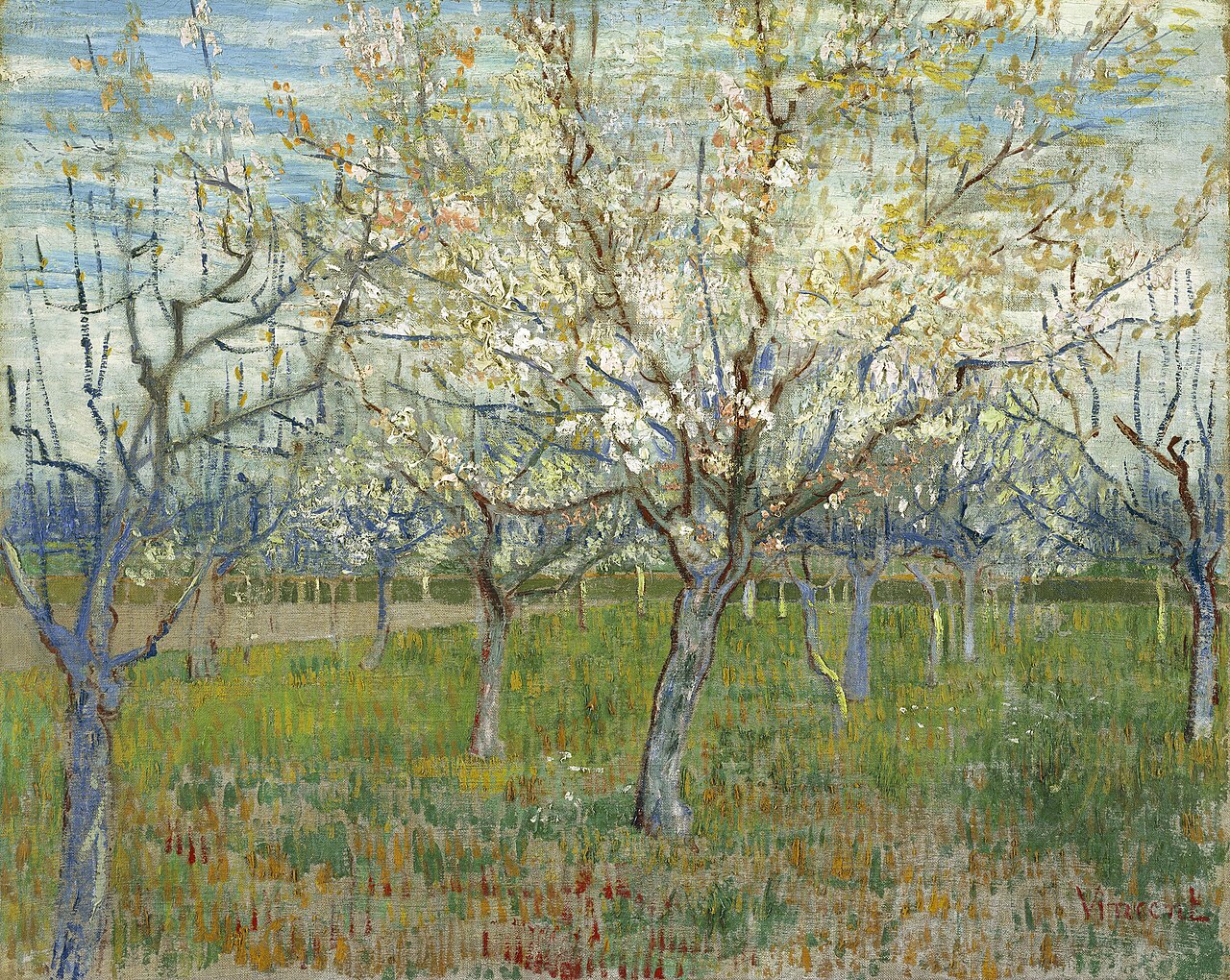
F403 The White Orchard 1888 -
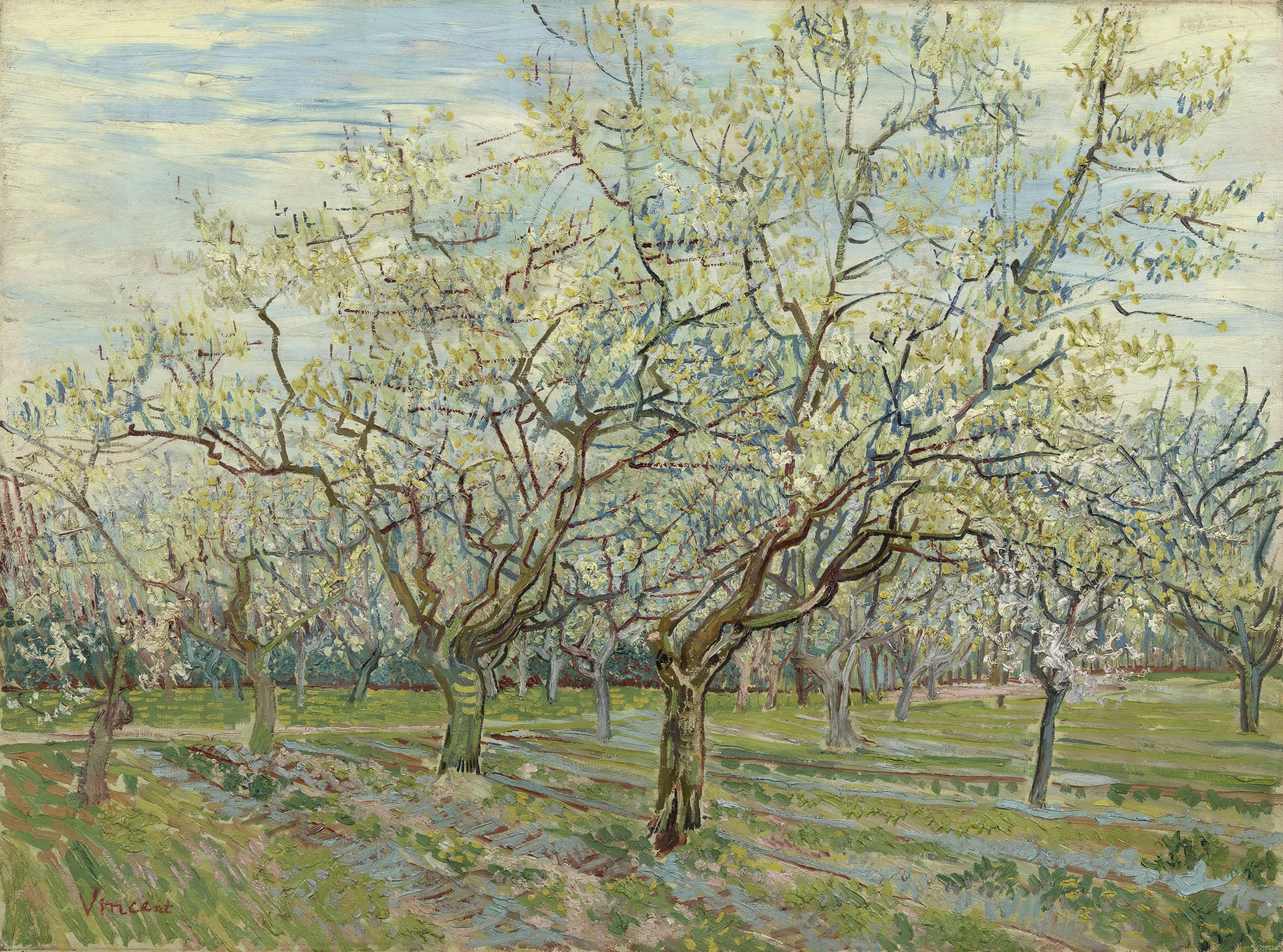
F555 The Pink Orchard 1888
Painting
The orchards were flowering before him. He painted trees around Arles while repeatedly thinking of the bright colour of Japanese prints. In March he compared the clear air and gay colour of this region with Japan.
Letter
In March he told Bernard that the air and colour here seemed as beautiful as Japan. In May he hoped other artists would come south and do here what Japanese artists had done at home. In June he told Theo that a longer stay would change one's vision: one would see with a more Japanese eye and feel colour differently.
Place
Arles, spring to early summer 1888. Orchards, stretches of water and strong light surrounded him. In a letter he named emerald and deep-blue water, pale-orange sunsets and fields made blue by that light when explaining his comparison with Japanese prints.
Events
- The Translator · Letter 587
To Bernard: the clear air and lively colour effects made this region seem as beautiful as Japan.
- The Translator · Letter 605
Hoped other artists would come south and do here what Japanese artists had done in their own country.
- The Ferocious Reader · Letter 614
Wanted to colour pen drawings with flat tints like Japanese prints.
- The Translator · Letter 620
Wrote that a longer stay in the south could make one see with a more Japanese eye and feel colour differently.
From the Letters
ayant promis de t’écrire je veux commencer par te dire que le pays me parait aussi beau que le Japon pour la limpidité de l’atmosphère et les effets de couleur gaie_ Having promised to write to you, I want to begin by telling you that this part of the world seems to me as beautiful as Japan for the clearness of the atmosphere and the gay colour effects.
Et puis j’espère que plus tard d’autres artistes surgiront dans ce beau pays. pour faire ici ce que les japonais ont fait chez eux_ Et travailler à cela c’est pas si mauvais_– And I hope that later on, other artists will emerge in this beautiful part of the country. To do here what the Japanese have done in their country. And working at that isn’t so bad.
Je voudrais que tu passas quelque temps ici/ tu sentirais la chose – au bout de quelque temps la vue change/ on voit avec un oeil plus Japonais/ on sent autrement la couleur_ I’d like you to spend some time here, you’d feel it — after some time your vision changes, you see with a more Japanese eye, you feel colour differently.
Letter Sources
Van Gogh letter records referenced on this page, linked to the Van Gogh Letters Project. vangoghletters.org