The Eliot Moment in Nuenen
Eliot made labourers no longer just a subject, but an ethics of seeing.
-
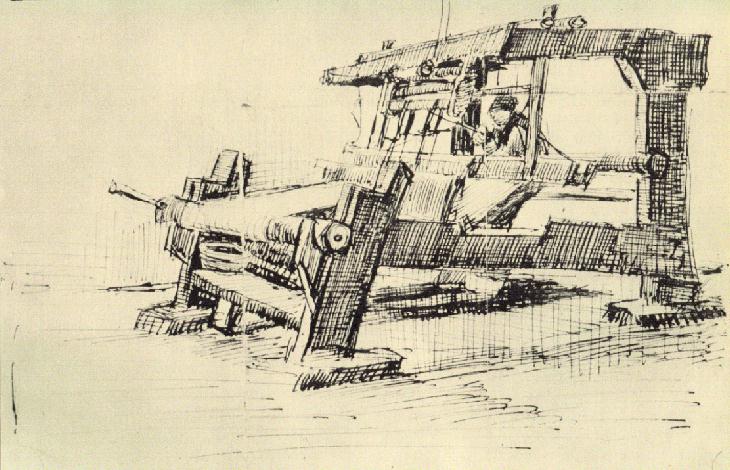
F1133 Weaver Facing Left 1884 -
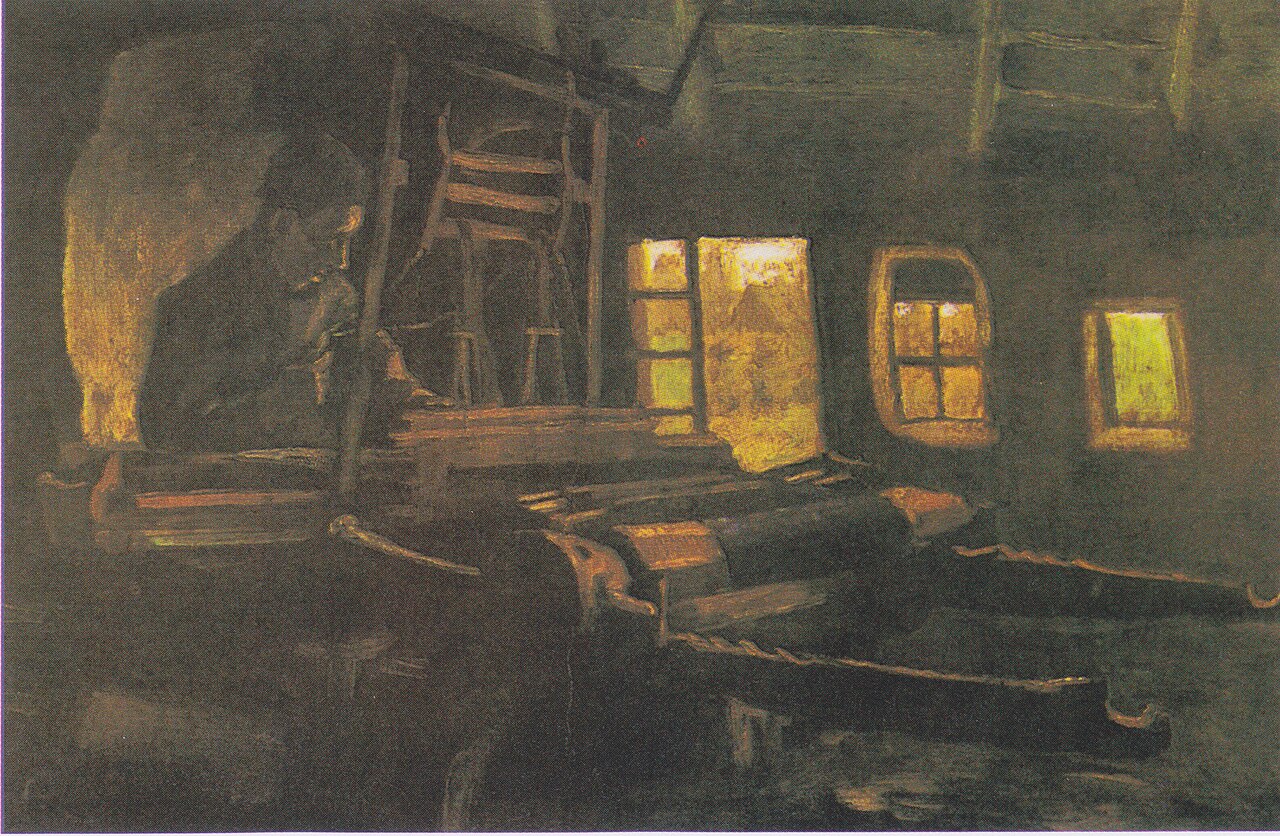
F1239 Weaver (interior with three windows) 1884
Painting
The Weavers series — four oil paintings, plus drawings and watercolours, more than twenty pieces in all. The loom is a black oak skeleton, vast, intricate, filling the room. The weaver sits in the middle, smaller than the machine. These paintings and the George Eliot he was reading belong to the same kind of attention: the dignity of labourers does not come from beautification, and does not depend on pity.
Letter
March 1884, Nuenen. He wrote: "After reading Adam Bede I dared to paint the weavers and peasants." Another letter: "George Eliot sees the worker as he really is." He placed Eliot's method and his own painting method side by side — Eliot writes workers, he paints workers; Eliot does not beautify, neither does he. This is a method: moving people at the bottom of society from the background to the centre.
Place
Nuenen, a Brabant village with home weaving workshops. Beside his father's parsonage stood the weavers' cottages — one room, one loom, one family. He sat in the corner for months; when his hands stiffened he would stand and stamp his feet. The loom creaked all day in the same rhythm.
Events
- The Ferocious Reader · Letter 432
Reading Zola's Germinal and George Eliot's Adam Bede. Two novels of working-class life on the desk at the same time
- The Ferocious Reader · Letter 432
'After reading Adam Bede I dared to paint the weavers and peasants.' The most direct self-statement of the ferocious reader talent
- Synaesthetic Precision · Letter 435
Described the loom: 'An old oak thing that has turned brown, with all kinds of scratches and stains in the wood.'
- The Ferocious Reader · Letter 433
'George Eliot sees the worker as he really is.' Placing Eliot's method and his own painting method side by side
From the Letters
Na het lezen van Adam Bede durfde ik de wevers en boeren te schilderen. After reading Adam Bede I dared to paint the weavers and peasants.
George Eliot ziet de arbeider zooals hij werkelijk is. George Eliot sees the worker as he really is.
Eliot beschrijft het leven van de wevers — en ik teken het. Het is dezelfde zaak. Eliot describes the life of the weavers — and I draw it. It is the same thing.
Een boek als Felix Holt geeft mij moed om door te gaan met de boerenfiguren. A book like Felix Holt gives me courage to continue with the peasant figures.
Wat Eliot doet met woorden — dat gevoel van het werkelijke — dat wil ik met kleur doen. What Eliot does with words — that feeling of the real — that is what I want to do with colour.
Ik lees 's avonds en overdag schilder ik — het een voedt het ander. I read in the evening and paint during the day — the one feeds the other.
Letter Sources
Van Gogh letter records referenced on this page, linked to the Van Gogh Letters Project. vangoghletters.org