The Paris Flower Studies
In Paris he used flowers to learn colour. The letters became sparse during those two years, but the paintings left a record in place of the silence.
-
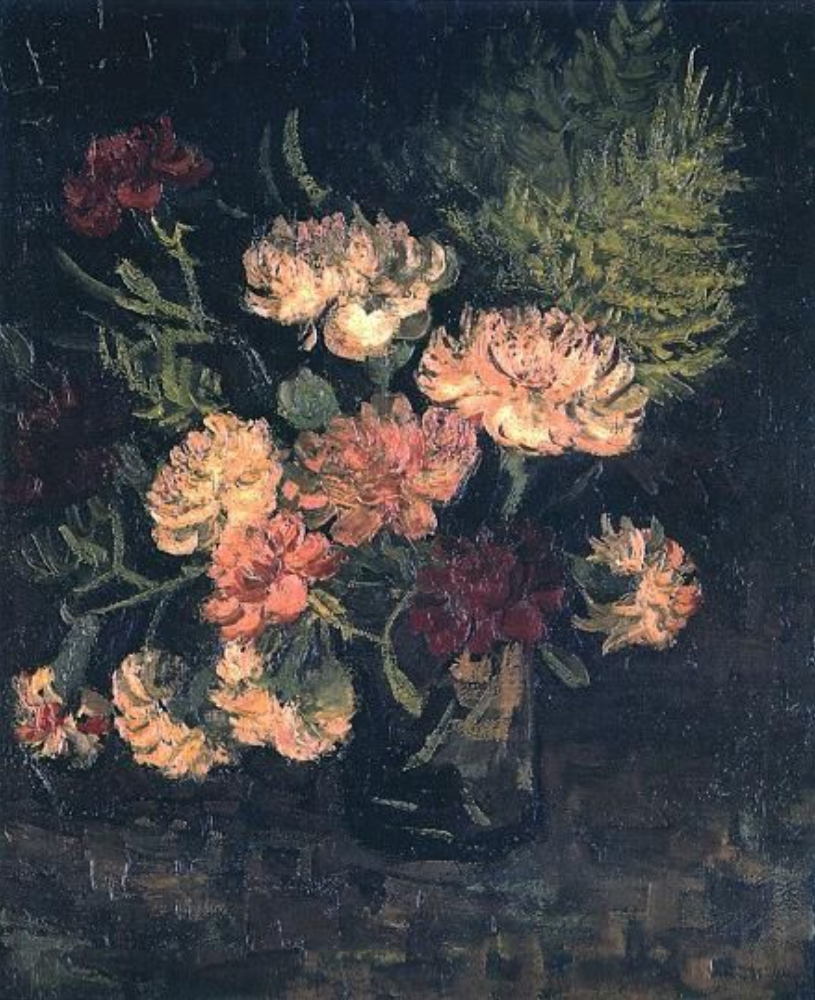
F243 Vase with Carnations 1886 -
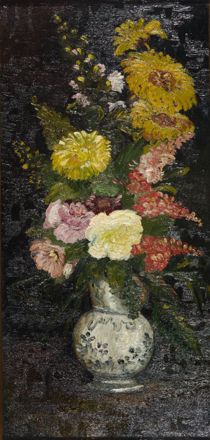
F286 Vase of Flowers 1886 -
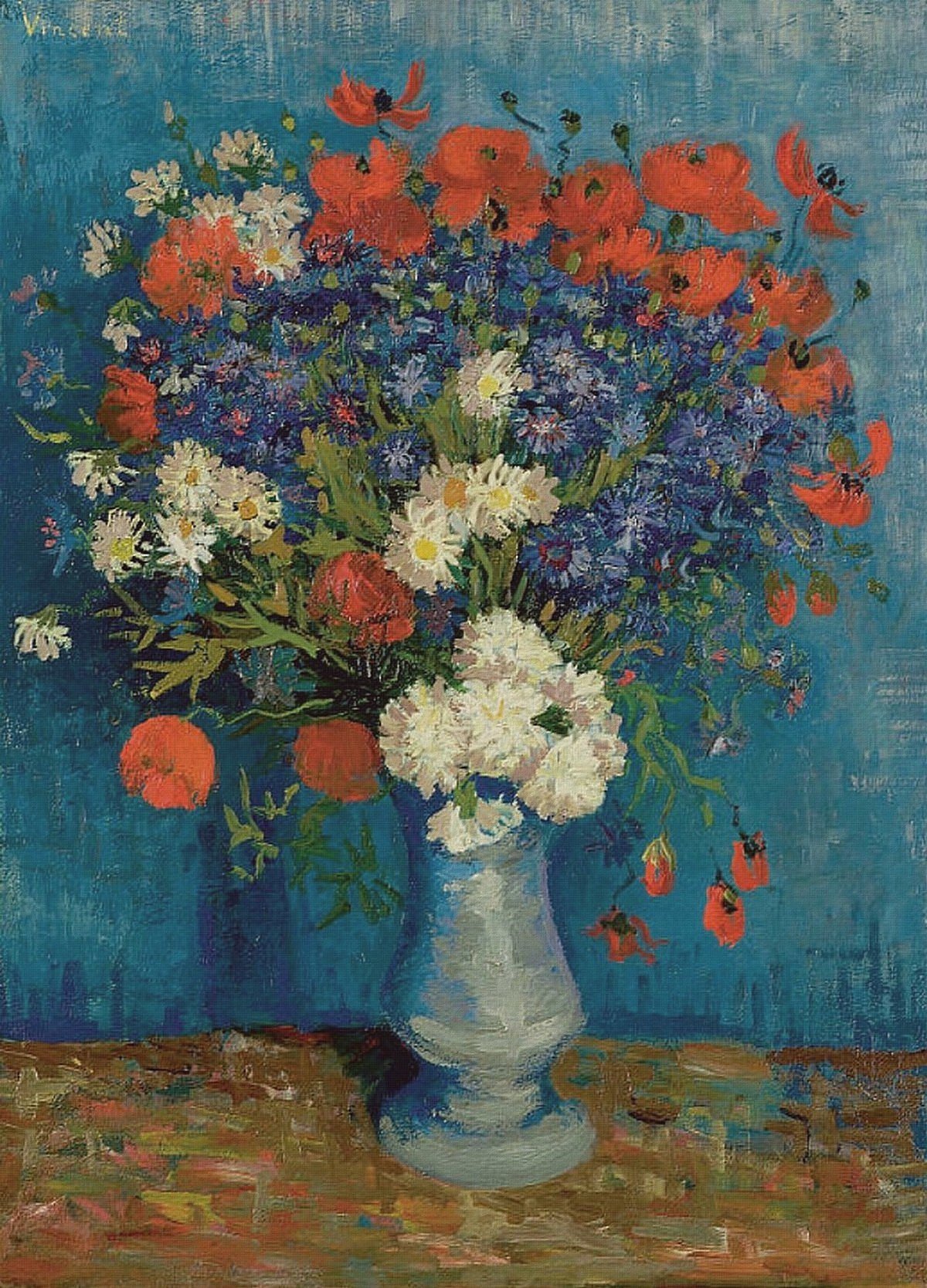
F324 Still life: vase with cornflowers and poppies 1887 -
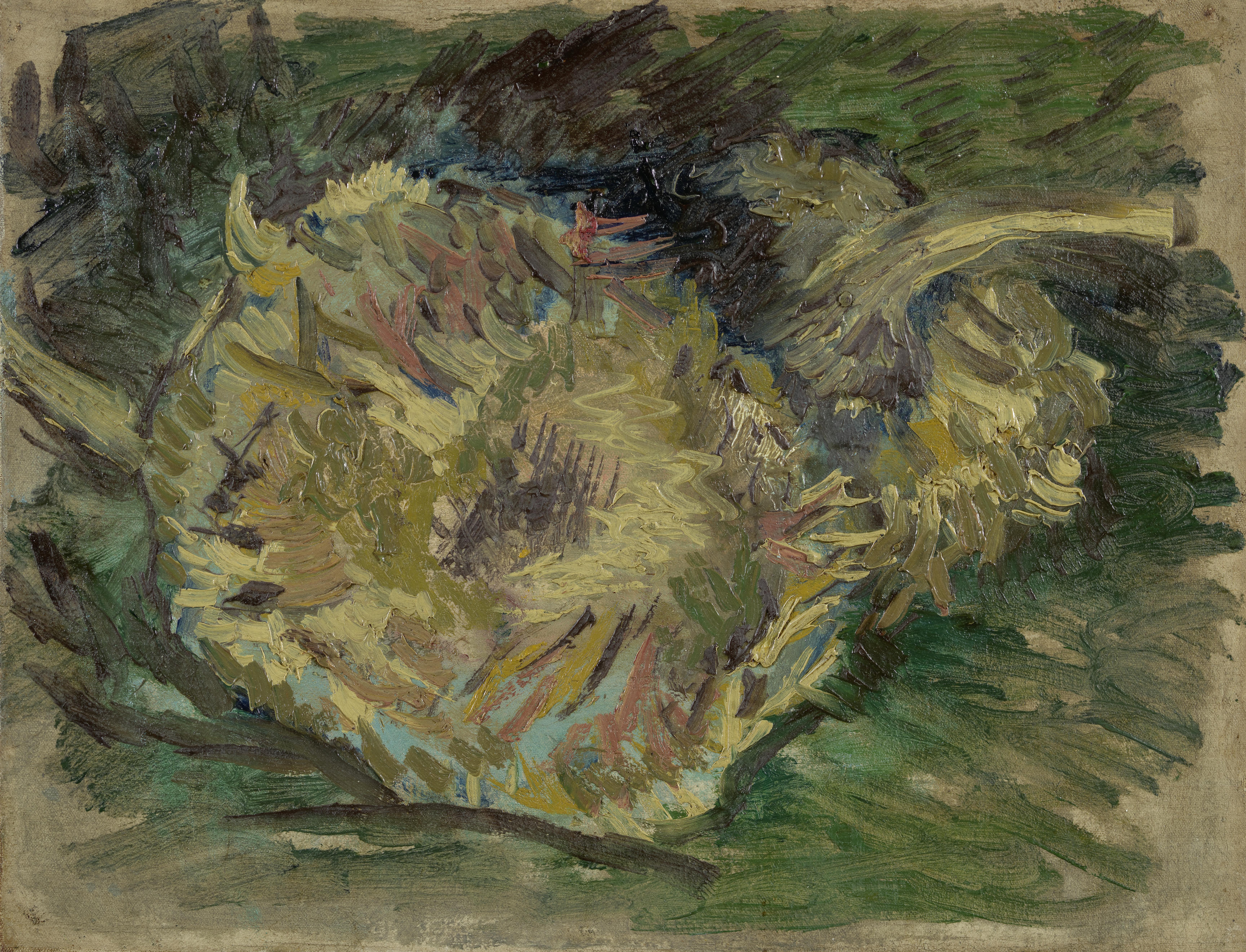
F377 Sunflowers Gone to Seed 1887 -
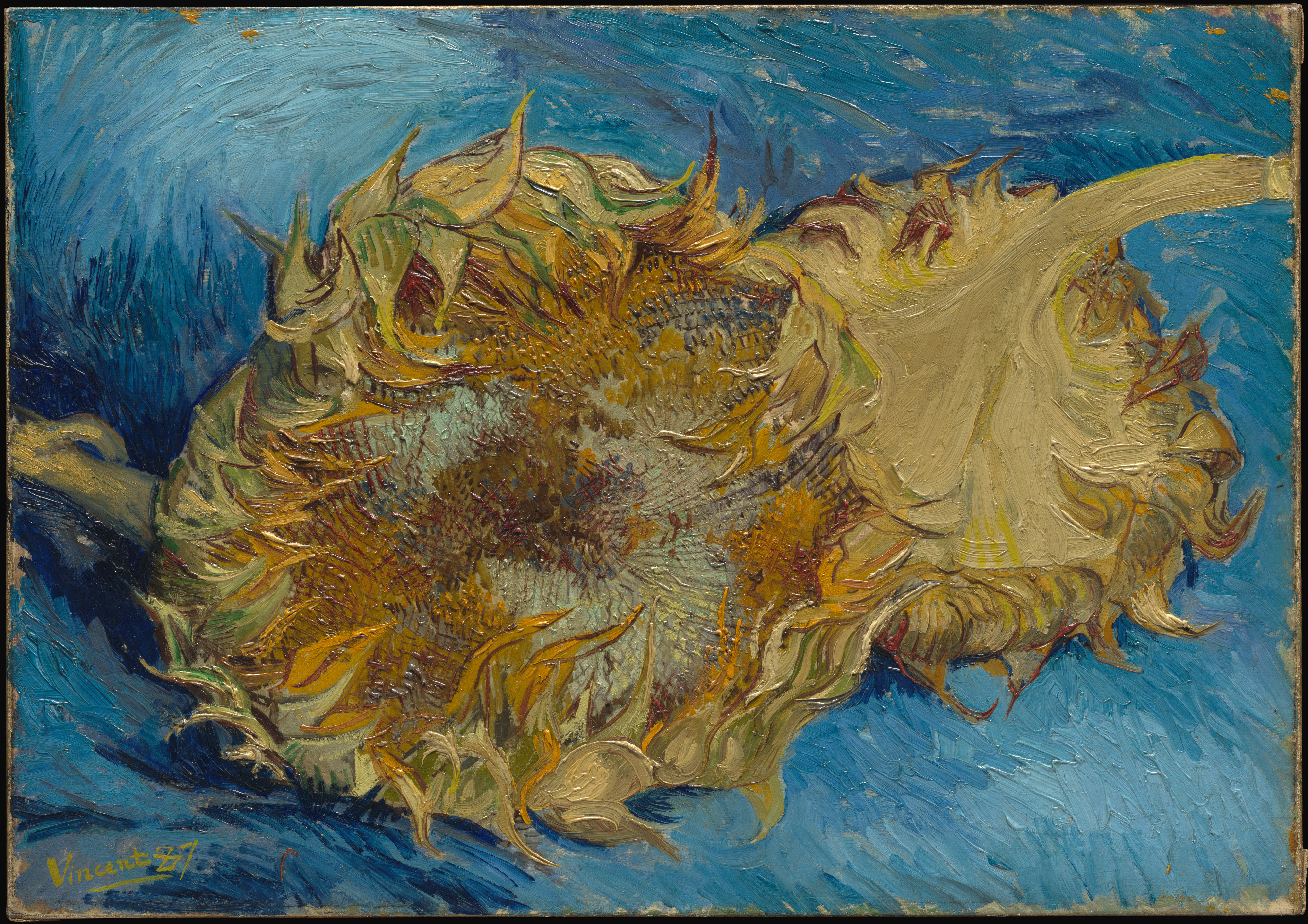
F375 Two Cut Sunflowers 1887 -
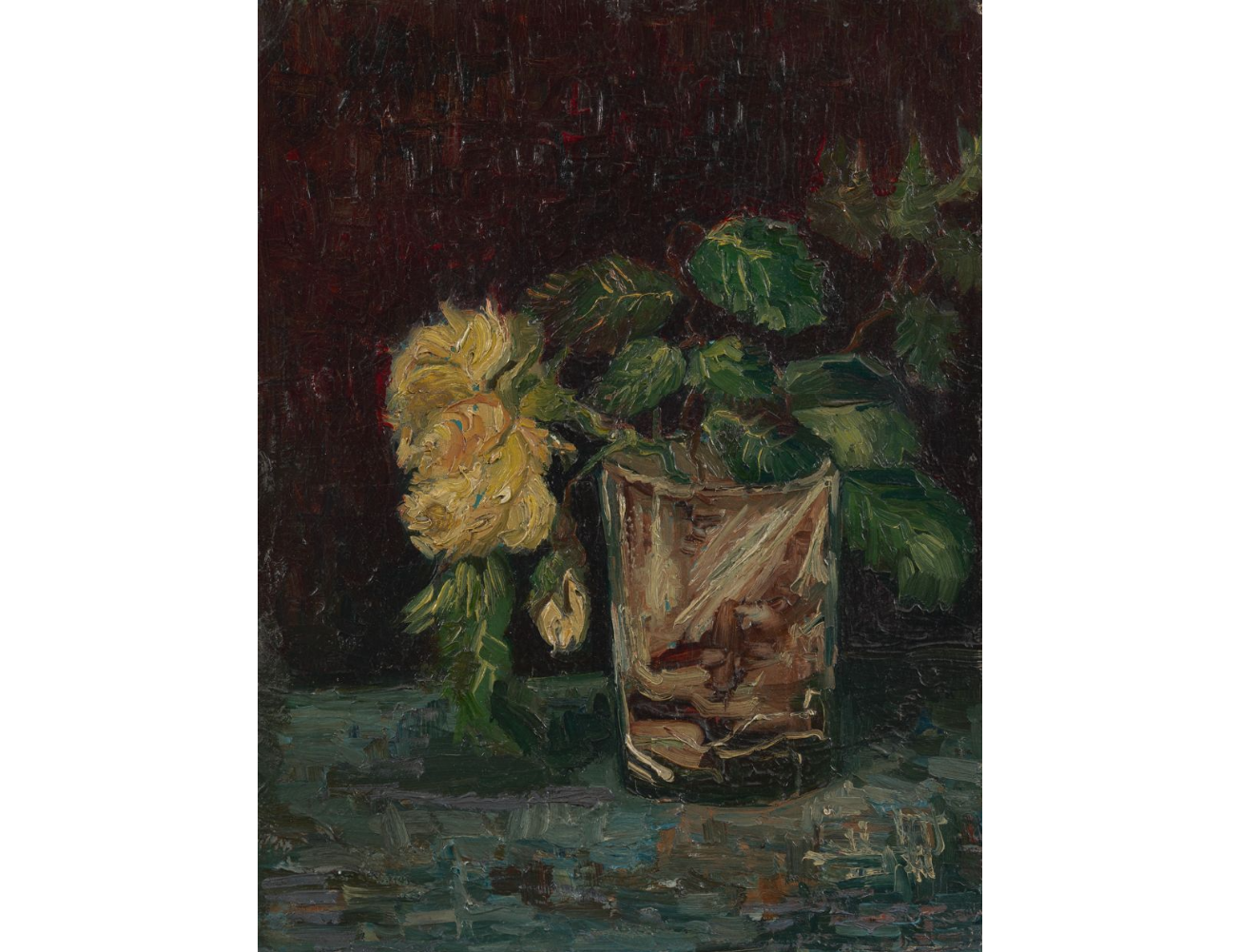
F218 Glass with Yellow Roses 1886 -
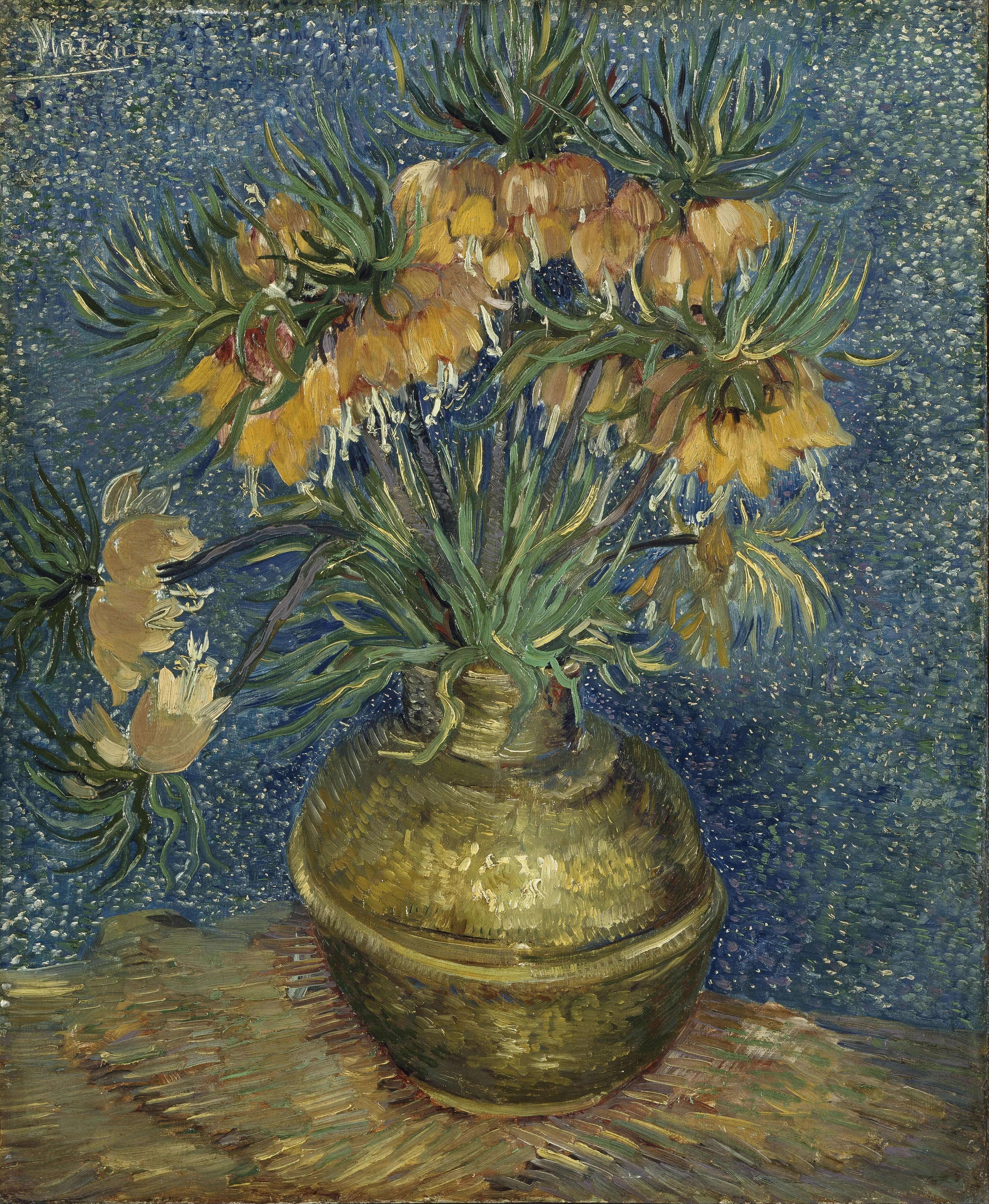
F213 Still life with fritillaries 1887
Painting
Spring 1886 to autumn 1887, more than thirty still lifes. Poppies, cornflowers, roses, gladioli, sunflowers gone to seed. The same bouquet painted again and again, each time with a different brush logic, a different colour rule. This is not "the Paris flower series" — it is thirty small experiments. The same poppy is dark red, earth brown, green leaf in the first canvas; by the twentieth it is vermilion, orange and bright yellow, the background gone from earth tone to neo-impressionist blue-violet dots. The flowers were a controllable sample — cheap, easy to come by, and they did not move. Where the shape stayed the same, the colour was rebuilt every time.
What this work changed: the Paris flowers turned colour training into repeated experiments. The bouquets stay related while backgrounds, edges, brushwork and colour relations change; colour gradually leaves the status of a fixed object property and becomes the force organizing the picture.
For these two years he temporarily set aside his earlier reliance on drawing and worked with short, semi-graphic strokes close to Neo-Impressionism. Flowers made the change repeatable: not a style label looking for a subject to prove it, but a way to practice how colour and brushwork could build a picture together.
Letter
When he moved into Theo's flat, the Antwerp darkness had not yet faded. Because the brothers lived together, this period does not leave the dense correspondence we can read from The Hague, Nuenen, or Arles; the evidence remains more in the paintings themselves and in scattered later recollections. In a letter to his sister Wil, he later mentioned that he had painted a great many flowers, trying to make the red redder and the blue bluer. There is no poetry in that sentence; it is closer to an experimental note. He was not proving inspiration, but training the eye's tolerance for colour.
Place
Paris, 54 rue Lepic in Montmartre at Theo's apartment, Cormon's atelier, the Seine bank at Asnières. He visited père Tanguy's paint shop, ran in and out of Bernard's, Lautrec's, Signac's circles. In summer 1887 he painted en plein air with Signac at Asnières, carrying the colour rules he had learned from the flower studies out into landscape. The two years in Paris did not leave the same quantity of self-explanation as Arles, but the pictures already say enough: when he left for Arles in February 1888, he was already a person working in another colour system.
Cormon's atelier gives this change a concrete social map: fellow pupils included Toulouse-Lautrec, Louis Anquetin and Émile Bernard, and in Paris he also came to know Gauguin. This was not a one-way apprenticeship, but a working environment in which a group of painters were testing colour, brushwork and modern urban subjects at once.
He went to Paris carrying the dark tones of Nuenen and the prints of Antwerp, squeezing in to live with Theo. He knew newer kinds of pictures were here, but his eye had not yet caught up.
He experimented with flower still lifes — buying cheap bouquets again and again, changing the colours, changing the brushwork. Back in the Nuenen years (letter 528, to Van Rappard, August 1885) he had already written that he kept doing the things he could not yet do, in order to learn them. In Paris, that sentence became an experiment carried out on bouquets.
He painted dozens; Theo's apartment grew smaller and smaller. During those two years the brothers lived together, so the letters became sparse; we cannot see much of the daily conversation, and can only read from the changes in the paintings how the eye was reloaded.
Events
- The Colour Experimenter
Arrived from Antwerp, moved into Theo's flat. Within the first week he was painting flower still lifes — flowers were cheap, easy to come by, and a controllable sample of colour
- The Translator
Brief study at Cormon's atelier, where he met Bernard and Lautrec. The Antwerp darkness began to be dispersed by Impressionism within a week — he did not resist, he translated
- The Colour Experimenter
Summer: concentrated flower studies — poppies, cornflowers, roses, sunflowers (the earlier Paris versions). The same bouquet painted again and again, each time under a different brush logic or colour rule
- The Colour Experimenter
Signac visited; the two discussed neo-impressionist colour theory. Vincent painted en plein air with Signac at Asnières — carrying the colour rules learned in the flower studies into landscape
- Synaesthetic Precision
30+ flower still lifes by the end of his time in Paris. No single monument here — the optic nerve had been thoroughly rewired. By the time he left for Arles, he was working in a different colour system
- The Colour Experimenter
The Paris sunflowers: cut heads, already gone to seed, lie across the picture. The problem is not vase decoration but the flowers’ weight, colour, and state of decline.
Letter Sources
Van Gogh letter records referenced on this page, linked to the Van Gogh Letters Project. vangoghletters.org
Essays
Long-form reading connected to this node.
- Painting for Painting With almost no cash market in Paris, Van Gogh's work circulated by barter: a self-portrait for a portrait of Bernard's grandmother, two sunflower still lifes for one landscape, oil studies for about a hundred Japanese prints, herring still lifes for a carpet. The rates were recorded, so his standing can be measured. Open essay
- How the Canvas Participates Canvas, cardboard, grounds and reused supports shaped the way Paris works were seen, made and dated. Open essay
- How Paris Paintings Are Dated Paris works are dated by converging clues: letters, seasons, locations, supports, pigments and continuity of touch. Open essay
- From Realism to Modernism Van Gogh's turn was not a sudden change of style, but a continuous chain from peasant subjects and Antwerp training to Rubens, Japanese prints and Parisian colour. Open essay
- Time, the Collaborator The violet ink of Montmajour has faded almost to nothing, the blue Paris paper has turned a dirty yellow, the pink of the peach blossoms has evaporated into white specks. A hundred and thirty years of light and oxidation keep rewriting these drawings — and some of the rewriting, strangely, lets us see his working method for the first time. Open essay