Still Life with Bible: moment and letters
No surviving letter explains why the two books are set side by side.
-
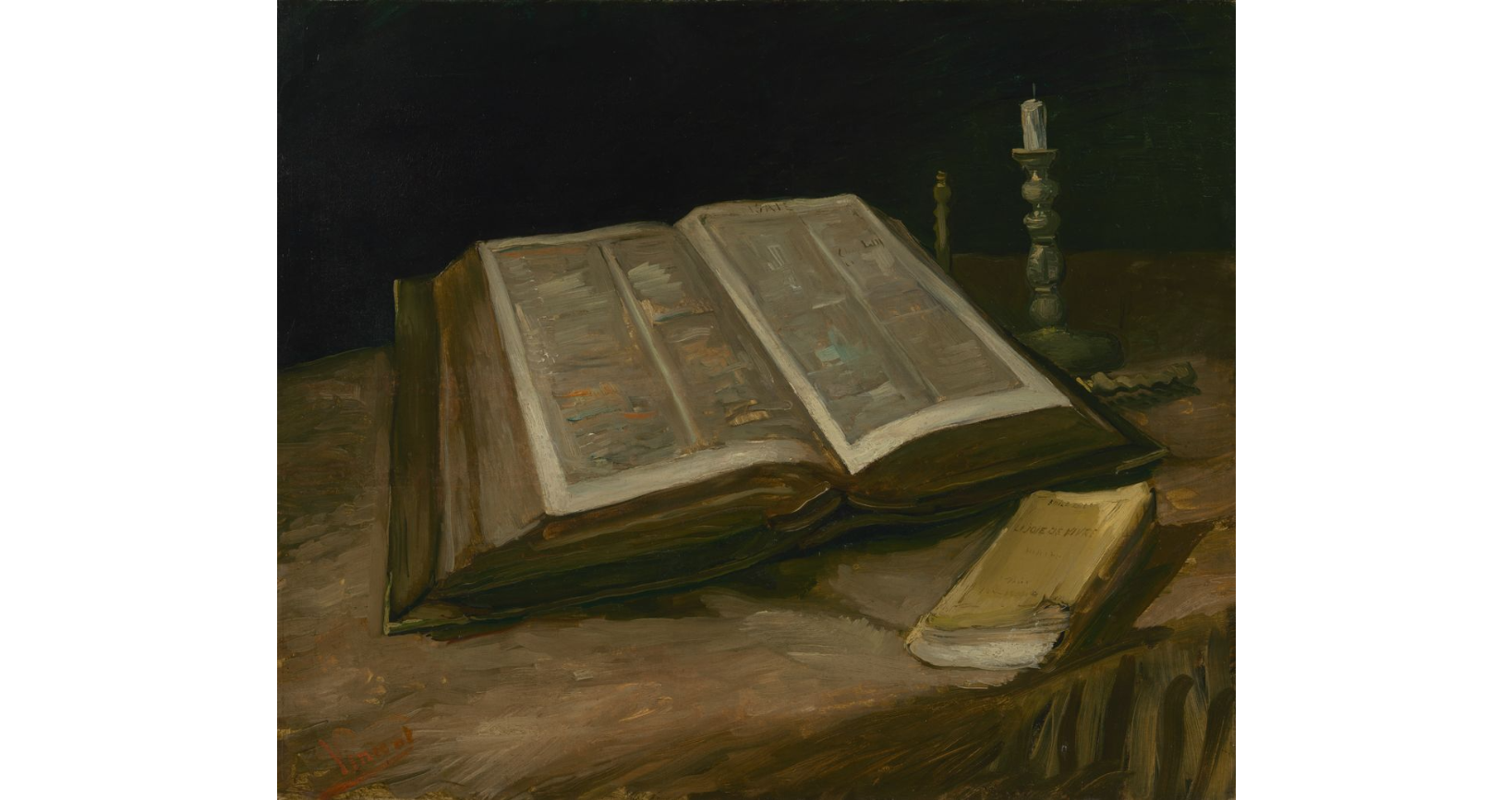
F117 Still Life with Bible 1885
In March 1885 his father died suddenly. His relationship with his father had not been smooth, but not smooth does not mean without attachment; death does not automatically complete reconciliation for them.
He painted his father's Bible on a table, with Zola's La Joie de vivre beside it. Van Gogh was a committed reader of Zola; no surviving letter is known to explain this particular arrangement.
A few months later he left Nuenen for Antwerp, and then for Paris. The painting belongs to the last stretch of his Nuenen period.
Events
- The Ferocious Reader · Letter 536
His father Theodorus died suddenly. Family religion, father-son conflict and unfinished reconciliation pressed together, forming the heaviest background layer of the late Nuenen period
- The Ferocious Reader · Letter 536
He painted his father's large Bible with Zola's La Joie de vivre beside it. On one table sit inherited faith and his own modern reading
- The Colour Experimenter · Letter 537
The painting remains in the dark Nuenen register: black tabletop, heavy pages, yellow-brown light. Colour serves not brightness, but conflict and silence
- The Translator
He left no clear explanation for the painting. Still life works here as translation: an unsayable family position converted into relations between objects
- The Ferocious Reader
A few months later he left Nuenen for Antwerp and then Paris. Still Life with Bible reads like a closure: the old faith is not argued down; it is placed behind him
Letter Sources
Van Gogh letter records referenced on this page, linked to the Van Gogh Letters Project. vangoghletters.org
Essays
Long-form reading connected to this node.