Period I
Drawing as Salvation
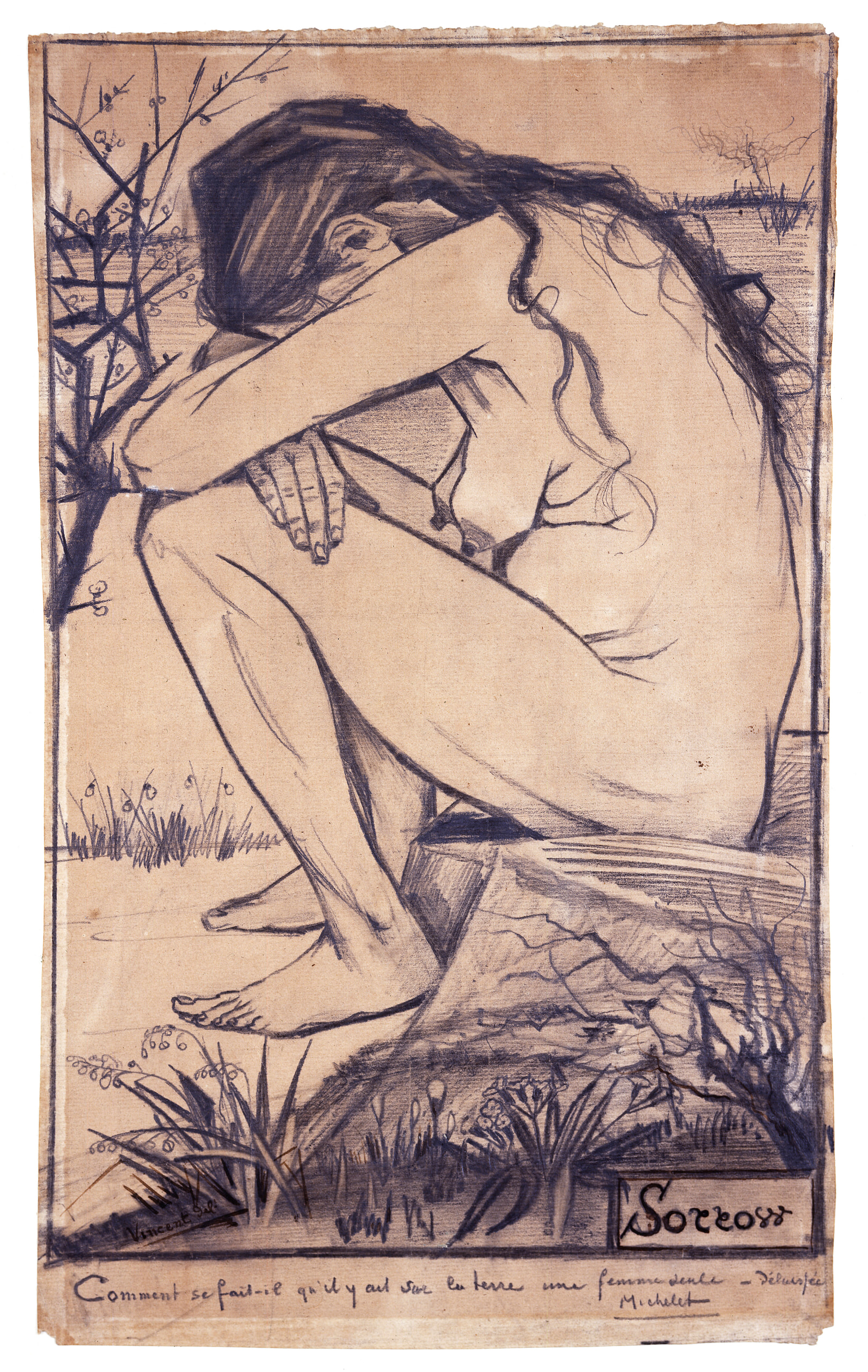
1880.08 - 1883.12 · Etten / The Hague / Drenthe Charcoal and pencil. Oil paint has not yet arrived.Before 1880, he had barely drawn seriously. He had worked at Goupil, tried to become a minister, and failed as a preacher in Borinage.
Then came nearly a year of silence. He had no income, no profession, no mission. In August 1880 he wrote to Theo: “I’ll take up my pencil again.”
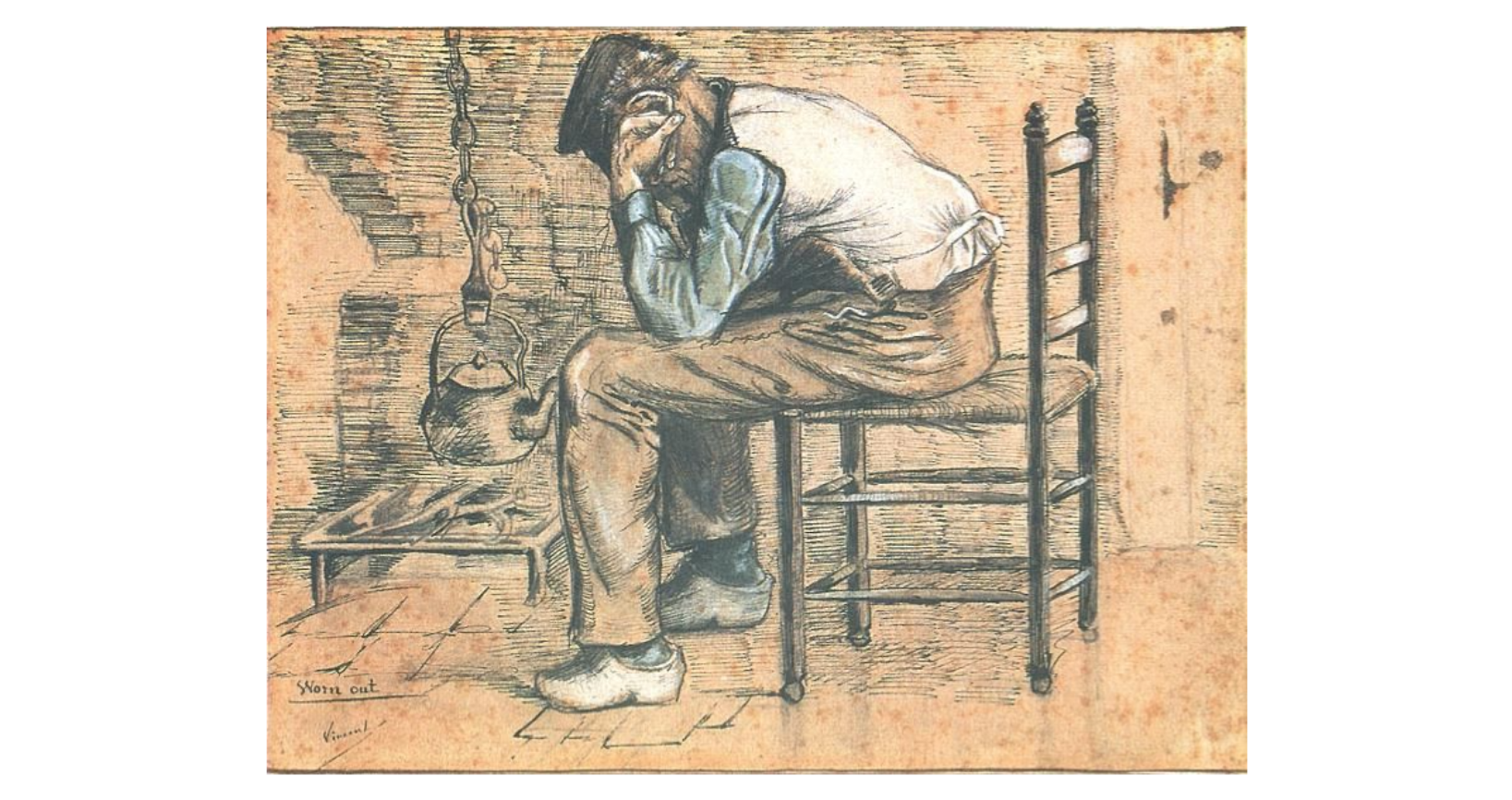
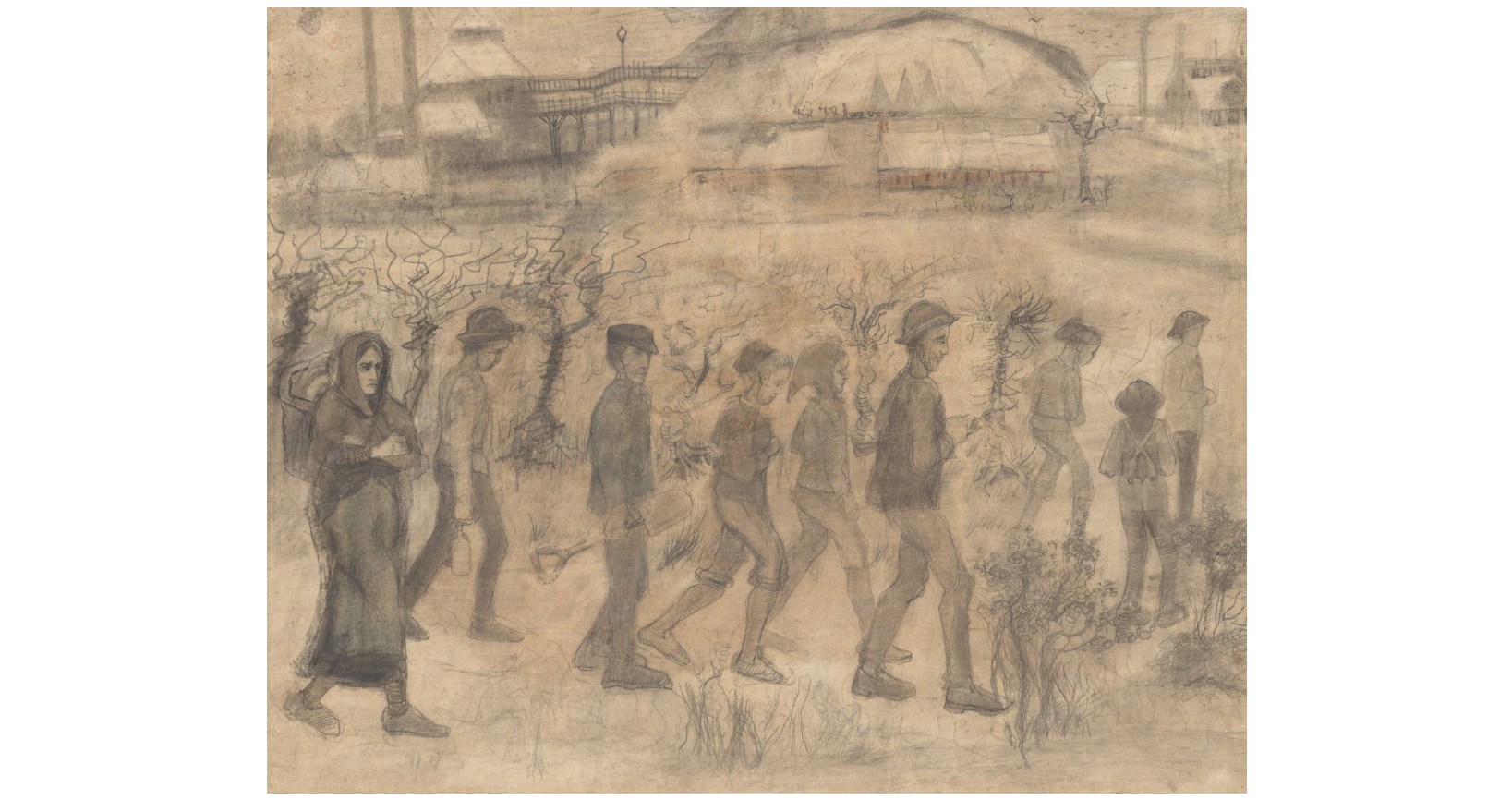
The first people he drew were miners, peasants and weavers, the same people he had tried to save as a preacher. The pulpit became the canvas.
Materials
- Pencil, charcoal, lithographic crayon
- Reed pen and ink, occasional watercolour
- Very little oil paint
Form
- Hard, closed contours with little breathing room
- Modelling by mass rather than light
- Stiff figures and uncertain foreshortening
Format
- Small works, mostly on paper
- Cheap drawing paper or rough packing paper
Causes
Age He began formal drawing at twenty-seven.
Failure The Borinage preaching failure turned saving souls into drawing workers.
Textbook He systematically copied all sixty Bargue plates.
Person Anton Mauve briefly taught him oil painting in The Hague.
Representative works · Material Evidence
Key letters
letter 158 · 1880-09-24 The start of the painter identity: taking up the pencil again.
letter 254 · 1882.08 A detailed description and sketch of the perspective frame.
Back to the breath line
On the breath line, this period corresponds to the silent knots of decision:
With material eyes, “becoming a painter” is not inspiration. It is systematic labour after every other door closed.