The Hague and Sien
In 1882, Van Gogh prepared a home with a cradle for Sien and her children; in autumn 1883, they agreed to separate.
-
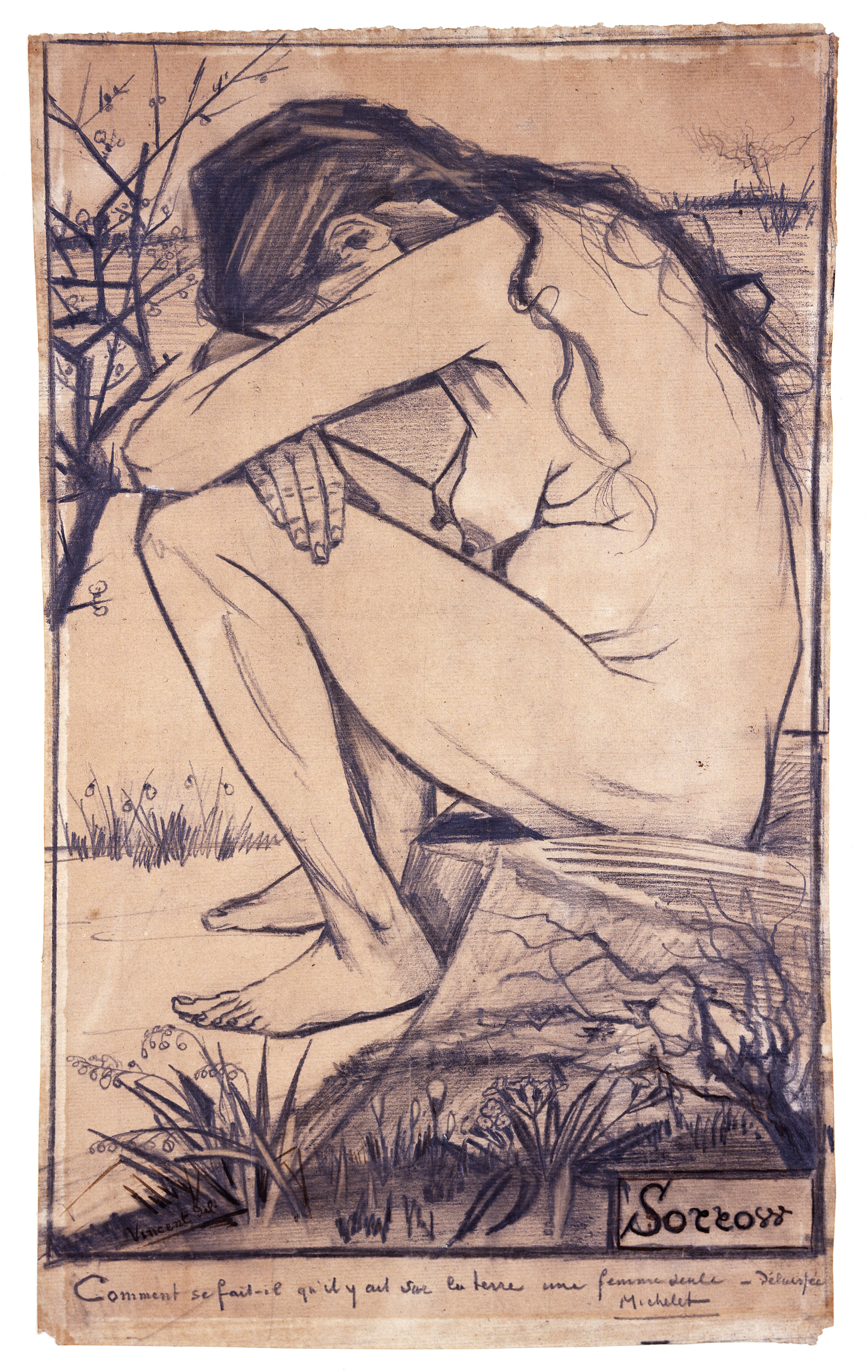
F929a Sorrow 1882
In the winter of 1882, Van Gogh met Sien Hoornik in The Hague. Pregnant and raising a child, she was earning her living on the streets. He asked her to model and worked with her throughout the winter.
He wrote to Theo that he intended to marry Sien. Theo advised against it; Vincent proposed delaying a civil marriage until he could support himself by selling his work. In summer he furnished an upstairs home: a studio for himself, a wicker chair for Sien and a cradle for the newborn child. In his letter he called these rooms a home.
In September 1883 he told Theo that, after a long talk, he and Sien had agreed to separate for a while or for good. Living together, he said, made both their situations harder: she had the children to care for, and he needed to work and go to Drenthe. Days later, he was still writing of his attachment to her and the children.
Events
- Letter 228
As he later told Theo, he met Sien, who was pregnant and earning a living on the winter streets, around the end of January.
- Synaesthetic Precision · Letter 216
He sent Theo a version of Sorrow, used a line from Michelet's L'oiseau to describe the feeling he sought in it, and said he wanted to make around thirty nude studies.
- Letter 224
He told Theo that a conversation with Mauve had ended in a break, and in the same letter described how the pregnant Sien had modelled for him throughout the winter.
- Letter 226
He wrote to Theo that his work lay among the people and that he had to delve into life; he also said he intended to marry Sien.
- Letter 245
He described the upstairs home at Schenkweg 136: a studio and attic, a wicker chair for Sien and a small cradle for the baby, ready for her return from the maternity hospital in Leiden.
- The Ferocious Reader · Letter 245
At the end of the same letter, he said he was reading Zola's Le ventre de Paris.
- Letter 248
He told Theo he still wanted to marry Sien, recalled Theo's advice against it, and proposed postponing a civil marriage until he could support himself by selling his work.
- Synaesthetic Precision · Letter 254
He brought back a perspective frame from the blacksmith, with iron spikes on its two long legs and a frame that could be set horizontally or vertically; the beach or meadow appeared through it as through a window.
- The Colour Experimenter · Letter 259
He told Theo he had brought back two small painted seascapes from Scheveningen; windblown sand entered the wet paint, and he had to scrape off and repaint the second one twice.
- Letter 380
He told Theo that after a long talk, he and Sien had agreed to separate for a while or for good: both were in difficulty, living together made it worse, she had her children and he had his work and a plan to go to Drenthe.
From the Letters
Ik heb dezen winter ontmoet eene zwangere vrouw/ verlaten door den man wiens kind zij in t’lijf droeg. Eene zwangere vrouw die in den winter op straat zwierf – haar brood moest verdienen/ gij weet wel hoe.– Ik heb die vrouw genomen voor model en met haar gewerkt den heelen winter_ This winter I met a pregnant woman, abandoned by the man whose child she was carrying. A pregnant woman who roamed the streets in winter – who had to earn her bread, you can imagine how. I took that woman as a model and worked with her the whole winter.
Ik gevoel dat mijn werk in ’t hart van ’t volk ligt, dat ik mij laag bij den weg moet houden, dat ik diep in ’t leven moet ingrijpen en door veel zorg en moeite moet vooruitkomen. I feel that my work lies in the heart of the people, that I must keep close to the ground, that I must delve deeply into life and must get ahead by coping with great cares and difficulties.
Letter Sources
Van Gogh letter records referenced on this page, linked to the Van Gogh Letters Project. vangoghletters.org