The Zola Summer in Arles
In Arles he held the people around him against the novels he had read. The inhabitants recalled Zola’s characters; Daudet’s cheerful south was harder to find.
-
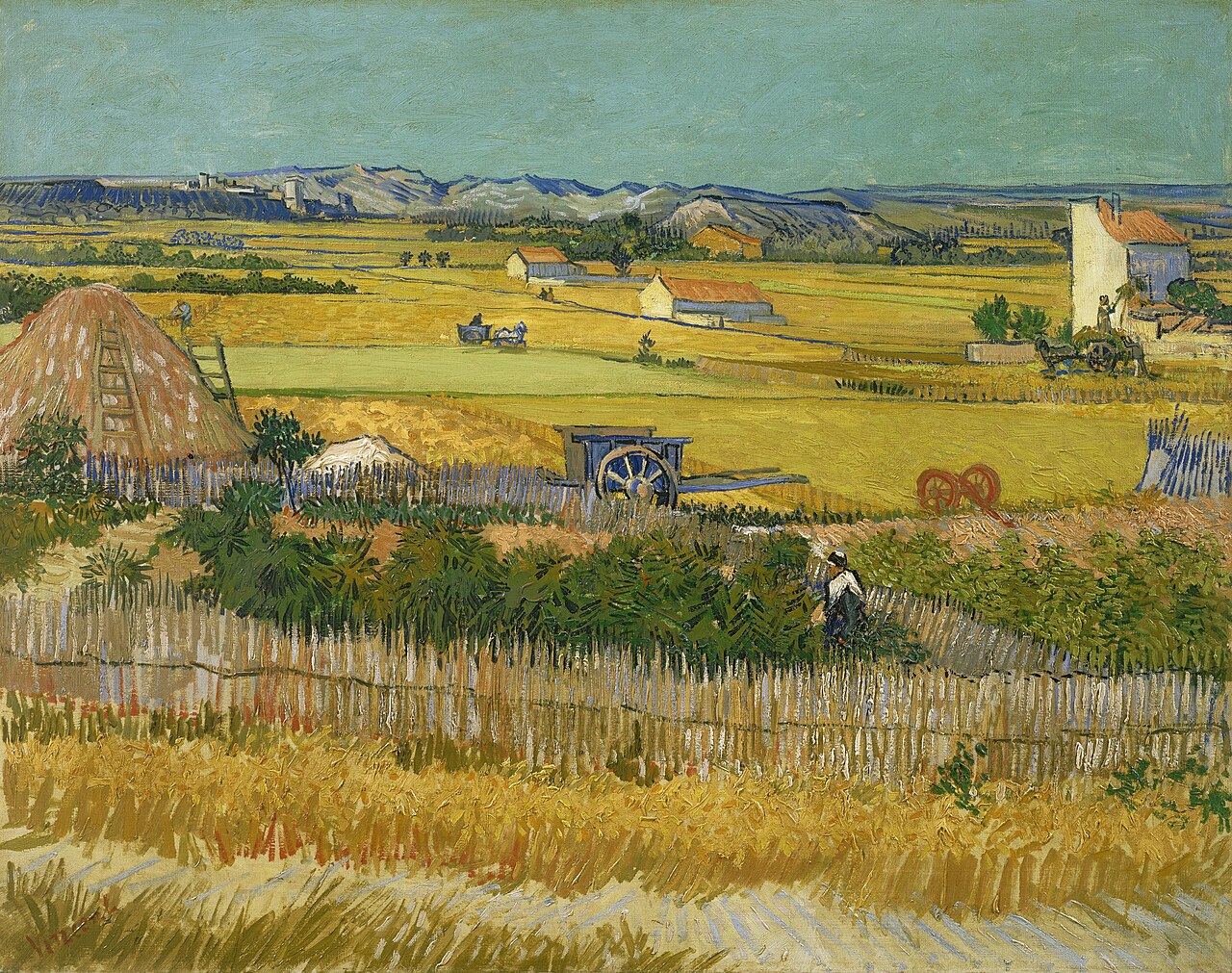
F412 Harvest at La Crau 1888 -
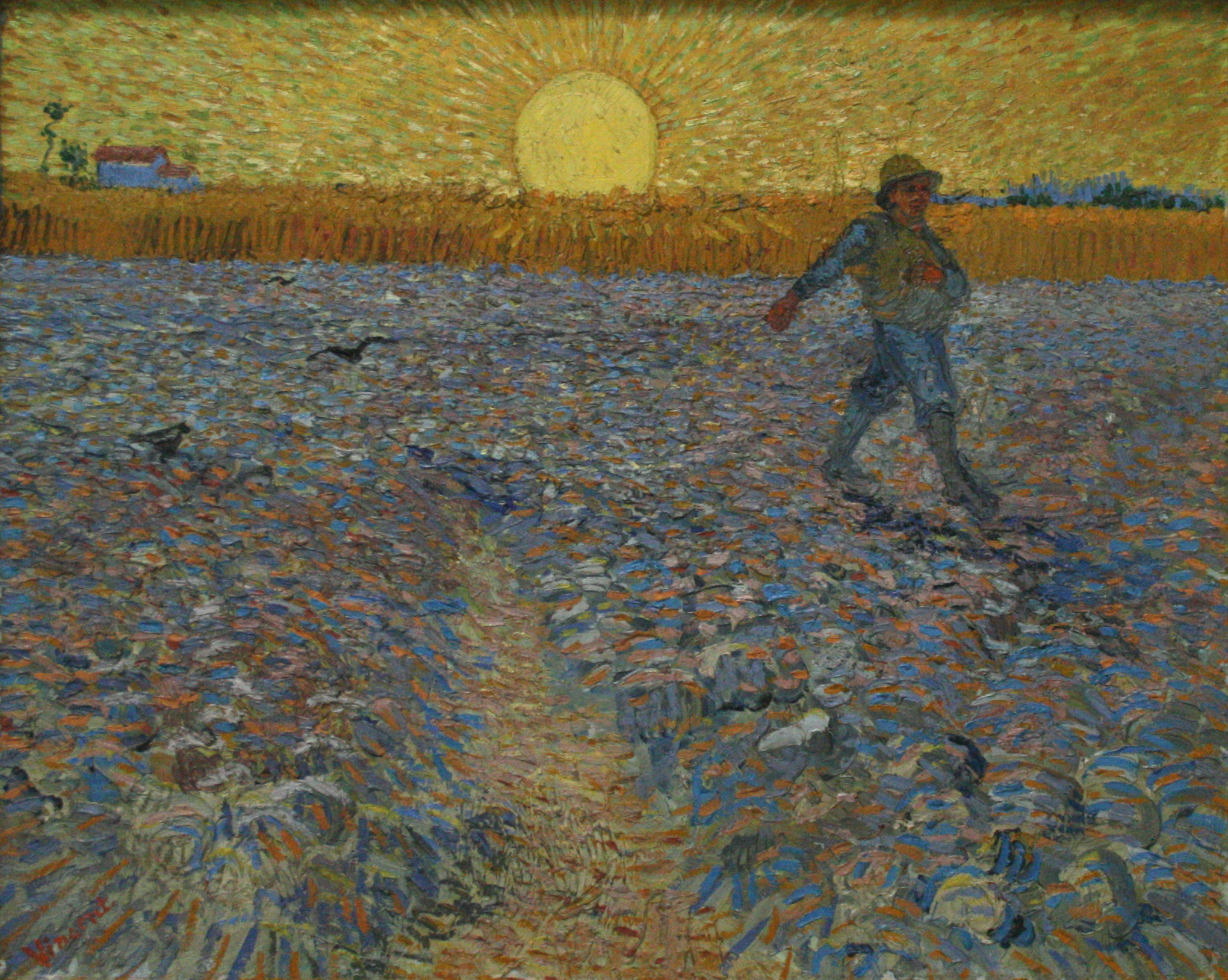
F422 The Sower 1888
Painting
Harvest at La Crau and The Sower were painted that summer. They show fields, labour and intense light. In the same months his letters repeatedly compared the people and places of Arles with literature. The paintings and the reading ran alongside each other.
Letter
In June he told Russell that the inhabitants reminded him of figures in Zola. To Bernard he wrote that he could not find the southern gaiety described by Daudet, though the region was beautiful. In August he still felt Zola and Voltaire everywhere.
Place
Streets, a park and the old garden at Montmajour each acquired a literary echo in his letters. A magistrate recalled Daudet; the garden recalled Zola’s Paradou. What he saw could also correct what a book had led him to expect.
Events
- The Ferocious Reader · Letter 622
A black-clad magistrate in the park reminded him of a figure in Daudet; he imagined painting him in simplified colour.
- The Ferocious Reader · Letter 624
He wrote that Cézanne, like Zola, belonged to this region and knew it well.
- The Ferocious Reader · Letter 627
To Russell he wrote that local inhabitants often reminded him of Zola’s characters.
- The Ferocious Reader · Letter 630
He did not find Daudet’s southern gaiety here, though he still found the region beautiful.
- The Ferocious Reader · Letter 638
An old garden at Montmajour brought Zola’s Paradou to mind.
- The Ferocious Reader · Letter 650
He described local smallholders as figures from Zola.
- The Ferocious Reader · Letter 657
He wrote that Zola and Voltaire could be felt everywhere in Arles.
From the Letters
The actual inhabitants of this country often remind me of the figures we see in Zola’s work. And Manet would like them as they are and the city as it is. On sent Zola et Voltaire partout involontairement_ C’est si vivant! You can’t help feeling Zola and Voltaire everywhere. It’s so full of life!
Letter Sources
Van Gogh letter records referenced on this page, linked to the Van Gogh Letters Project. vangoghletters.org
Technique Evidence
This work appears as evidence in this site’s technique-evolution axis.
- The Shattering Stroke 1888.02 – 1889.05 Open period F422 / JH1470 The Sower Brushstroke Representative of directional brushwork
- The World in Motion 1889.05 – 1890.05 Open period F689 / JH1837 Sower (after Millet)