Period III
The Practice of Colour
1886.03 - 1888.02 · Paris The palette cracked open by Impressionism and Pointillism.In Paris, he and Theo covered the walls with Japanese prints. Ukiyo-e offered a different way of seeing: line and flat colour instead of shadow.
Through Signac and Seurat he tested divisionist colour. Pointillism was too cold for him, but complementary structure remained.
He painted himself more than thirty times. Each self-portrait was a test: orange against blue, green against red, face as experiment.
Palette
- Chrome yellow, cobalt blue, emerald green, vermilion
- Complementary contrasts become systematic
- Black nearly disappears from the palette
Brushwork
- Broken colour and small strokes
- Divisionism is tested, then loosened
- Self-portraits become technical experiments
Space
- Japanese prints flatten the picture plane
- Strong outlines and cropped compositions
- Shadow yields to colour relation
Causes
City Paris exposed him to Impressionism, Neo-Impressionism and dealers.
Brother Living with Theo removed the need for letters and filled the walls with art.
Japan Ukiyo-e broke open European perspective.
Poverty With no money for models, he used his own face as a laboratory.
Representative works · Material Evidence
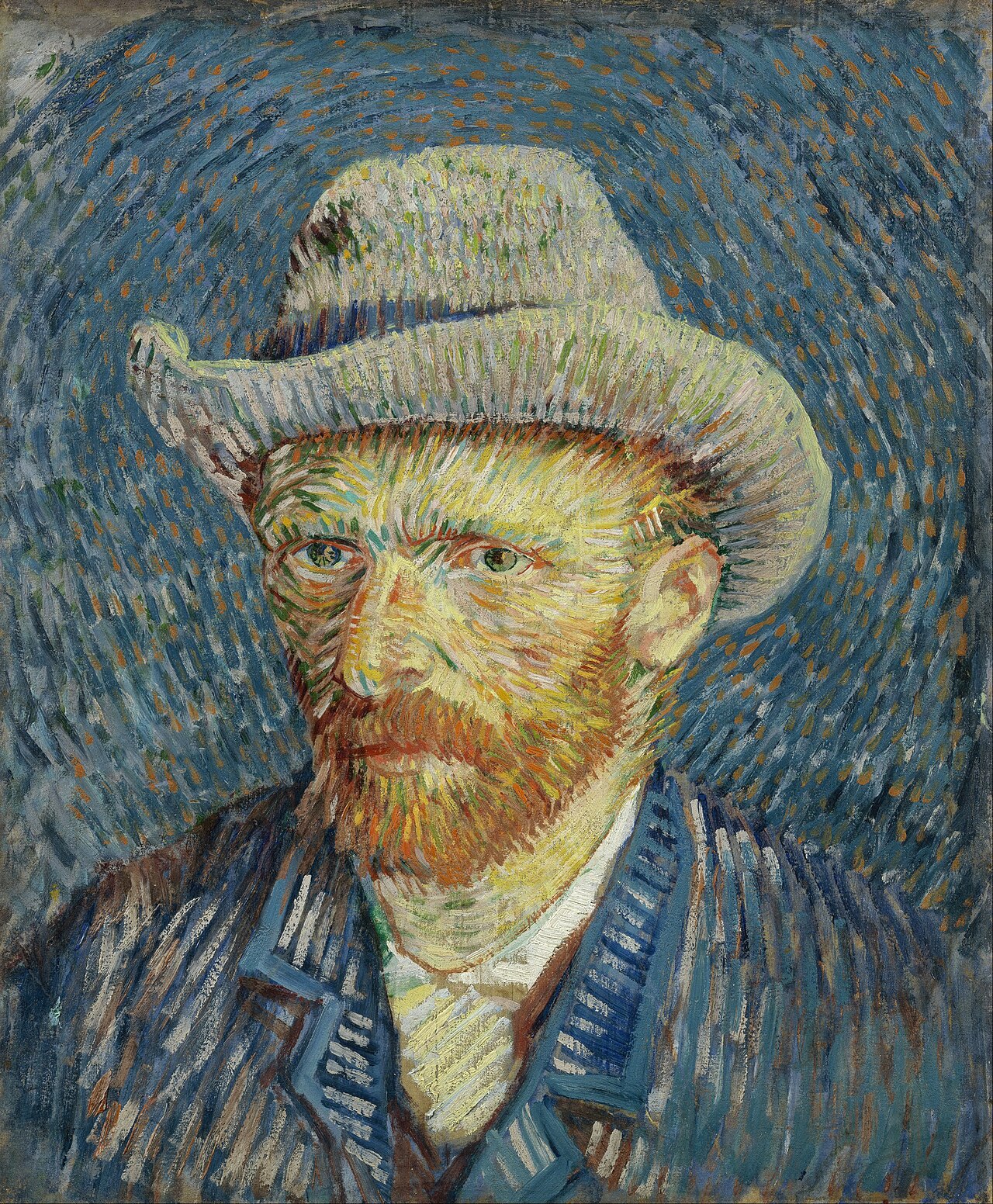 Self-Portrait with Felt Hat F344 / JH1353 · 1887-88 The face becomes a colour experiment.
 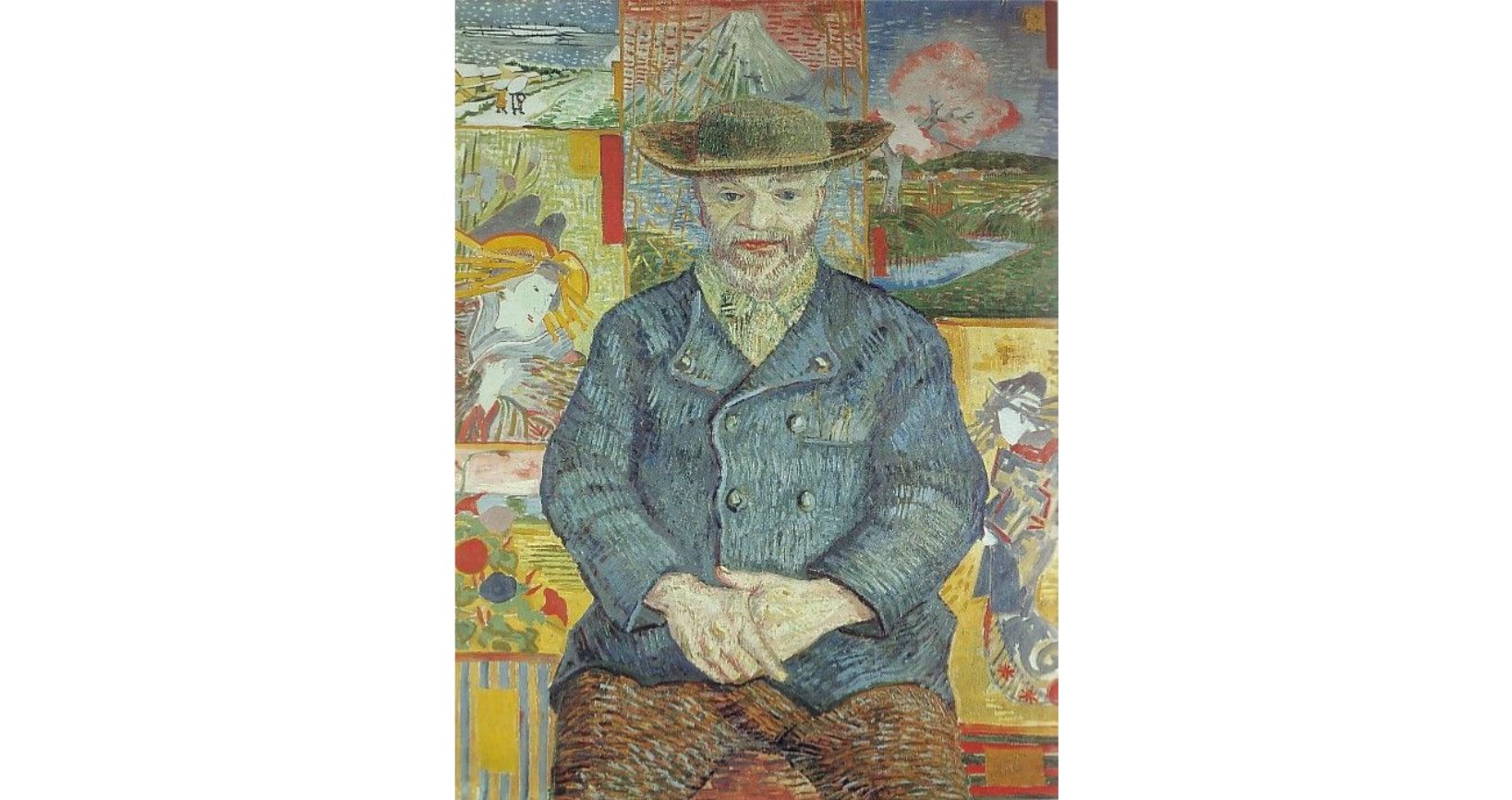 Père Tanguy F363 / JH1351 · 1887 A Japanese-print world rebuilt inside Paris.
 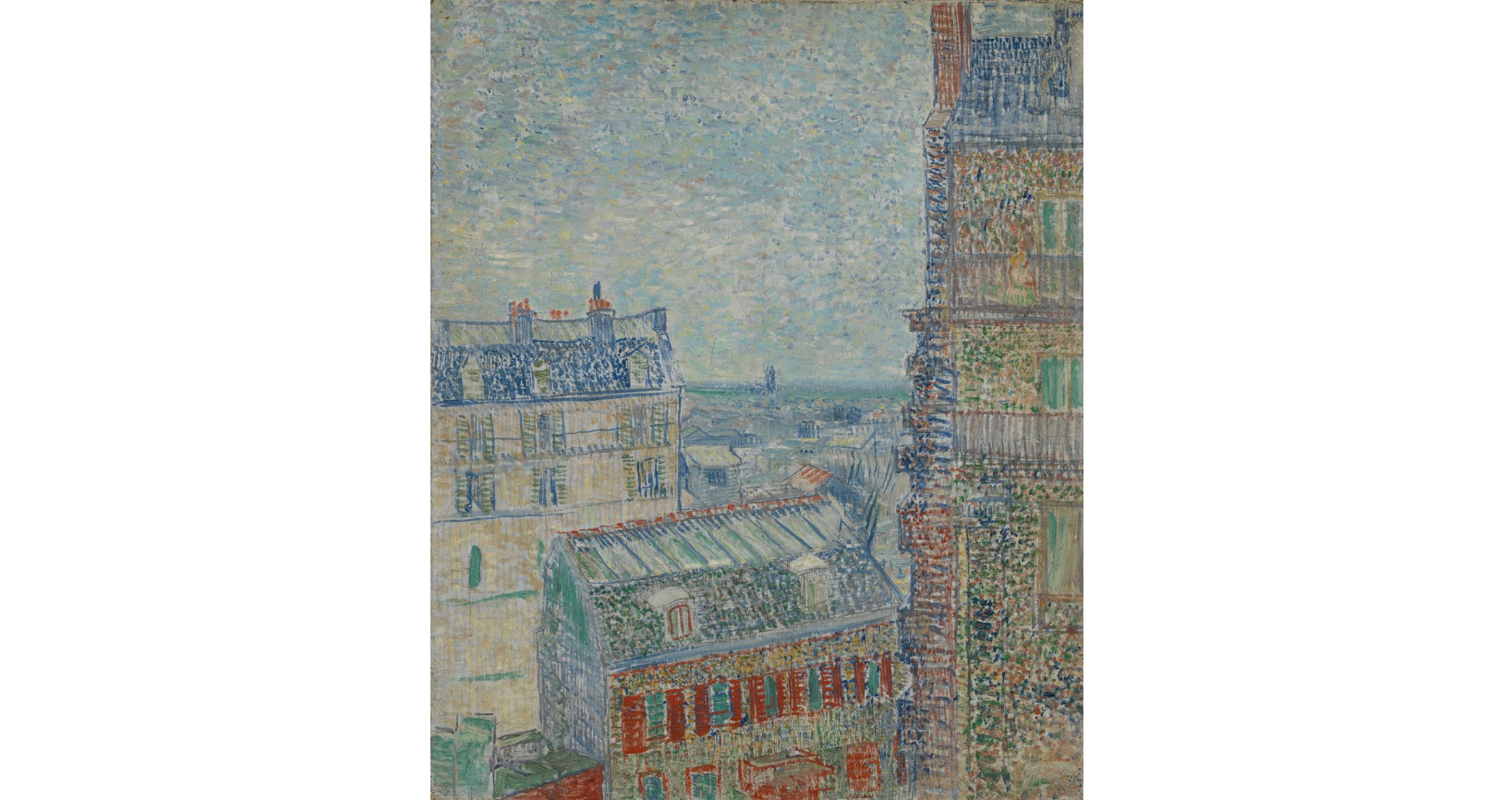 View from Theo's Apartment F341 / JH1242 · 1887 A view from Theo’s apartment, testing urban light.
 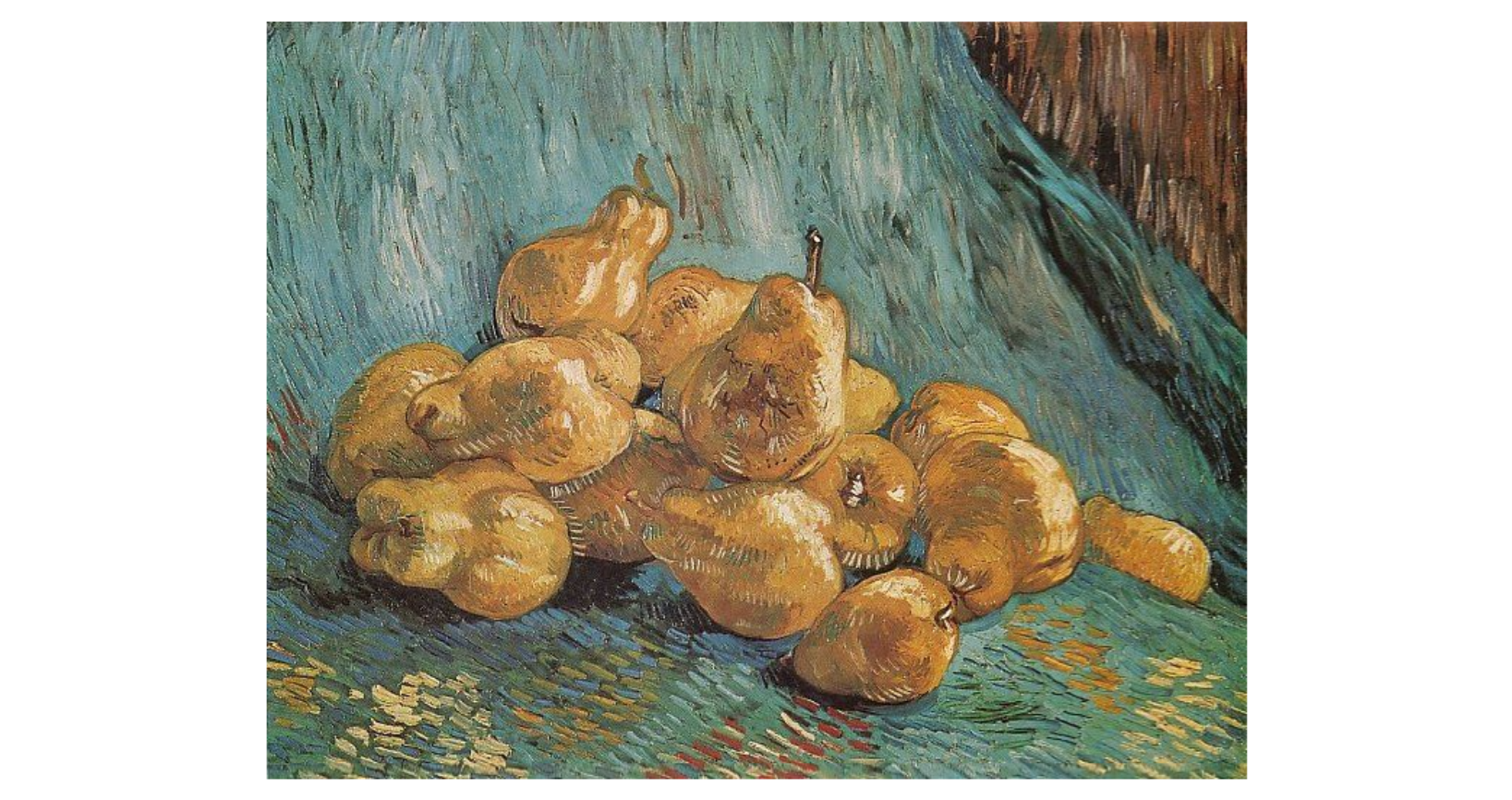 Still Life with Quinces and Lemons F602 / JH1343 · 1887 黄色与紫色关系被压缩到一张桌面。
 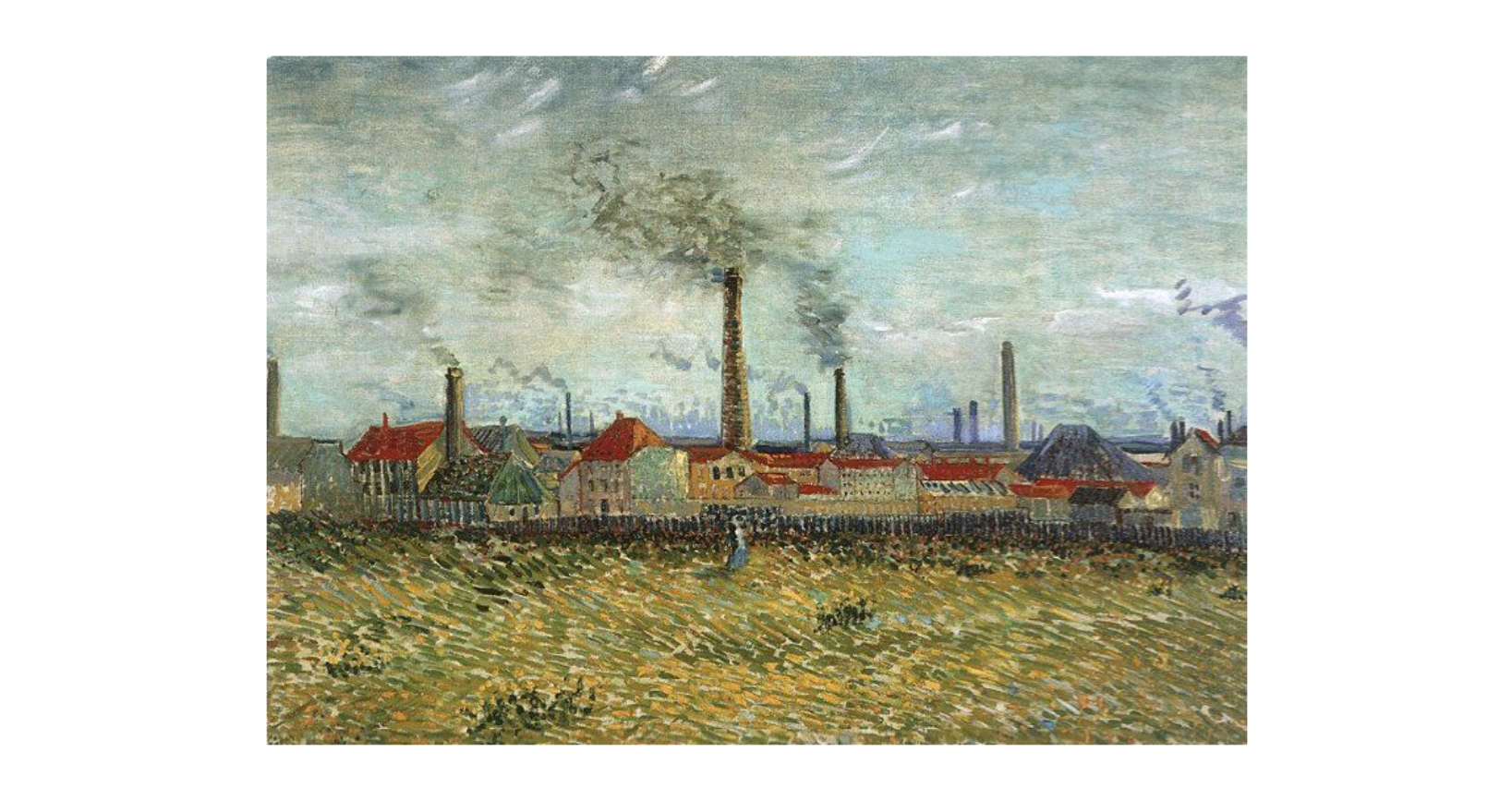 Asnières landscape series F317-F318 · 1887 把花卉静物的色彩实验带到户外。
 Key letters
档案沉默期 The Paris silence itself is evidence: he and Theo were living together.
Back to the breath line
On the breath line, Paris is where the visual system is rebuilt:
The same silence has two readings: few letters, but the most concentrated technical preparation.