1889 · F717 · JH1756
Wheat Field with Cypresses
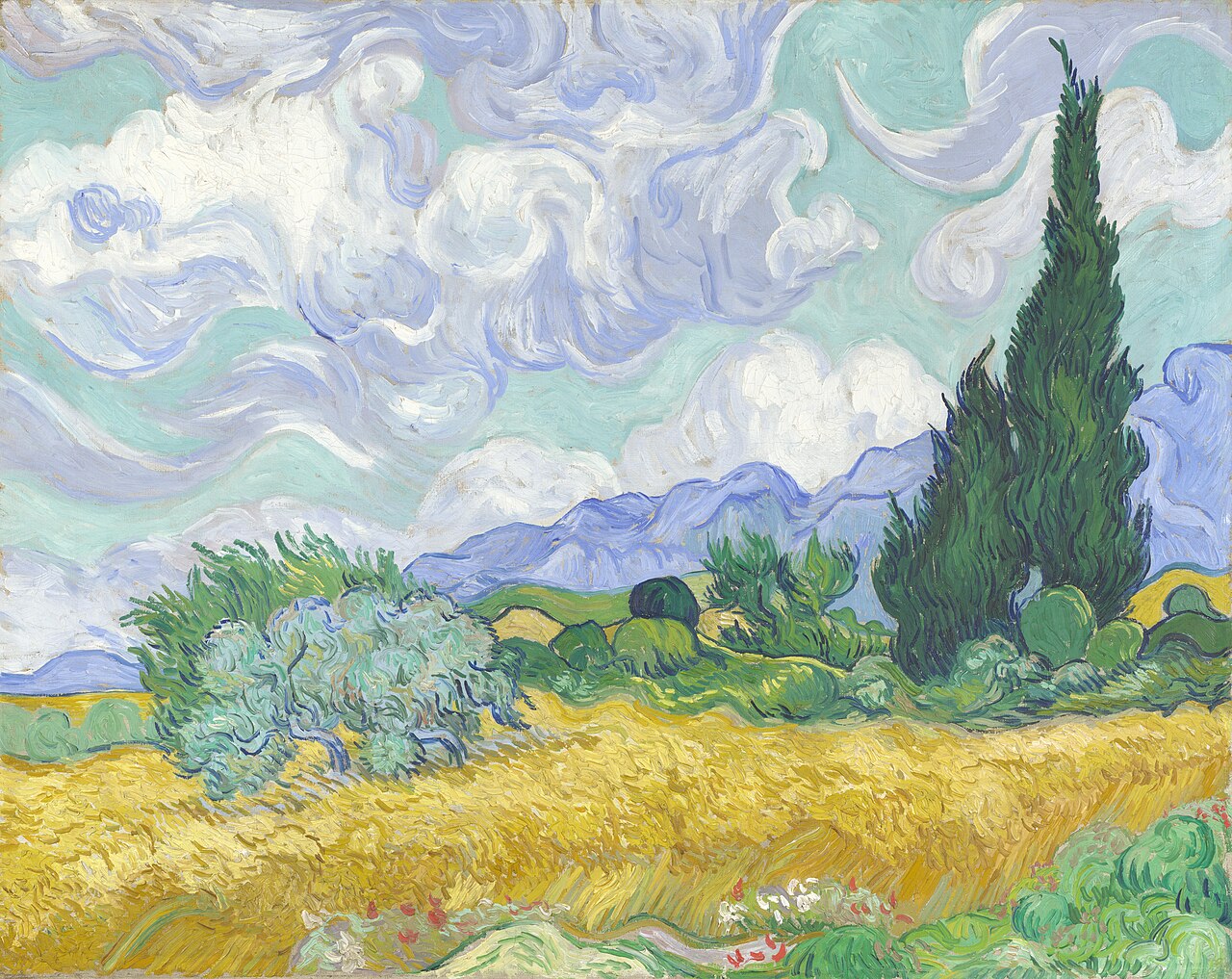
Wheat Field with Cypresses brings together three Saint-Remy motifs: ripening grain, the dark upright cypress and a sky that appears to move. It is a landscape built from pressure, rhythm and change rather than a calm record of a view.
Wheat Field with Cypresses meaning and analysis
Wheat Field with Cypresses brings together three Saint-Remy motifs: ripening grain, the dark upright cypress and a sky that appears to move. It is a landscape built from pressure, rhythm and change rather than a calm record of a view.
Continue with this work in the context of Cypresses.
Meaning
The wheat field is full of seasonal energy, while the cypress holds a darker vertical force at its edge. The painting makes growth and gravity coexist.
It is tempting to turn the cypress into a fixed symbol of death. More carefully, the image lets a rooted tree, changing weather and living crops occupy the same unstable world.
Visual Analysis
The field rises toward the horizon in broad bands, then meets the cypress and the hills. This layered structure makes the view feel both spacious and compressed.
Clouds and foliage repeat the same curling movement, so the sky is not a background. It joins the wheat and tree as an active force in the composition.
Symbolism
Wheat can suggest labour, seasons and renewal because it grows, ripens and is harvested. The painting does not reduce those associations to a single message.
The cypress acts as a visual hinge between earth and sky. Its dark upward shape gives the painting a counterweight to the horizontal field.
Technique
Van Gogh separates surfaces with distinct stroke languages: short marks in the grain, rising curves in the tree and rolling strokes in the sky.
Yellow, blue and green are held in sharp relation rather than blended into naturalistic atmosphere. That contrast gives the landscape its charged clarity.
Period Context
The work belongs to the Saint-Remy period of 1889, when Van Gogh repeatedly returned to the asylum garden, nearby fields and cypress trees.
It belongs with Cypresses and The Starry Night, but it is a daylight problem rather than a night scene: how can a landscape remain visibly in motion?
Related Letters
In letters from Saint-Remy, Van Gogh described the landscape around the institution and his desire to work from its fields and trees. The painting should be read within that repeated attention to the local terrain, not as a detached emblem.
FAQ
- What does Wheat Field with Cypresses mean?
- It joins seasonal wheat, a dark cypress and moving sky to explore growth, force and change in the Saint-Remy landscape.
- When did Van Gogh paint Wheat Field with Cypresses?
- He painted versions of the motif in 1889 during his Saint-Remy period.
- Why did Van Gogh paint cypresses with wheat fields?
- The contrast between horizontal grain, vertical trees and active sky gave him a powerful way to organize movement in the landscape.
Wheat Field with Cypresses. Golden wheat waves beside dark-green cypresses — life and death coexisting in one frame. The sky spirals too. Not a single still line in the entire painting.