The Roulin Family
He was not painting himself an imagined family — he was painting, for the few who really stayed, a kind of portrait that could let a relationship remain.
-

F432 Portrait of the Postman Joseph Roulin 1888 -
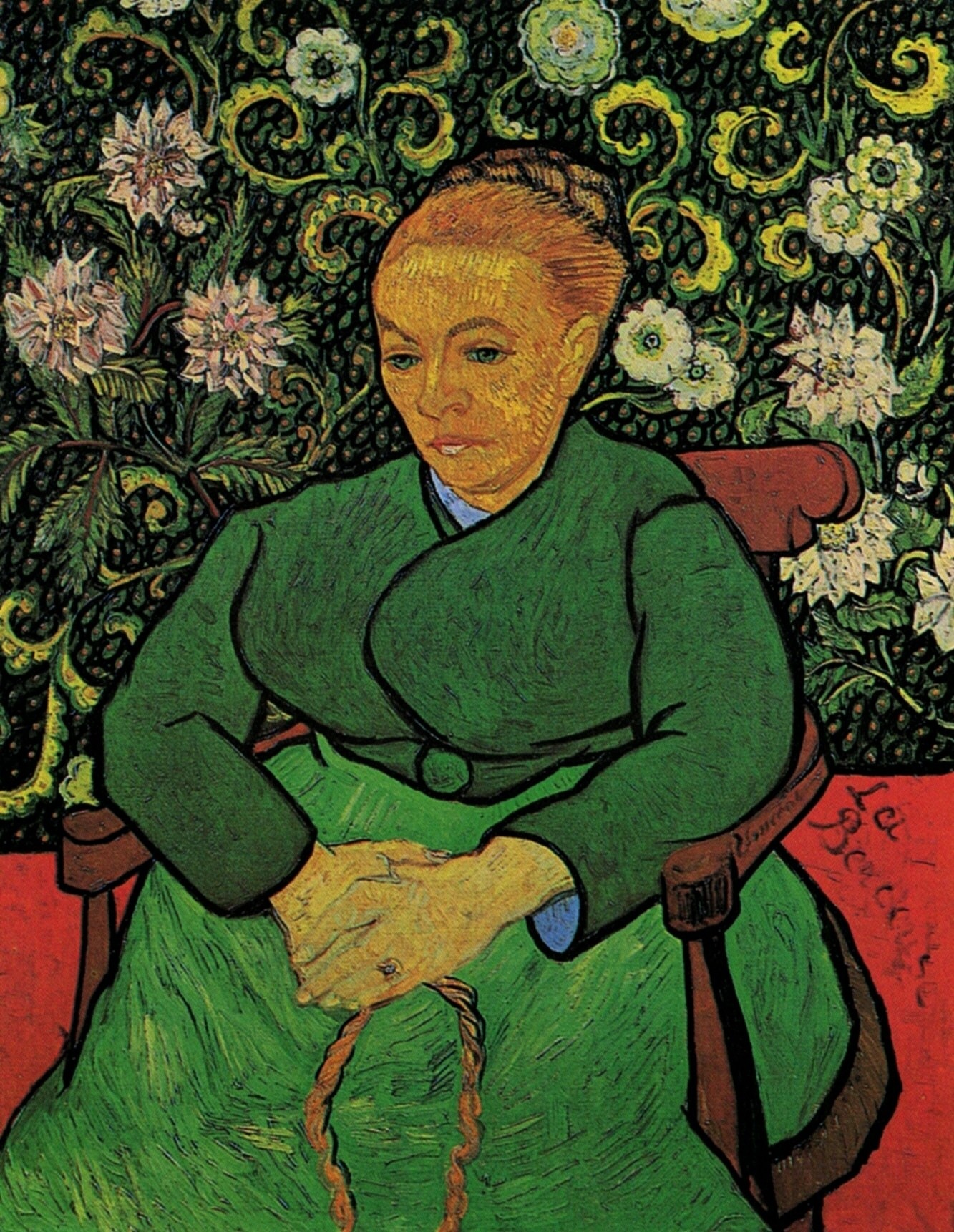
F504 La Berceuse (Augustine Roulin) 1889 -
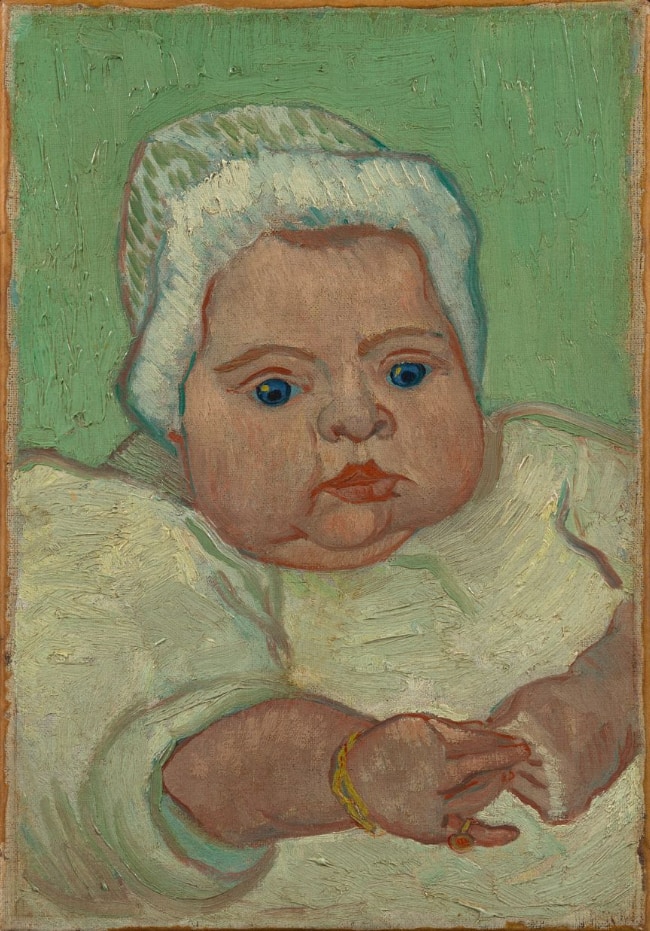
F441 Portrait of Marcelle Roulin 1888 -
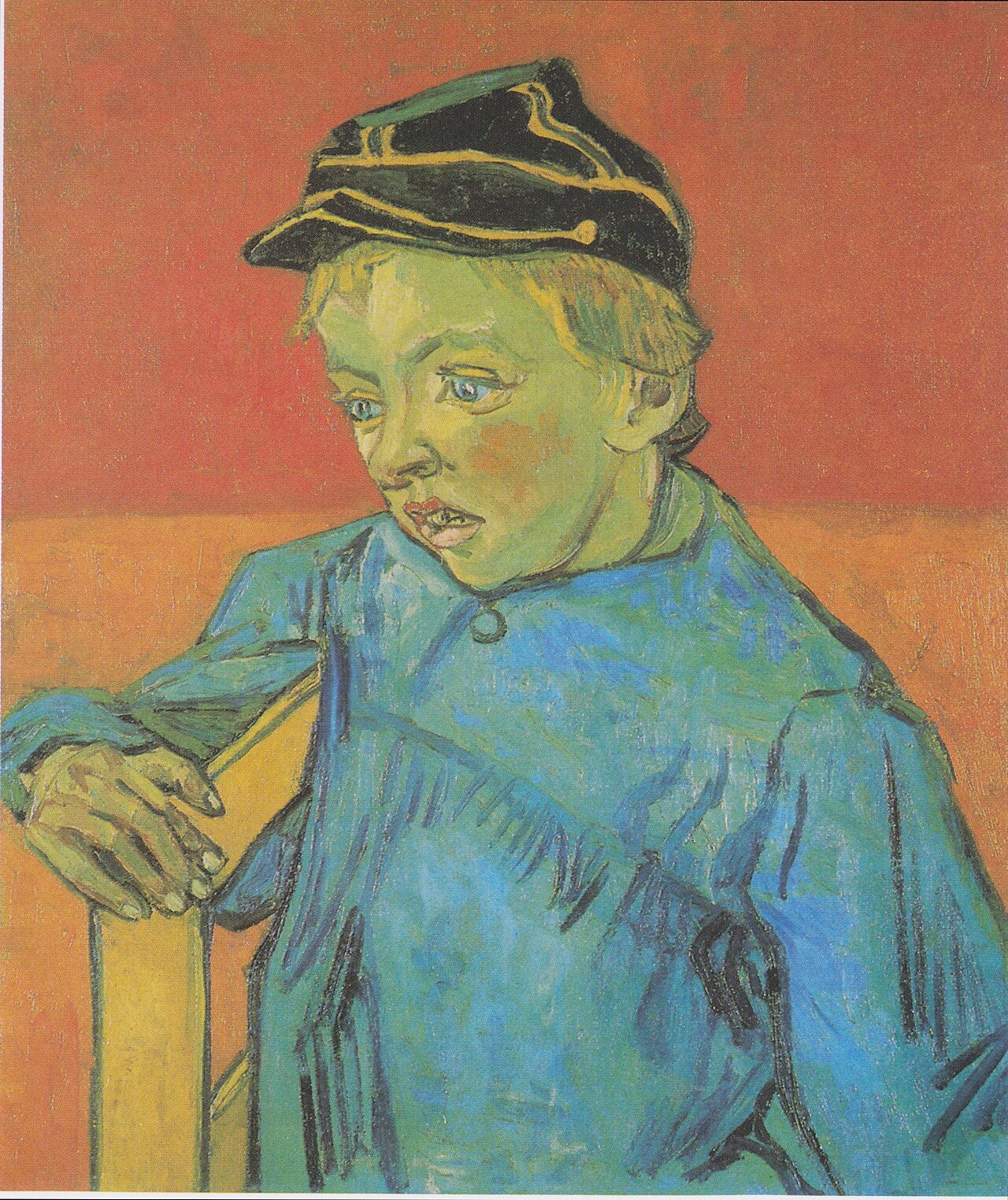
F665 The Schoolboy (Camille Roulin) 1888 -

F440 The Baby Marcelle Roulin 1888
Painting
Five oil paintings are shown here: the postman Joseph, his wife Augustine in La Berceuse, their son Camille, and two versions of the baby Marcelle. Joseph wears a dark-blue uniform; its gold buttons stand out against a pale-blue background. Floral wallpaper stands behind Augustine. Compare the two portraits of Marcelle: the sitter is the same, but the backgrounds and colours of her bonnet and face differ. Colour keeps changing across these portraits, while the sitters remain members of one particular family.
Letter
On 31 July 1888, Van Gogh wrote to his sister that Roulin reasoned well and knew many things. That December he told Theo he had painted portraits of the postman's entire family: the man, his wife, the baby, the young boy and the sixteen-year-old son. Later, discussing La Berceuse, he recalled talking with Gauguin about the isolation of Icelandic fishermen and imagined sailors finding a lullaby in the painting. Augustine holds a cradle cord, not a child.
Place
Arles. Joseph Roulin worked for the railway post, wore a dark-blue uniform and had a large beard. Augustine was his wife; their children were sixteen-year-old Armand, young Camille and the baby Marcelle. While Van Gogh was in hospital, Roulin and the charwoman looked after the Yellow House. Roulin was with him when he left hospital.
In Arles he knew few people. Roulin was the one he saw most — a postman, a republican, talkative, indifferent to whether or not he was a painter.
He painted Roulin himself, Madame Roulin, the three children. They were among the few in Arles with whom he entered a real, everyday relationship — the postman, the wife, the children, the coming and going, the choosing of pictures, the care after his illness.
What he sought in these portraits was not only likeness, but a form that could let a relationship remain. The Roulins were still in Arles at his most broken moment, and that was no small thing.
Events
- Synaesthetic Precision · Letter 652
Writing to Theo, Van Gogh described his model Roulin: a postman in blue with gold trimmings, a large beard and a Socratic appearance; he found him more interesting than many people.
- The Colour Experimenter · Letter 655
He told Bernard he had just painted two portraits of the postman: Socratic in appearance, a fierce republican, pleased by the birth of his child. The second had an almost white blue background and a Prussian-blue uniform trimmed with yellow.
- The Colour Experimenter · Letter 723
Around the beginning of December, he told Theo he had painted the postman's entire family: Joseph, his wife Augustine, baby Marcelle, young Camille and sixteen-year-old Armand.
- Synaesthetic Precision · Letter 729
In a letter of 4 January, he wrote that Roulin and the charwoman had looked after the Yellow House and put it in order during his hospital stay.
- The Copyist · Letter 739
Writing to Gauguin, he said he had resumed La Berceuse. The canvas had been started before his injury, which had left the hands unfinished.
- Synaesthetic Precision · Letter 739
Roulin had been transferred to Marseille and had just left. Van Gogh recalled him making little Marcelle laugh and bounce on his knees in the days before departure.
- The Colour Experimenter · Letter 744
When Roulin visited Arles, Van Gogh showed him two versions of La Berceuse between four sunflower canvases.
From the Letters
Je viens de faire un portrait d’un facteur – ou plutôt même deux portraits I’ve just made a portrait of a postman — or rather, two portraits even.
Mais j’ai fait les portraits de toute une famille, celle du facteur dont j’ai déjà précédemment fait la tête But I’ve done the portraits of an entire family, the family of the postman whose head I did before.
il y a en lui enormement de Socrate There’s an enormous amount of Socrates in him.
Letter Sources
Van Gogh letter records referenced on this page, linked to the Van Gogh Letters Project. vangoghletters.org