The Self-Portraits
He was not searching for who he was; he was using his own face to do something technical.
-
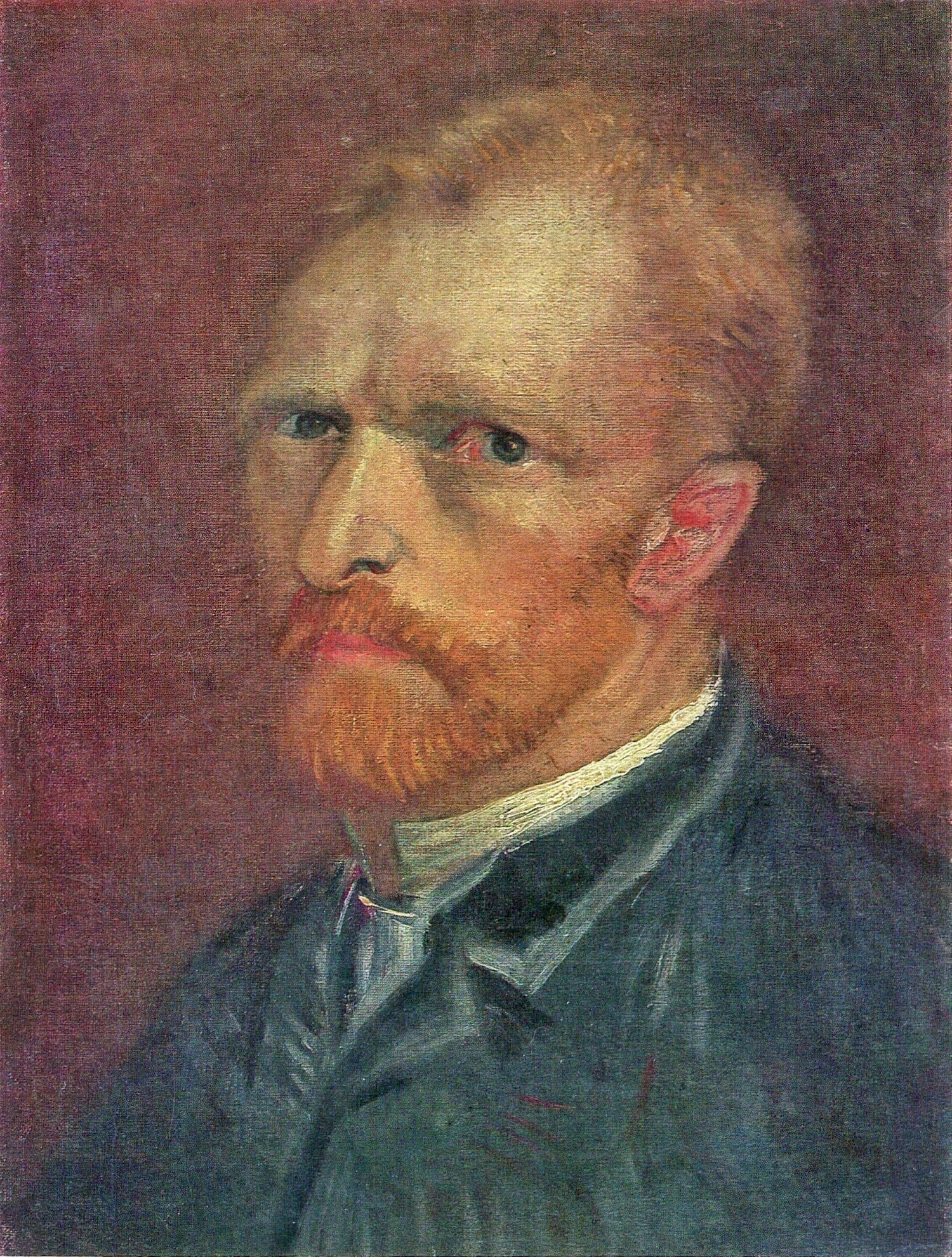
F178v Self-Portrait (Paris, dark) 1886 -
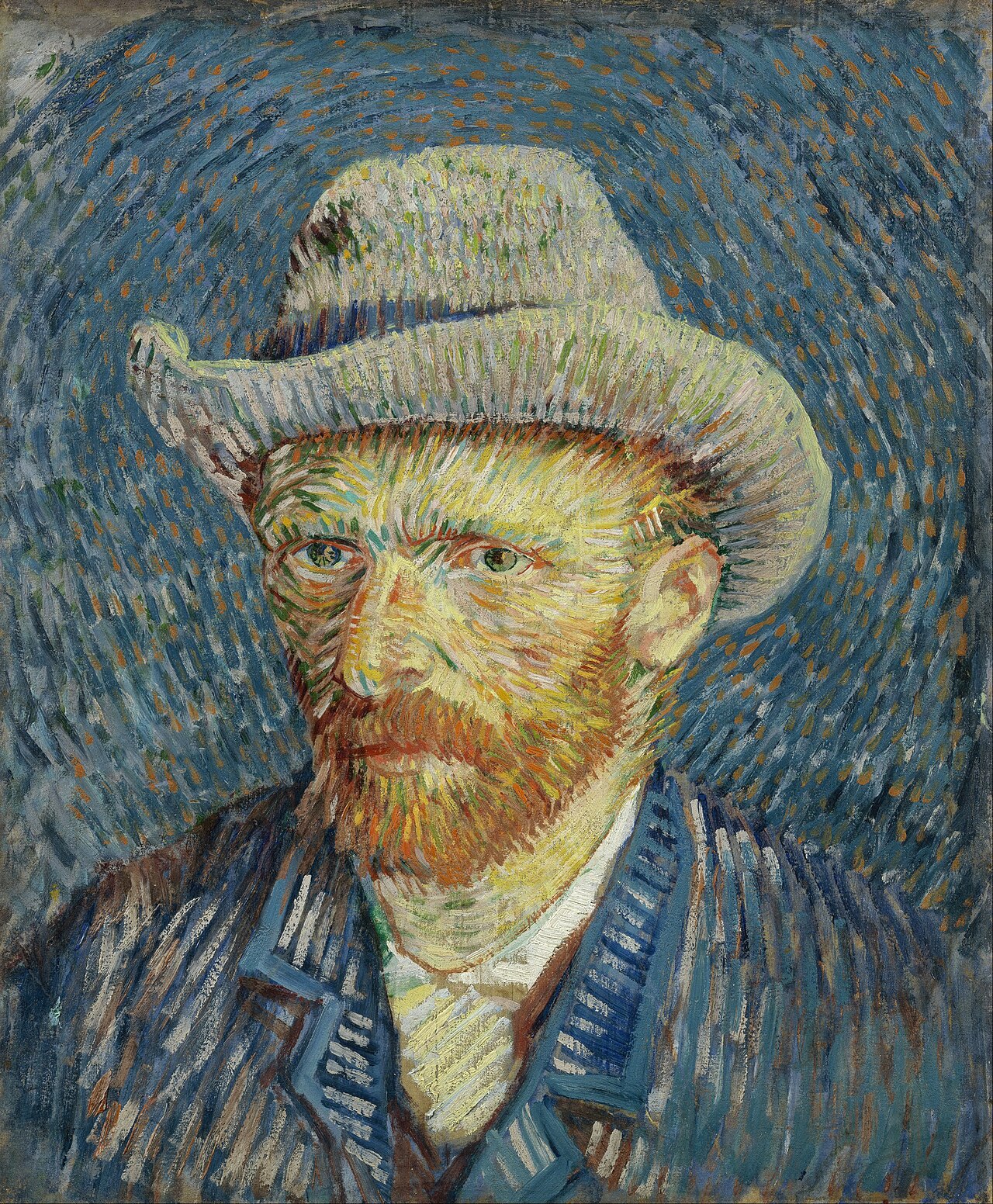
F344 Self-Portrait with Grey Felt Hat 1887 -
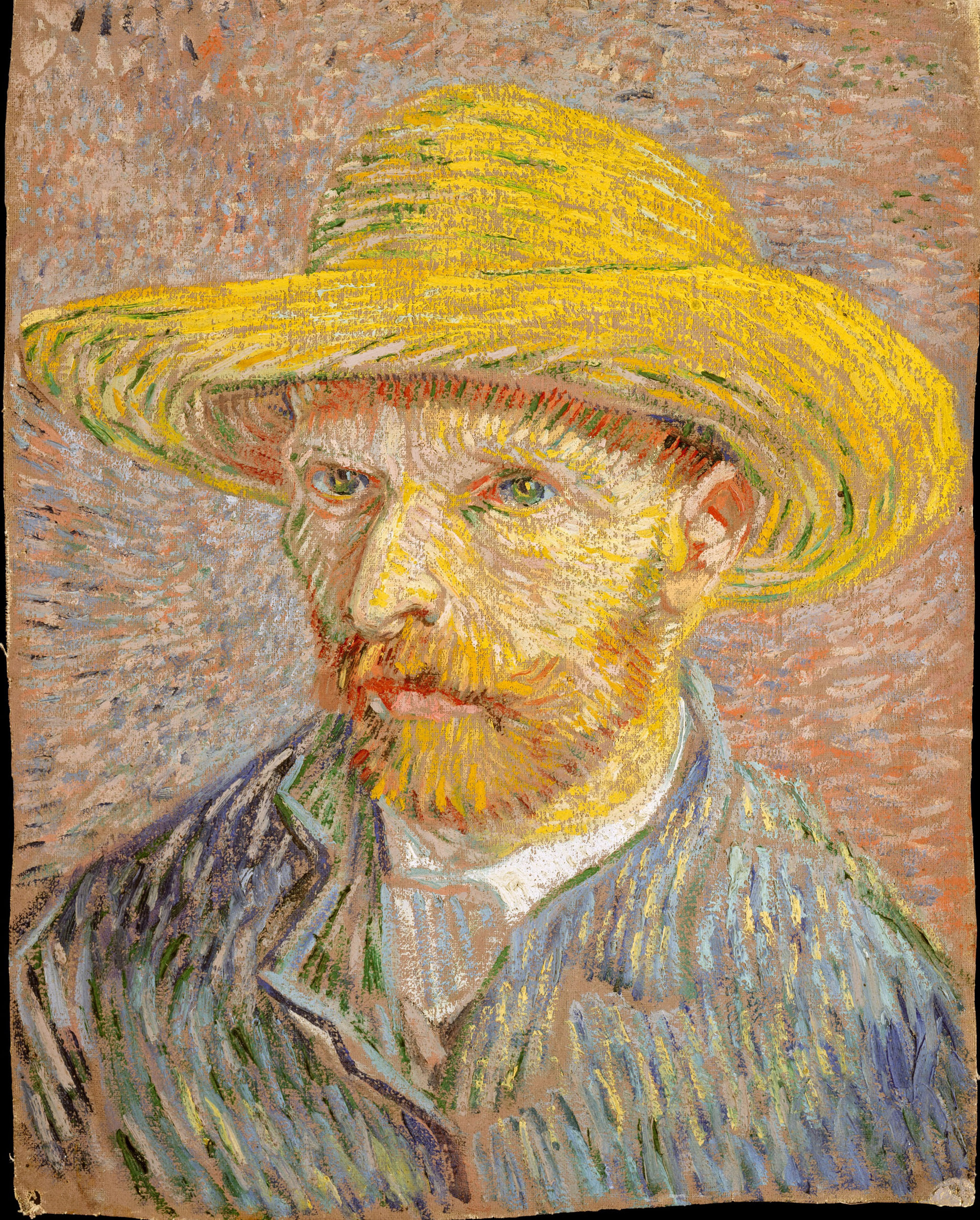
F365v Self-Portrait with Straw Hat 1887 -
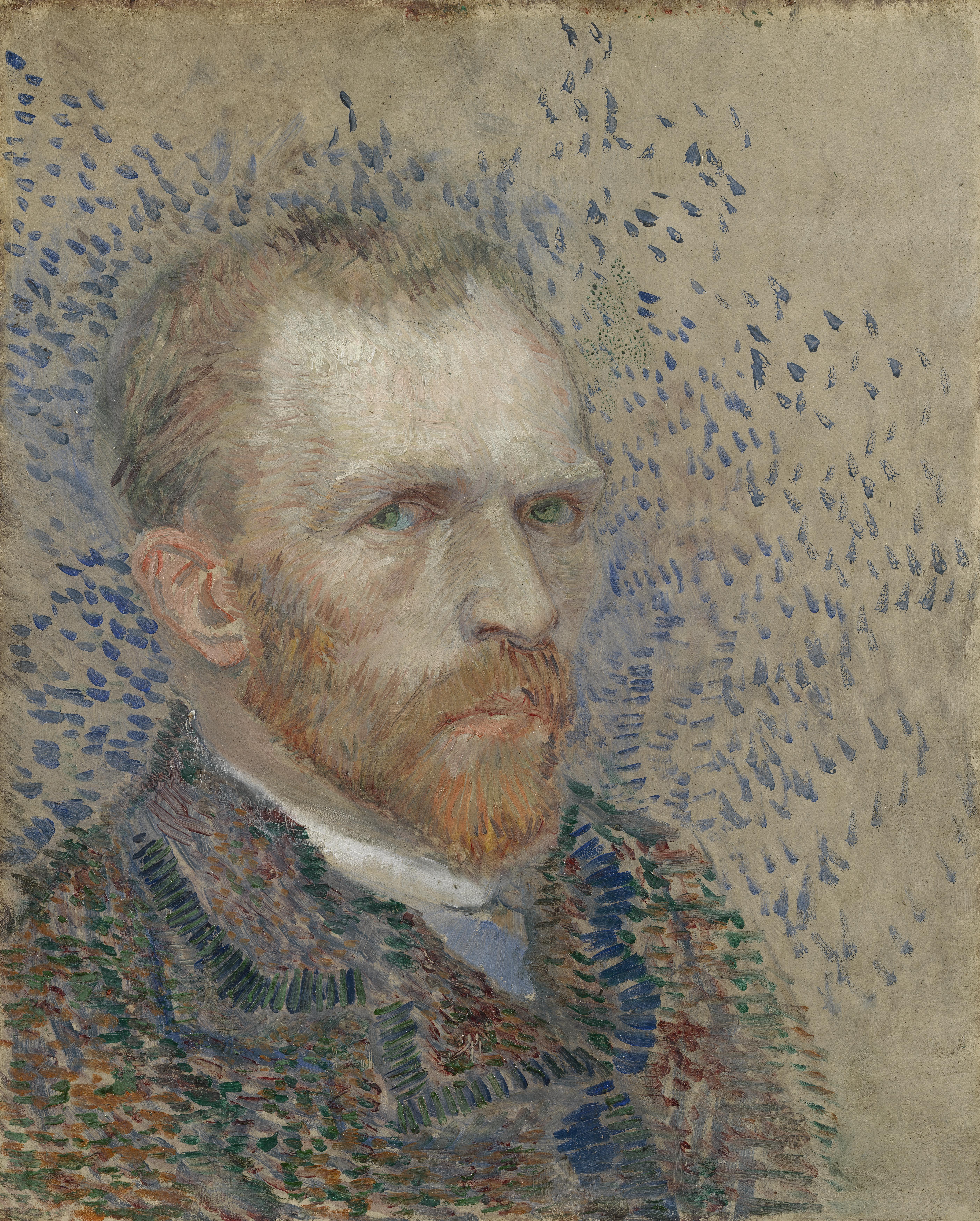
F356 Self-Portrait (Paris, blue background) 1887 -
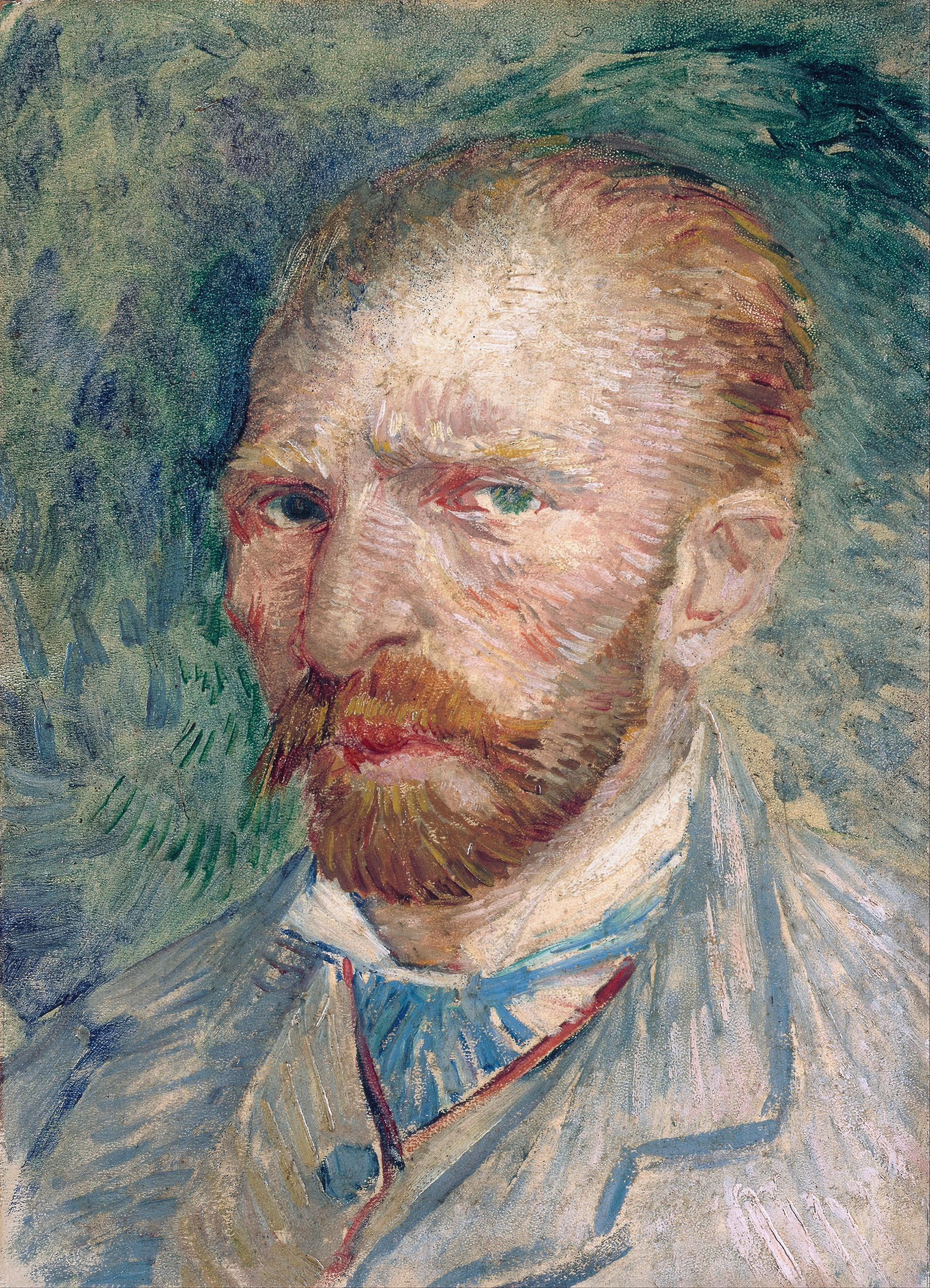
F380 Self-Portrait 1887 -
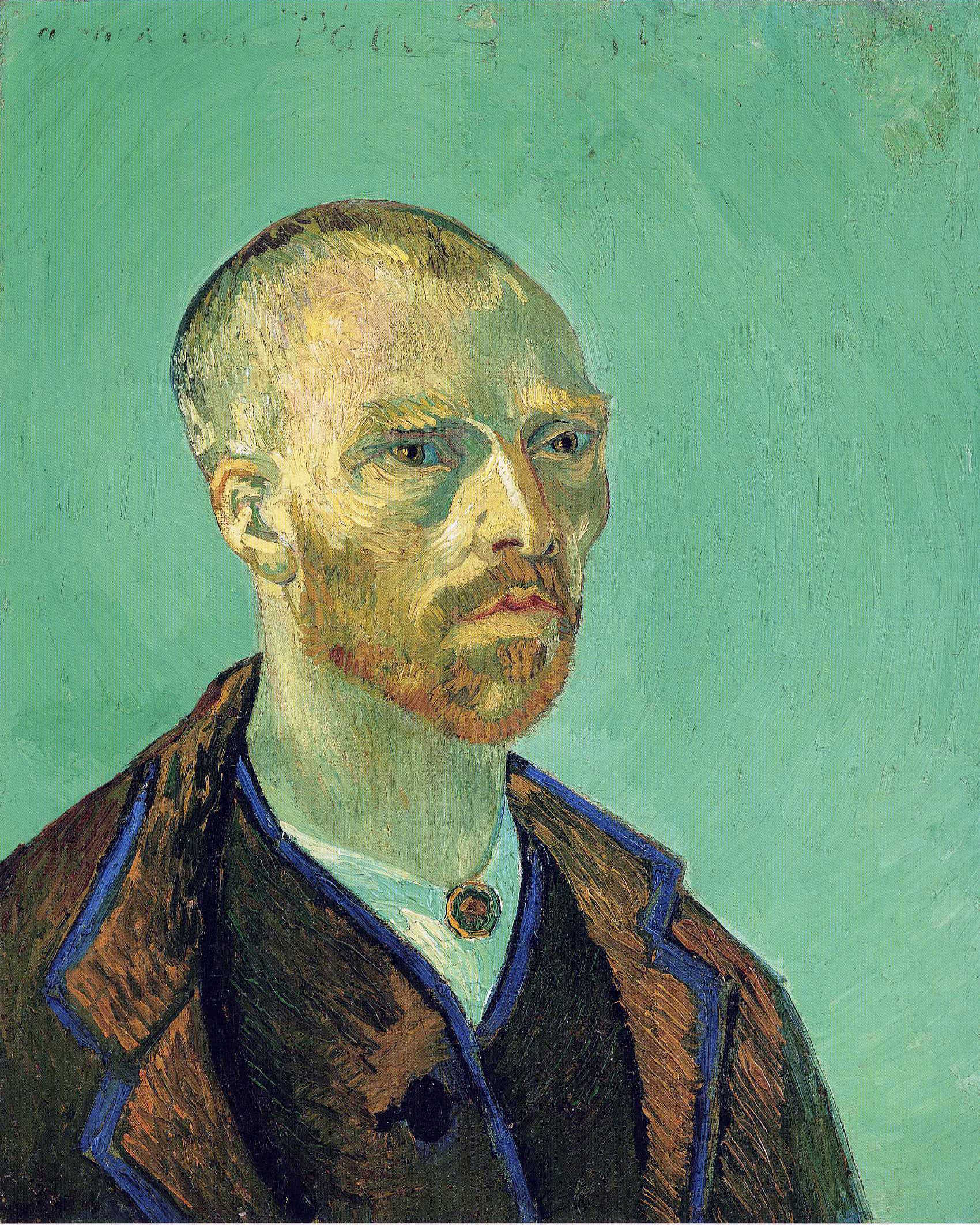
F476 Self-Portrait (dedicated to Gauguin) 1888 -
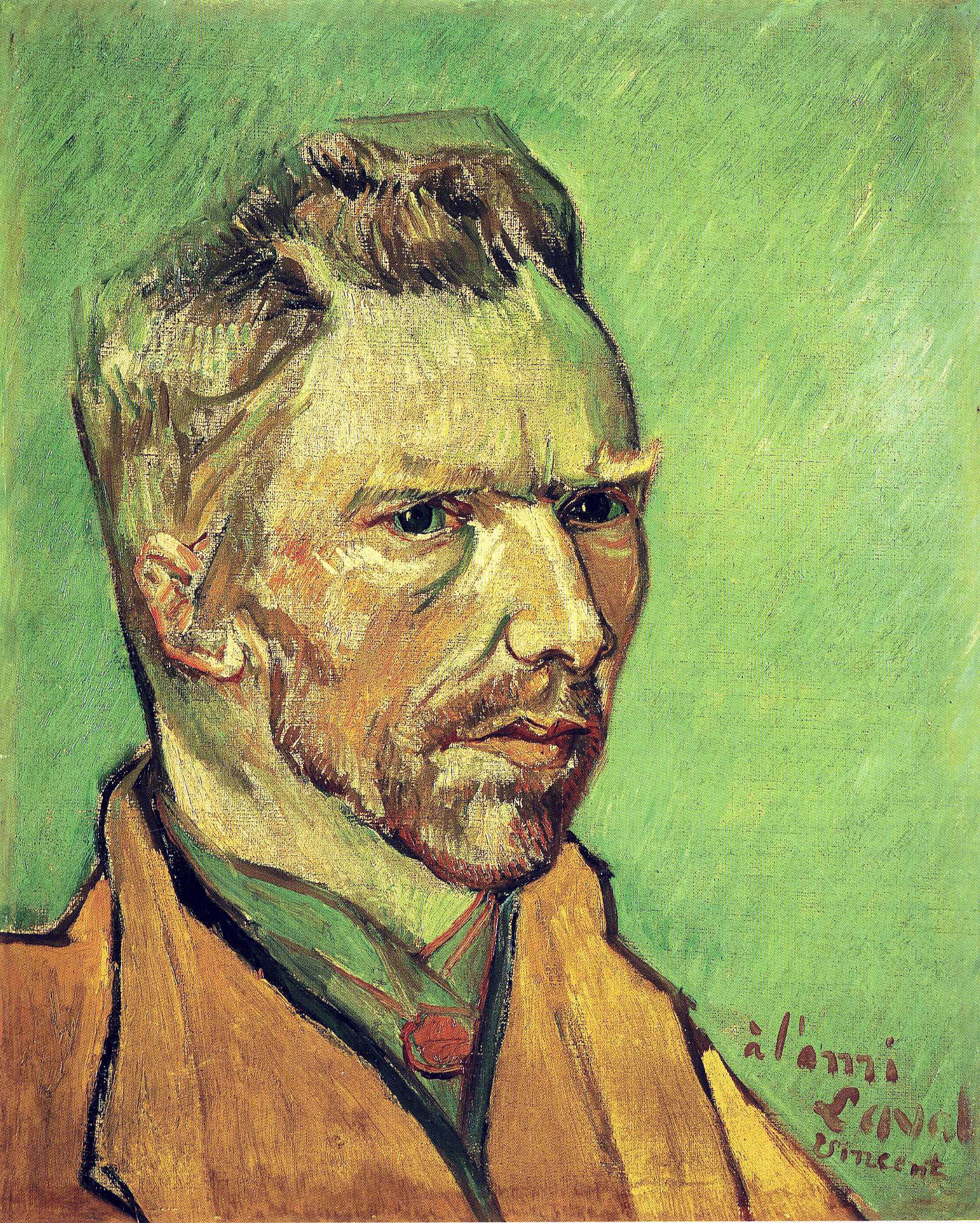
F501 Self-Portrait Dedicated to Charles Laval 1888 -
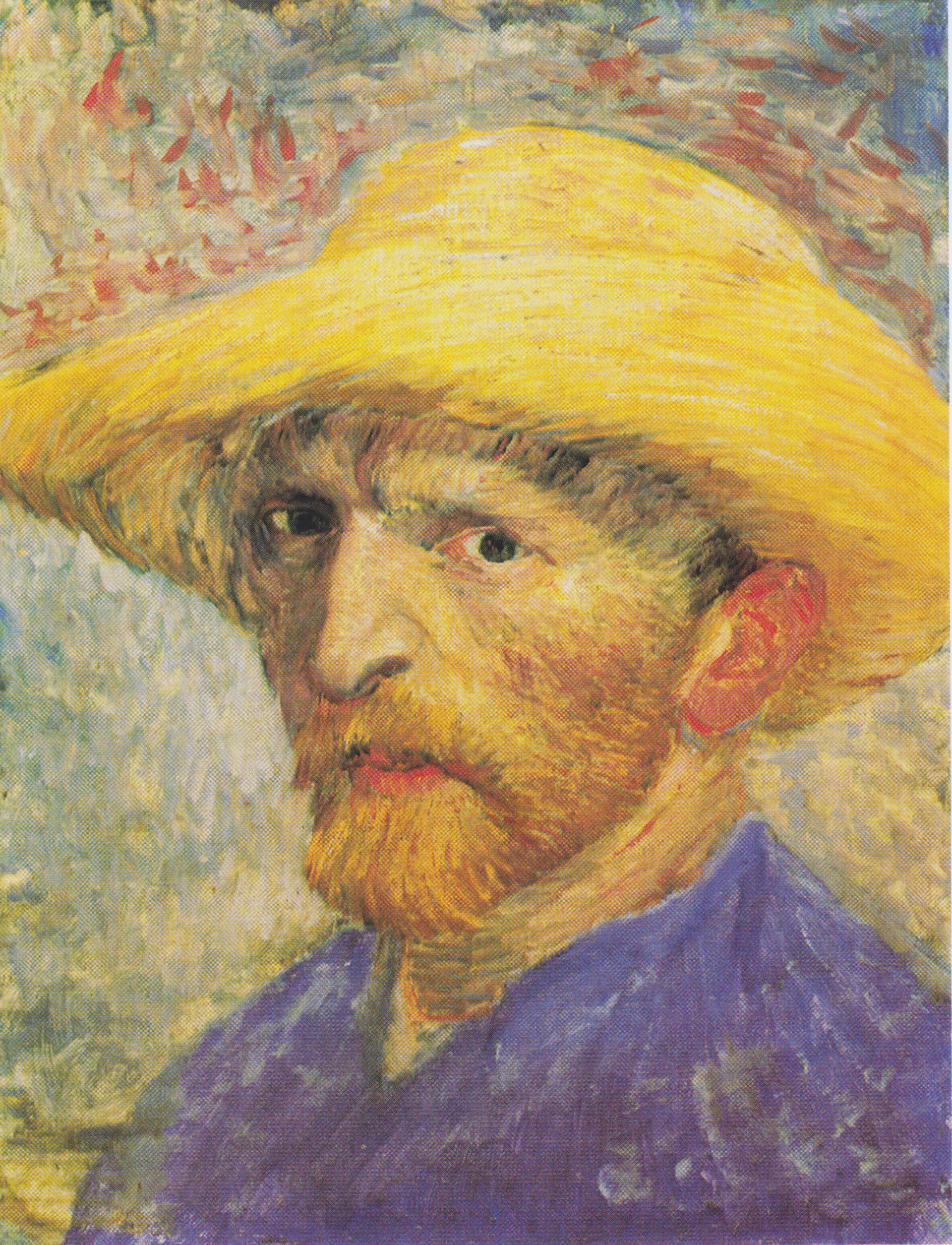
F526 Self-Portrait with Straw Hat 1887 -
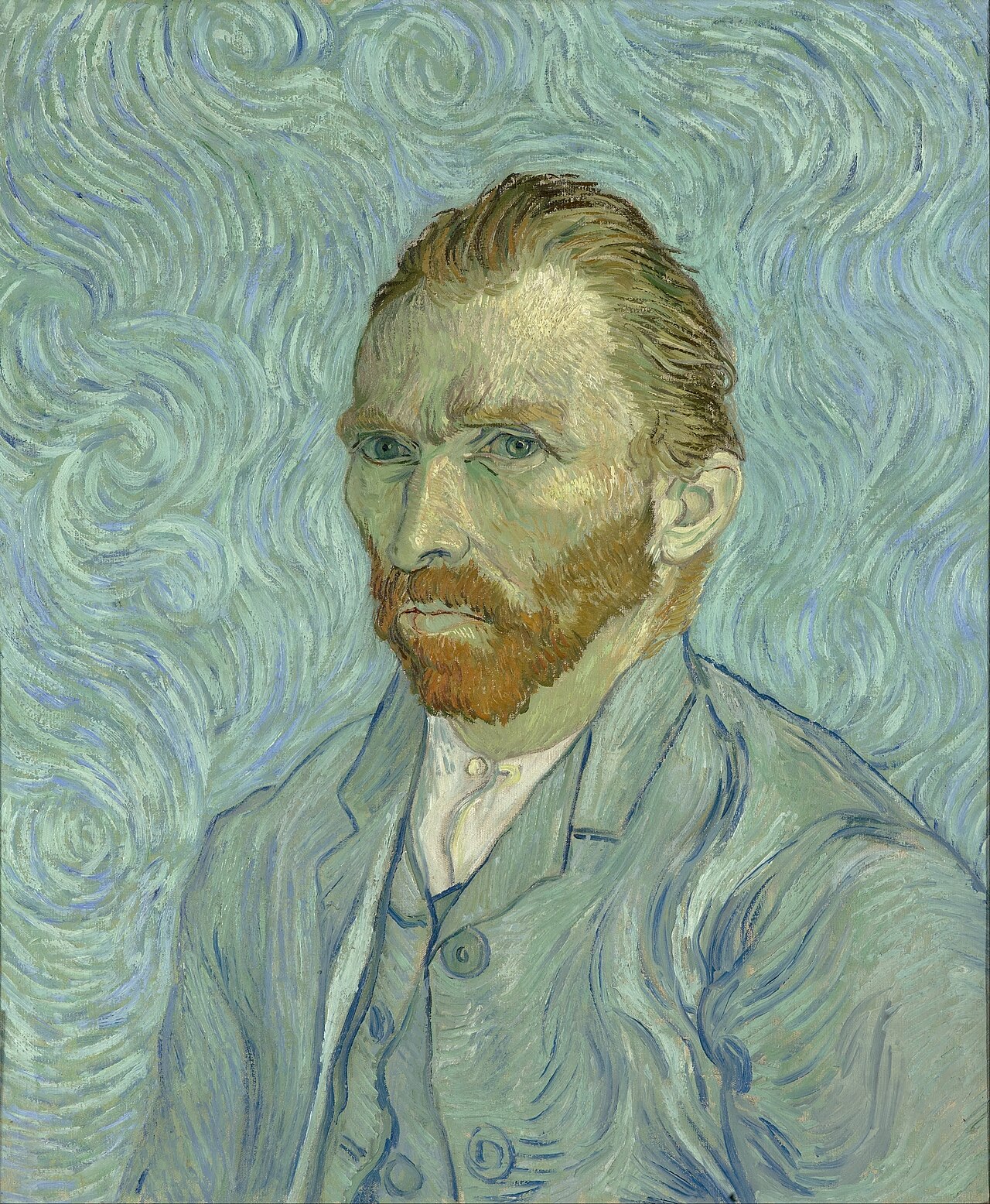
F627 Self-Portrait (Saint-Rémy) 1889 -
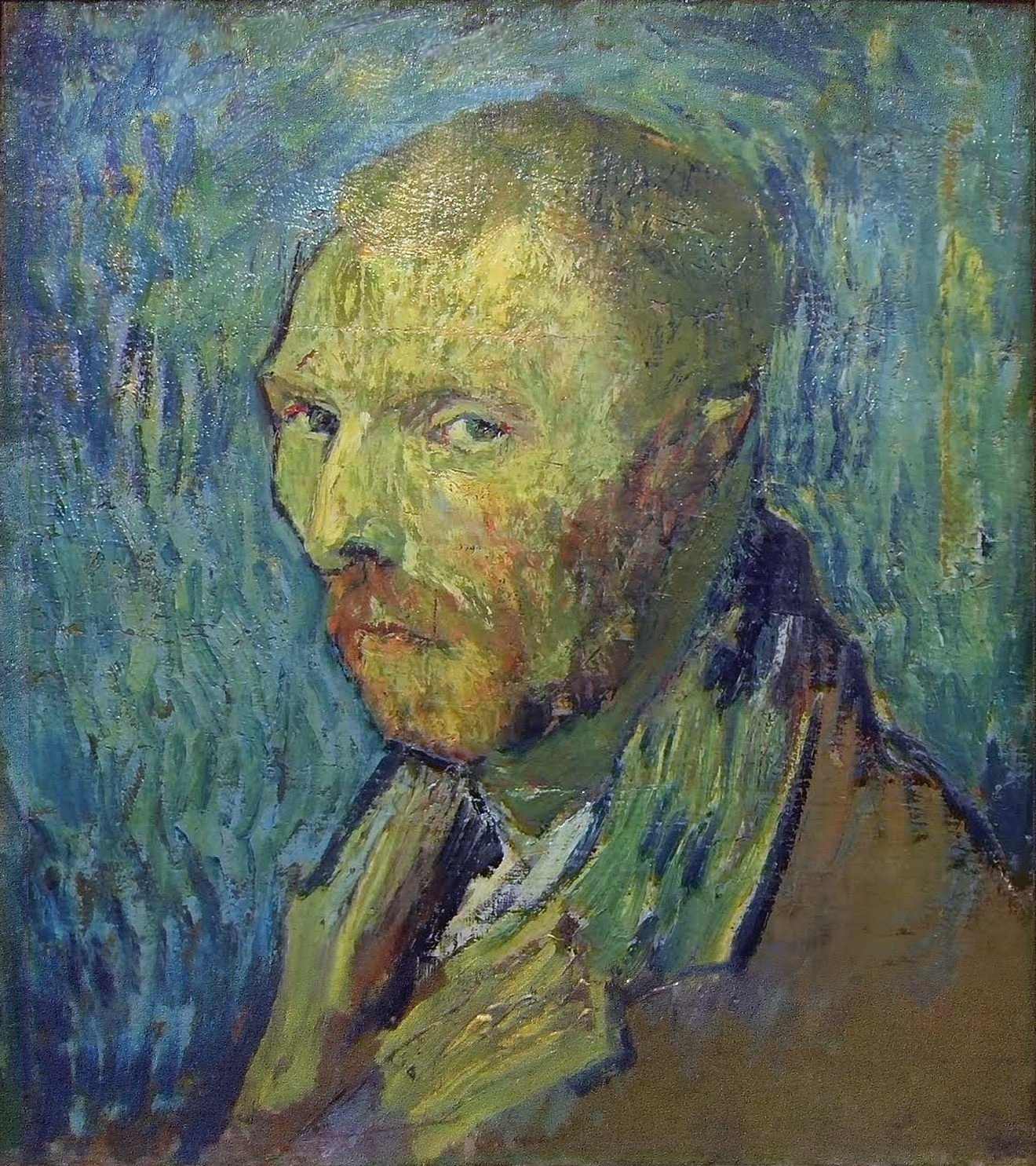
F528 Self-Portrait (Saint-Rémy, blue swirls) 1889 -
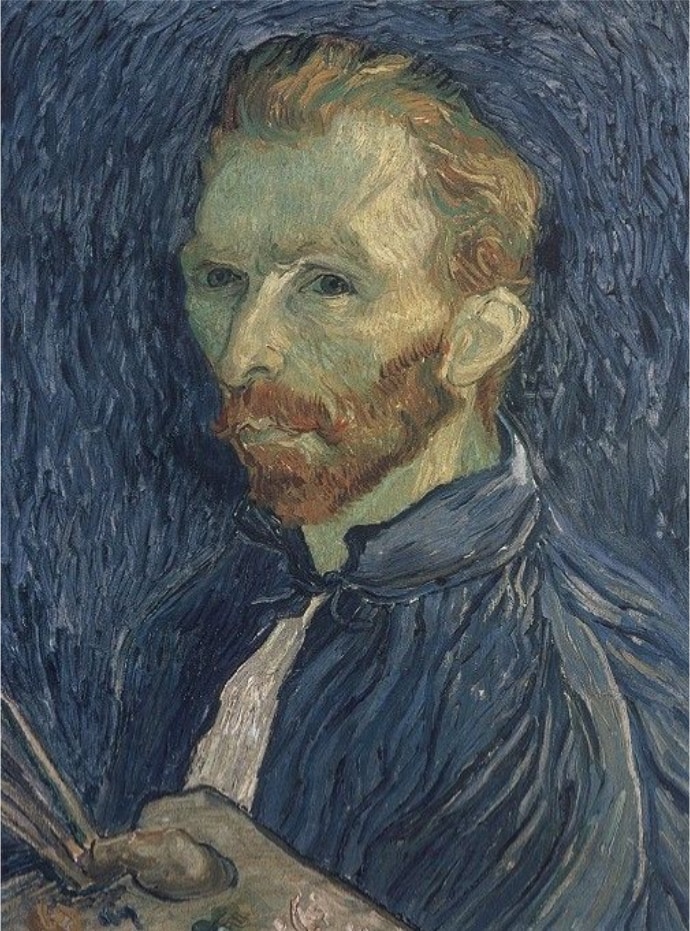
F626 Self-Portrait with Palette 1889
Painting
More than thirty self-portraits across four years and three cities. Four shown here, one palette per city: Paris 1887, Self-Portrait with Grey Felt Hat — Impressionist greys, pointillist strokes, an uncertain gaze. Paris 1887, Self-Portrait with Straw Hat — the first gold of the south. Arles 1888, Self-Portrait dedicated to Gauguin — shaved head and blue-green ground; in a letter of that year, he wrote that he looked like a Japanese. Saint-Rémy 1889, Self-Portrait — swirling brushwork on a turquoise ground, the pattern of the coat continuous with the pattern of the background, the entire face floating on a moving sea. Same eyes, same nose. Each year a new palette. Colour shifts; the eyes look straight at the mirror through every shift.
What this work changed: in Paris the self-portrait became more than a record of identity. It became a technical laboratory for testing the face, hats, backgrounds and brushwork, with the repeated face making changes in colour and touch comparable.
Letter
1888. "I am looking for a deeper resemblance than that obtained by a photographer." Another: "They say — and I am willing to believe it — that it is difficult to know yourself, but it isn't easy to paint yourself either." A third: "I've done two portraits of myself lately; one of which will look quite good, I think." Together they hold an attitude: resemblance has layers, painting yourself is the same difficulty as knowing yourself, self-evaluation stays cool.
Place
No single place — Paris, Arles, Saint-Rémy, across four years. Paris: Theo's flat, winter grey, learning the Impressionists. Arles: the Yellow House, gold light, the year of Gauguin. Saint-Rémy: the hospital room, the year after the crisis. The face stays still while everything behind it — city, light, bodily state, working method — keeps changing, until the exercise has completed its task and he no longer paints self-portraits.
Paris had museums and galleries, and also the cost of paint, of models, of rent. His cheapest and most reliable model was the mirror.
He painted more than thirty self-portraits — the hat, the tie, the background colour all changing. From the Paris years no letter survives in which he speaks of this series. Later, in Arles (letter 681), he explained that, lacking a model, he had bought a mirror so he could practise painting the coloration of his own head.
This practice taught him one concrete thing: to turn a person's face into colour and brushstroke rather than into likeness. That technique was later used on the postman and the doctor in Arles.
Events
- The Colour Experimenter · Letter 544
In Paris, painting Self-Portrait with Grey Felt Hat at Theo's flat. Pointillism, Impressionist grey, an uncertain gaze — he was trying Impressionism on his own face
- The Colour Experimenter · Letter 544
Painted Self-Portrait with Straw Hat — the background now saturated yellow and blue. Crossing from Impressionist feather to the colours of the southern sun
- The Translator · Letter 544
Arles: completed the self-portrait dedicated to Gauguin. 'I want to paint myself as a Japanese monk venerating eternity, doing penance in the Himalayas.' Shaved head, monk-like face, blue-green ground
- Synaesthetic Precision · Letter 544
'It isn't easy to paint yourself either.' Equating the difficulty of self-evaluation with the difficulty of painting
- The Colour Experimenter · Letter 694
Saint-Rémy: painted Self-Portrait in the asylum room, on a turquoise ground. Swirling brushwork, the pattern of the coat continuous with the pattern of the background, the face floating on waves
- Synaesthetic Precision · Letter 800
'I am looking for a deeper resemblance than that obtained by a photographer.' Using the self-portrait to take the measure of his own evolution as a painter
- The Translator · Letter 695
'I've done two portraits of myself lately — one of which will look quite good, I think.' This was the last group of self-portraits he made — the final entries among more than thirty
From the Letters
Je cherche une ressemblance plus profonde que celle qu'obtient le photographe. I am looking for a deeper resemblance than that obtained by a photographer.
On dit — et je le crois volontiers — qu'il est difficile de se connaître soi-même — mais il n'est pas aisé non plus de se peindre soi-même. They say — and I am willing to believe it — that it is difficult to know yourself — but it isn't easy to paint yourself either.
J'ai fait deux portraits de moi ces derniers temps, dont l'un aura assez bon air je crois. I've done two portraits of myself lately, one of which will look quite good I think.
Letter Sources
Van Gogh letter records referenced on this page, linked to the Van Gogh Letters Project. vangoghletters.org
Essays
Long-form reading connected to this node.
- Painting for Painting With almost no cash market in Paris, Van Gogh's work circulated by barter: a self-portrait for a portrait of Bernard's grandmother, two sunflower still lifes for one landscape, oil studies for about a hundred Japanese prints, herring still lifes for a carpet. The rates were recorded, so his standing can be measured. Open essay
- How Paris Paintings Are Dated Paris works are dated by converging clues: letters, seasons, locations, supports, pigments and continuity of touch. Open essay
- From Realism to Modernism Van Gogh's turn was not a sudden change of style, but a continuous chain from peasant subjects and Antwerp training to Rubens, Japanese prints and Parisian colour. Open essay
Technique Evidence
This work appears as evidence in this site’s technique-evolution axis.
- Colour as Practice 1886.03 – 1888.02 Open period F344 / JH1353 Self-Portrait with Felt Hat Brushstroke Representative of Paris short, adjacent brushwork
- The World in Motion 1889.05 – 1890.05 Open period F627 / JH1772 Self-Portrait Brushstroke Representative of swirling brushwork