The Sunflower Decoration
He painted the welcome ahead of time, and then waited for it to be seen.
-
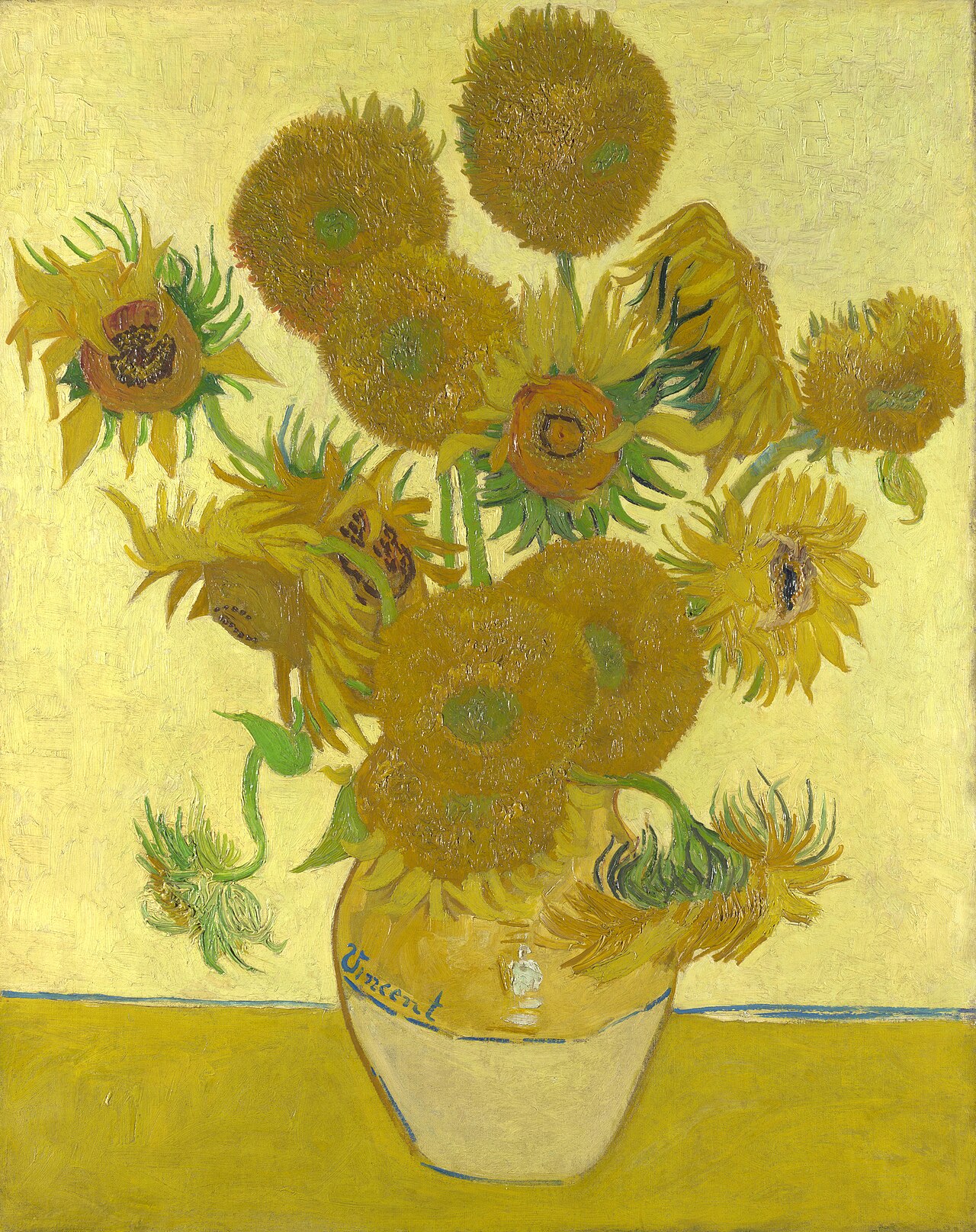
F454 Sunflowers (fifteen) 1888 -
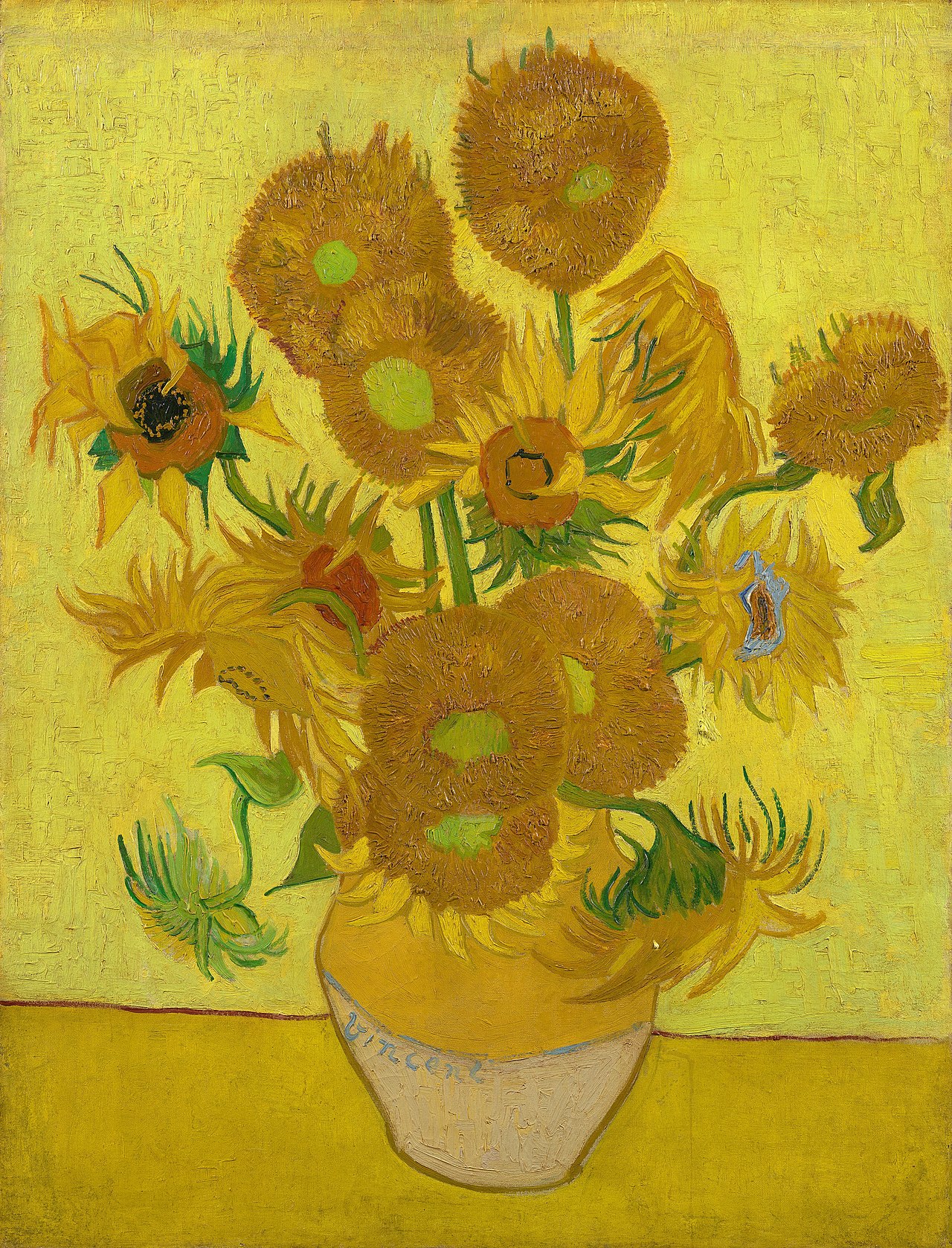
F456 Sunflowers (fourteen) 1888 -
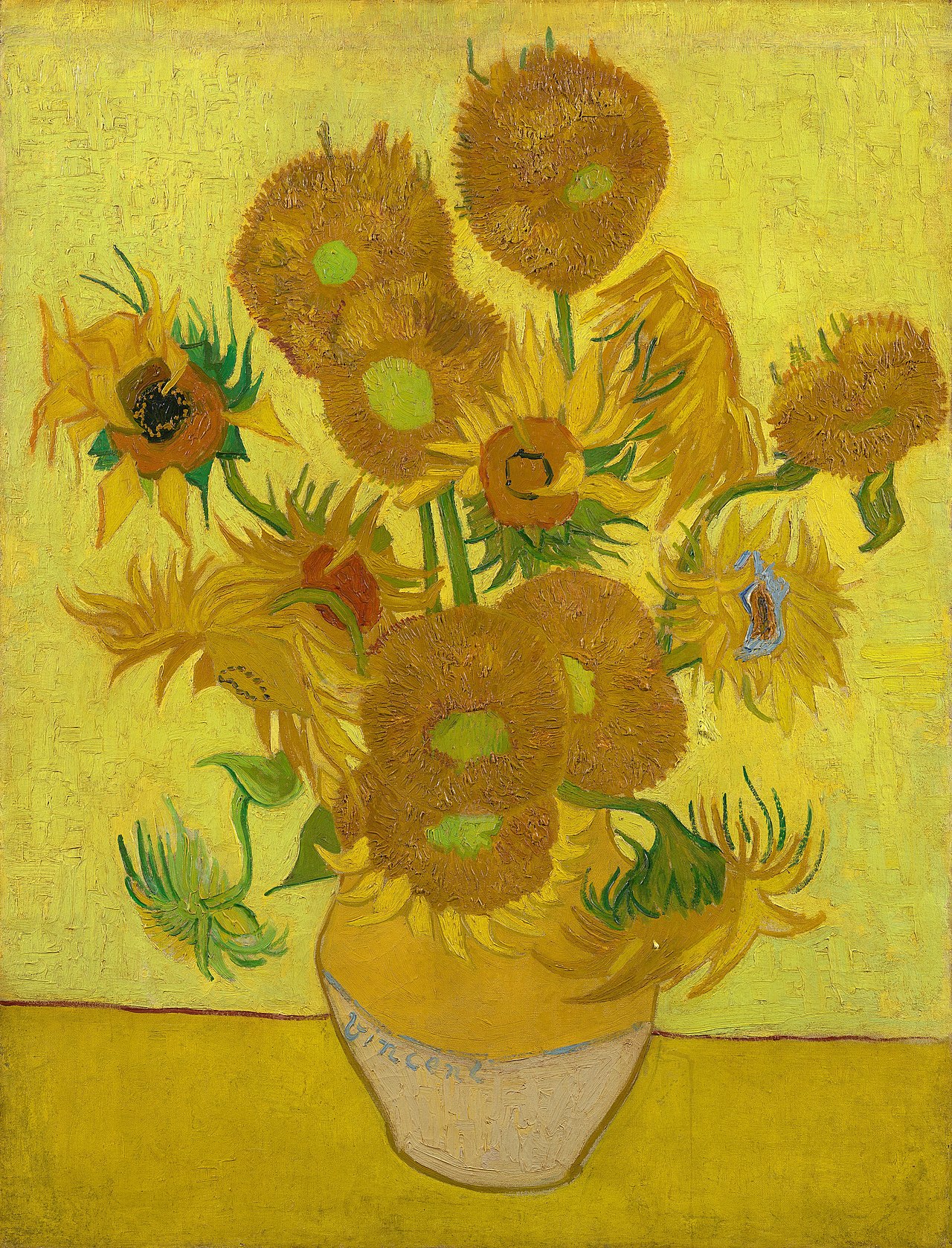
F458 Sunflowers (fifteen, repetition) 1889
Painting
This node selects three Arles vase versions: fifteen, fourteen, fifteen again. The fuller sequence begins in Paris with four paintings of sunflowers laid on a table, then develops in Arles into seven vase paintings with changing numbers, positions and yellow-orange registers. Chrome yellow from lemon to orange, backgrounds from royal blue to pale green. The petals hover between wilting and blooming — he did not paint the most beautiful moment, he painted the entire process. The paint is thick; the flower centres rise from the canvas like relief sculpture. This is not still life. It is one man's obsession with yellow.
Letter
August 1888, Arles. He wrote to Theo: "I'd like to do a decoration for the studio. Nothing but large Sunflowers." Gauguin was coming, and he wanted to fill the Yellow House walls with sunflowers — the way the Japanese decorate rooms with irises. He said the sunflower "is mine, in a way."
Place
Arles, the Yellow House. August — sunflowers last about a week once cut, and Provençal August burns them faster. He bought bunch after bunch, racing the wilt. Two doors down lived the postman Roulin; the spare room upstairs was already being prepared for a guest. He had nine weeks before Gauguin would arrive, and the walls he was filling were the walls of a house he would lose within the year.
Gauguin had agreed to come and live with him in Arles, and Vincent had been preparing for it for months.
He painted sunflowers for Gauguin's room — twelve blooms, fourteen — wanting the room to be right from the moment one stepped through the door. In his letters he planned to make the sunflowers into a whole set of decoration, about a dozen panels. Yellow was the highest temperature he could find at the time.
Gauguin did not arrive until October; the set was already finished by then, pinned to the wall. In the waiting he did not stop.
Events
- The Colour Experimenter · Letter 668
Decided to make a 'decoration' for the Yellow House — nothing but large sunflowers. 'I'd like to do a decoration for the studio. Nothing but large Sunflowers.'
- Synaesthetic Precision · Letter 666
'I am painting with the gusto of a Marseillais eating bouillabaisse.' A synaesthetic proposition turning the act of painting into the physical sense of eating
- The Colour Experimenter · Letter 669
Completed the 'yellow-on-yellow' stress test — chrome, cadmium, Naples and lemon yellow distinguishing themselves in one canvas without merging
- The Translator · Letter 670
'Paint flowers the way the Japanese do.' Flat backgrounds, clear outlines, large areas of pure colour transferred onto the sunflowers
- The Colour Experimenter · Letter 667
Within three months, completed the first set of three Sunflowers — fifteen, fourteen, and fifteen again. Backgrounds from royal blue to pale green to bright yellow
- Synaesthetic Precision · Letter 670
Wrote: 'The sunflower is mine, in a way.' A painter's clearest claim of ownership over a single plant
- The Copyist · Letter 732
After Gauguin's departure, he repeated the Sunflowers — painting two of the first group again. Repetition as a method of self-repair
From the Letters
Je suis en train de peindre avec l'entrain d'un Marseillais mangeant la bouillabaisse, ce qui ne t'étonnera pas quand il s'agit de peindre de grands tournesols. I am painting with the gusto of a Marseillais eating bouillabaisse, which won't surprise you when it's a matter of painting large sunflowers.
Je voudrais faire une décoration pour l'atelier. Rien que de grands Tournesols. I'd like to do a decoration for the studio. Nothing but large Sunflowers.
Le tournesol est à moi en quelque sorte. The sunflower is mine, in a way.
Letter Sources
Van Gogh letter records referenced on this page, linked to the Van Gogh Letters Project. vangoghletters.org
Technique Evidence
This work appears as evidence in this site’s technique-evolution axis.