The Wheat Fields
He put sadness, extreme loneliness, and the countryside's strengthening force in the same letter.
-
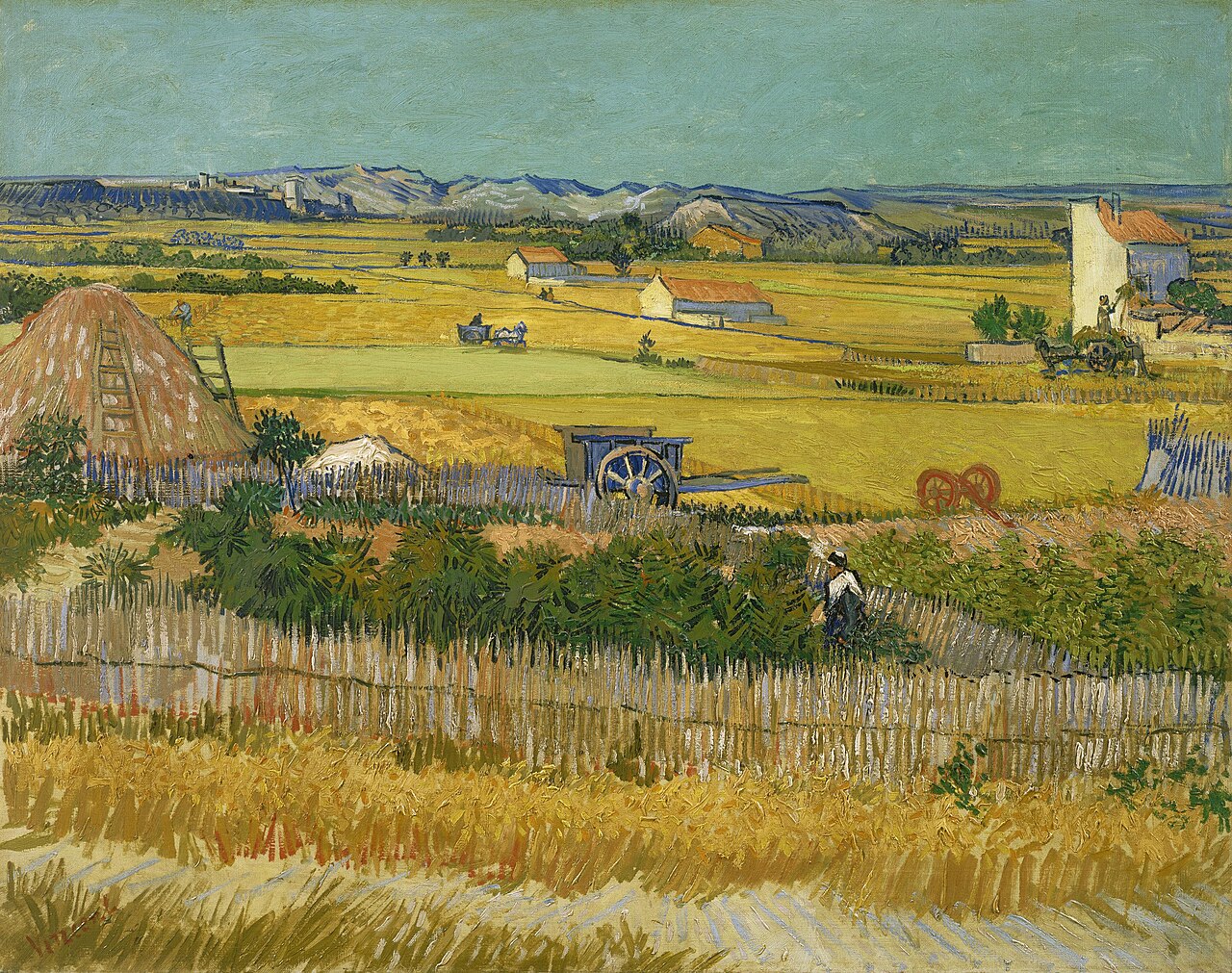
F412 Harvest at La Crau 1888 -
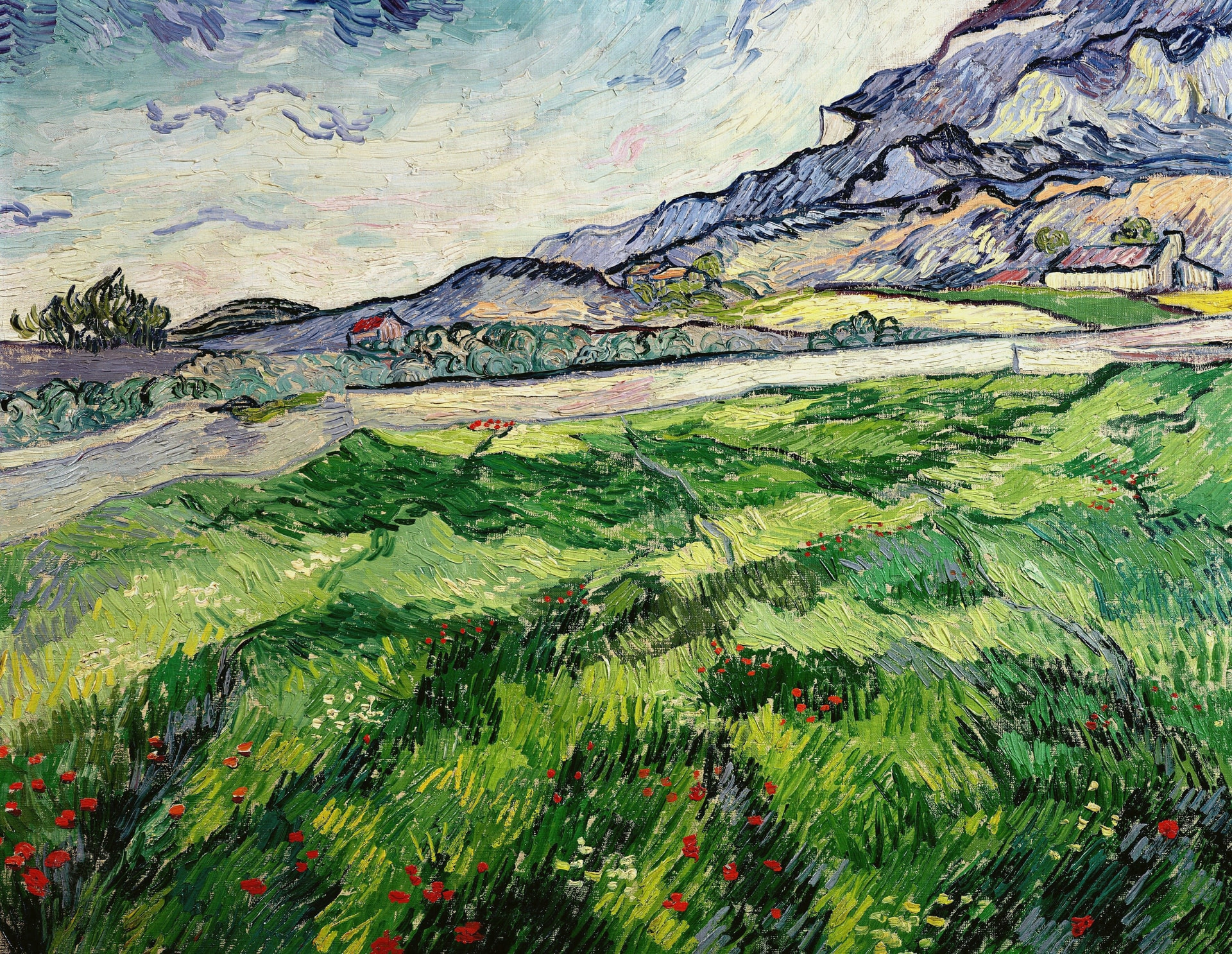
F718 The green wheatfield behind the asylum 1889 -
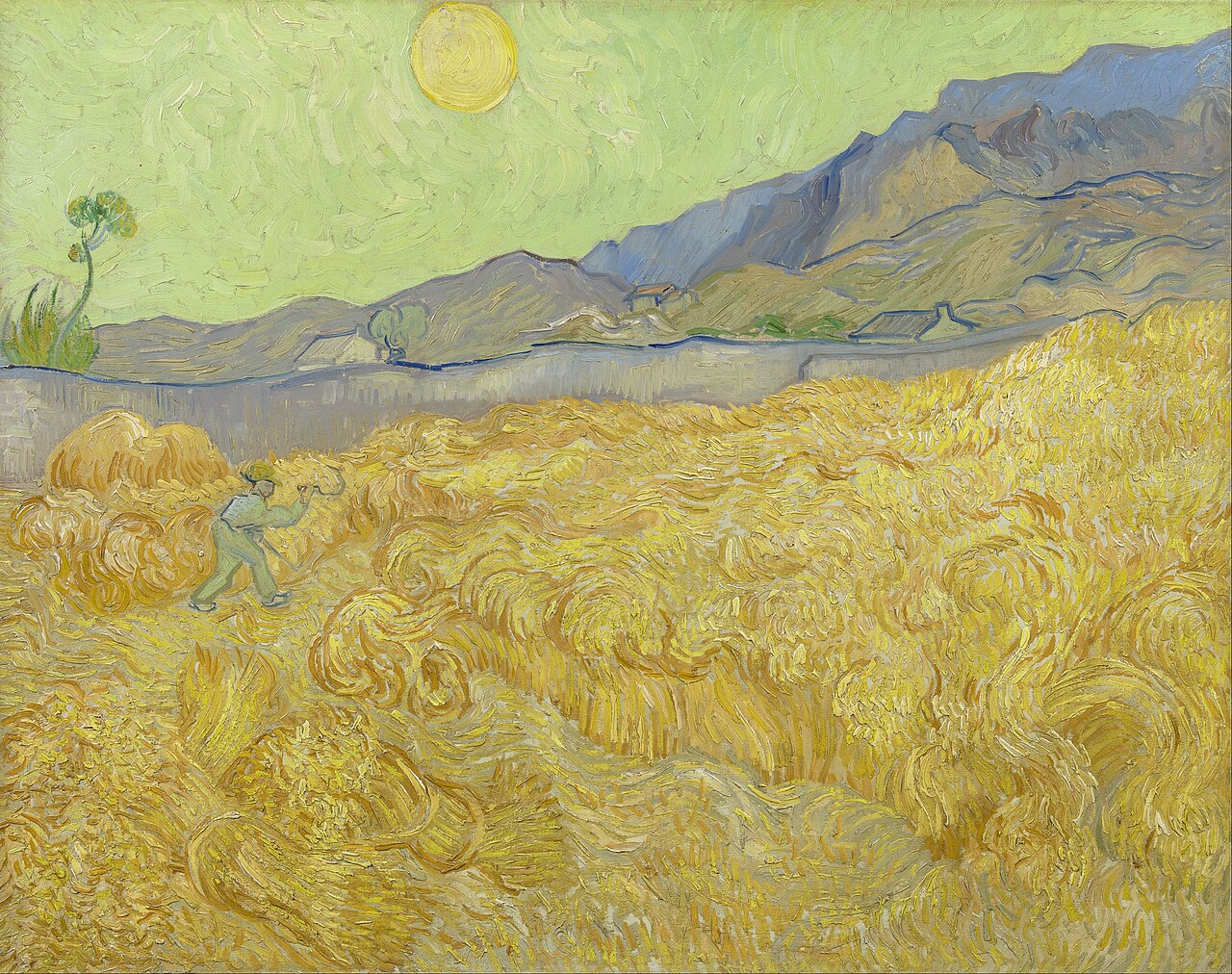
F617 Wheat Field with Reaper 1889 -
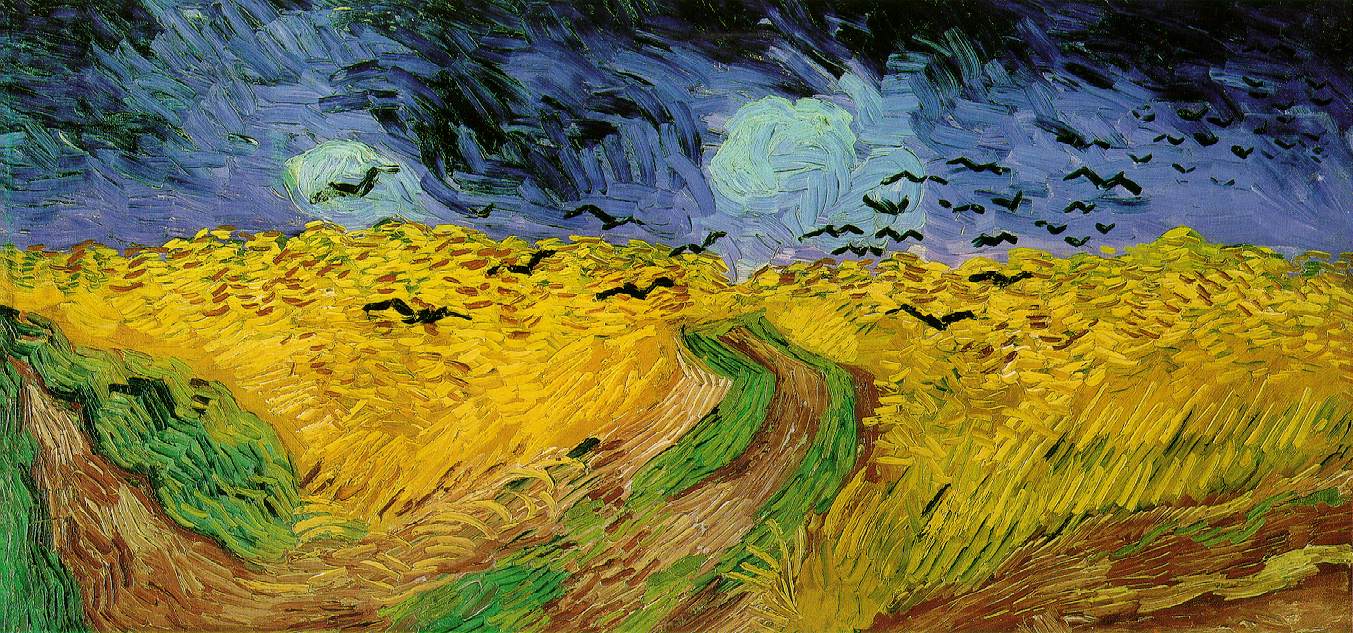
F779 Wheat Field with Crows 1890
Painting
A motif spanning three years. 1888 Arles: Harvest at La Crau — golden, flat, the rows of wheat orderly, blue mountains on the horizon. 1889 Saint-Rémy: Wheat Field with Cypresses, Wheat Field with Reaper — the same ears swaying just outside the asylum's wall, the colour now turning blue-green and rolling. 1890 Auvers: Wheat Field with Crows — a double-wide canvas, black crows, a violet sky, three small paths splitting and going nowhere. One crop, three densities of light.
Letter
1888 Arles: "I have a new drawing of a wheat field, a very broad, very simple landscape." 1889 Saint-Rémy: "I see in this reaper — a vague figure fighting like a devil in the midst of the heat to get to the end of his task — I see in it the image of death." 1890 Auvers: "They’re immense stretches of wheatfields under turbulent skies, and I made a point of trying to express sadness, extreme loneliness." Three sentences across three years; the motif is repeatedly remade by place, work, and circumstance.
Place
Three places. La Crau, the rolling country southeast of Arles, June 1888, midday — he sat under an olive tree at the edge of the field for two hours to make one painting. The wheat outside the wall of the asylum at Saint-Rémy, summer 1889 — he could see it from his second-floor window, and the wall in the painting is the same wall he saw daily from the inside. The wheat fields of Auvers, July 1890, the last two weeks. Taken together, the three places are not a prophecy of fate, but the transformation of one motif inside three different situations.
Wheat fields had been in his pictures since the Nuenen years, bound up with the sower and the labourers. At Saint-Rémy and Auvers, he continued to return to the motif.
In Auvers, he wrote of three large canvases: immense wheat fields under turbulent skies, made to express sadness and extreme loneliness. In the same passage, he hoped the canvases might say what he could not put into words about the health and strength he found in the countryside.
The surviving letter identifies a group of canvases, not a single final wheat field. It does not settle one meaning for every late field.
Events
- The Colour Experimenter · Letter 629
Southeast of Arles, the rolling country of La Crau. June 1888, midday — he sat under an olive tree at the edge of the field for two hours to make Harvest at La Crau
- The Colour Experimenter · Letter 629
'I have a new drawing of a wheat field — a very broad, very simple landscape.' Gold, level, the rows orderly
- Synaesthetic Precision · Letter 784
Saint-Rémy: from the second-floor window he could see the wheat outside the wall. Completed Wheat Field with Cypresses — the same ears now turning blue-green and rolling
- Synaesthetic Precision · Letter 800
'I see in this reaper — a vague figure fighting like a devil in the midst of the heat to get to the end of his task — I see in it the image of death.'
- The Translator · Letter 800
By early September, Wheat Field with Reaper was finished. The figure and barely visible sickle are small in the yellow field; in his letter, Van Gogh saw an 'image of death' in the reaper, but not a sad one.
- Synaesthetic Precision · Letter 898
Auvers, the last weeks — painted Wheat Field with Crows (double-wide): black crows, violet sky, three small paths splitting and going nowhere
- Synaesthetic Precision · Letter 898
‘They’re immense stretches of wheatfields under turbulent skies, and I made a point of trying to express sadness, extreme loneliness.’
From the Letters
J'ai un nouveau dessin d'un champ de blé, un paysage très large, très simple. I have a new drawing of a wheat field, a very broad, very simple landscape.
Je vois dans ce faucheur — une vague figure qui lutte comme un diable en pleine chaleur pour venir à bout de sa besogne — je vois là-dedans l'image de la mort. I see in this reaper — a vague figure fighting like a devil in the midst of the heat to get to the end of his task — I see in it the image of death.
Ce sont d'immenses étendues de blés sous des ciels troublés, et je ne me suis pas gêné pour chercher à exprimer de la tristesse, de la solitude extrême. They’re immense stretches of wheatfields under turbulent skies, and I made a point of trying to express sadness, extreme loneliness.
Letter Sources
Van Gogh letter records referenced on this page, linked to the Van Gogh Letters Project. vangoghletters.org
Technique Evidence
This work appears as evidence in this site’s technique-evolution axis.
- The World in Motion 1889.05 – 1890.05 Open period F615 / JH1755 Wheatfield with Cypresses Impasto Visible impasto and thick brushwork Brushstroke Representative of swirling brushwork
- The Burning Seventy Days 1890.05 – 1890.07 Open period F779 / JH2117 Wheatfield with Crows Speed Representative work from the 70-day Auvers burst