themes
Van Gogh Night Sky Paintings
The night sky theme connects the Rhône, café scenes and Saint-Remy: starlight is not decoration, but an experiment in light, distance and intensity.
From observed night to imagined sky
Arles: lamplight alongside starlight
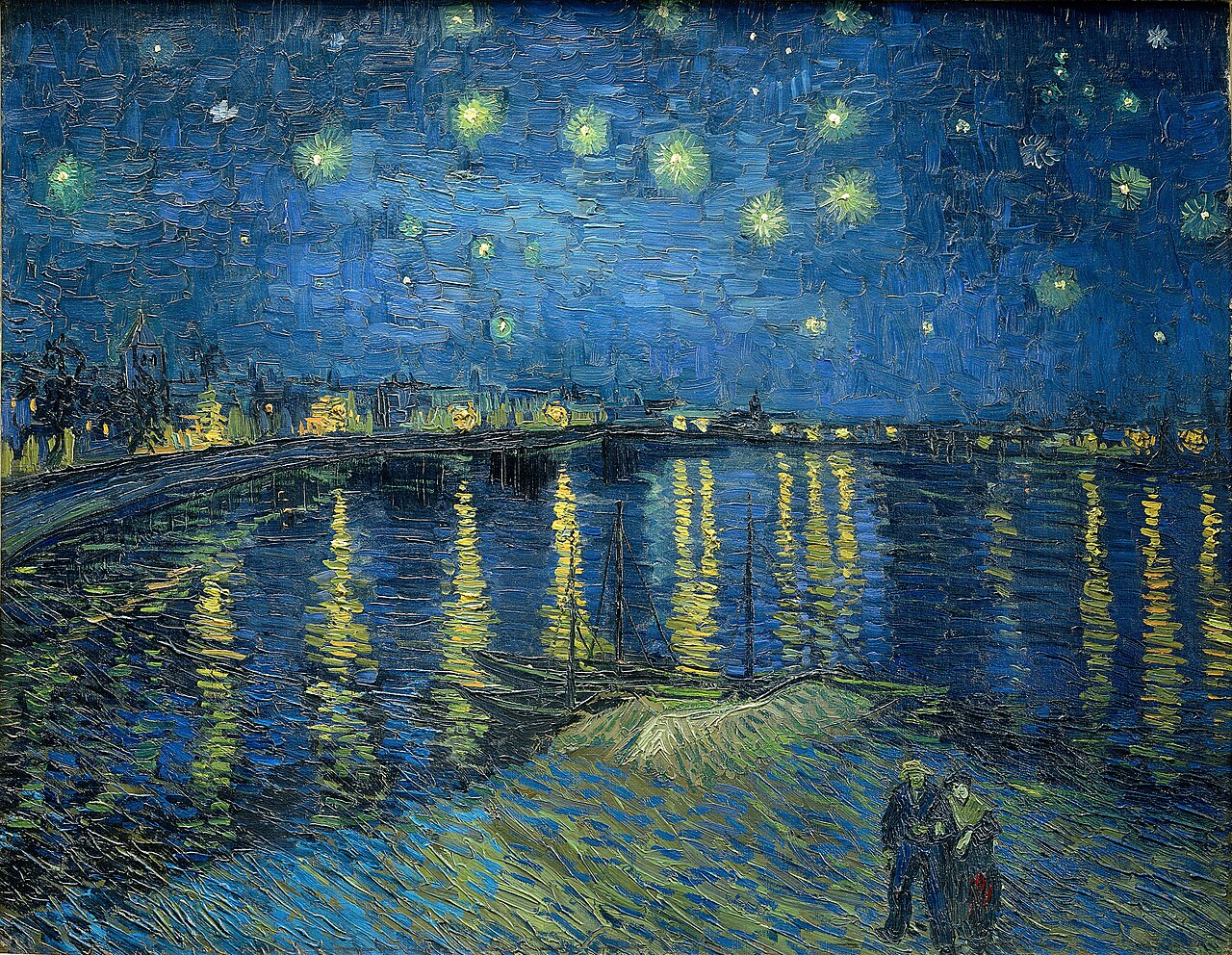
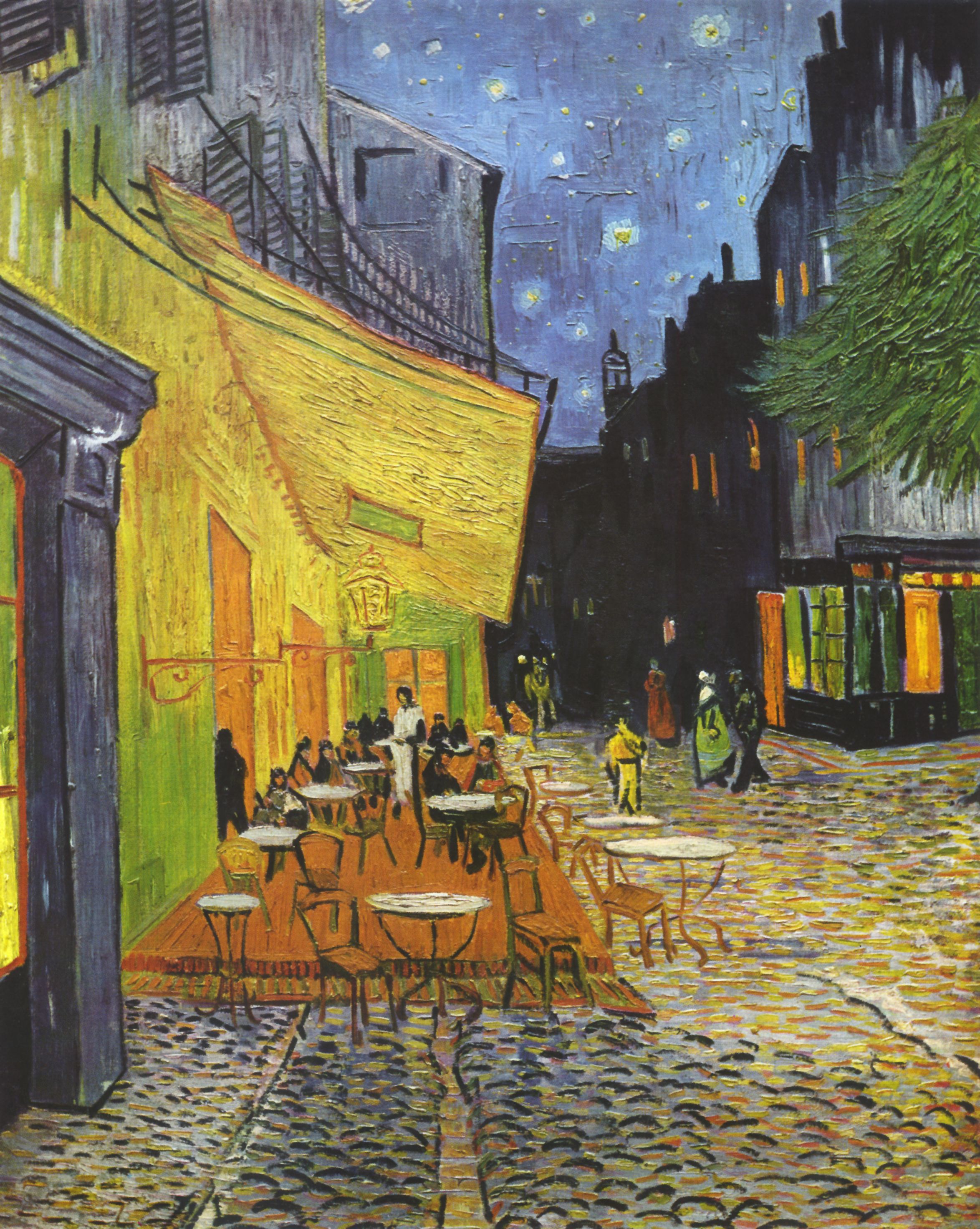
In letter 678, Van Gogh describes the yellow lantern lighting the terrace and street in Cafe Terrace at Night, a night scene painted on site without relying on black. In letter 691, he says that Starry Night over the Rhone was actually painted at night under a gas lamp. Both begin with nocturnal observation, but they organize city light and the sky differently.
Saint-Remy: The Starry Night is not the same kind of record
MoMA describes the 1889 Starry Night as inspired by the view from the asylum window but also a clear departure from it; the village and church spire were not directly visible there. A claim about the symbolism of Van Gogh's night skies must therefore distinguish observed places from a recomposed image, rather than assign one meaning to every nocturne.
Long-tail intents
- Van Gogh night sky paintings
- stars symbolism in Van Gogh
- The Starry Night symbolism
Creative Context
Common Questions
What do Van Gogh's night sky paintings explore?
They explore how artificial light, starlight, colour and brushwork can make night feel active rather than empty.
Which Van Gogh paintings show a night sky?
Major examples include The Starry Night, Starry Night Over the Rhone and Cafe Terrace at Night.
Why did Van Gogh paint night scenes?
Night let him test colour contrasts and new kinds of light while turning familiar places into more intense visual experiences.