1890 · F779 · JH2117
Wheat Field with Crows
Wheat Field with Crows is one of the most charged Auvers paintings. It is often treated as a final message, but the image is better read through landscape, path, weather and loneliness.
Wheat Field with Crows meaning and analysis
Wheat Field with Crows is one of the most charged Auvers paintings. It is often treated as a final message, but the image is better read through landscape, path, weather and loneliness.
Continue with this work in the context of The Seventy Days of Auvers.
Meaning
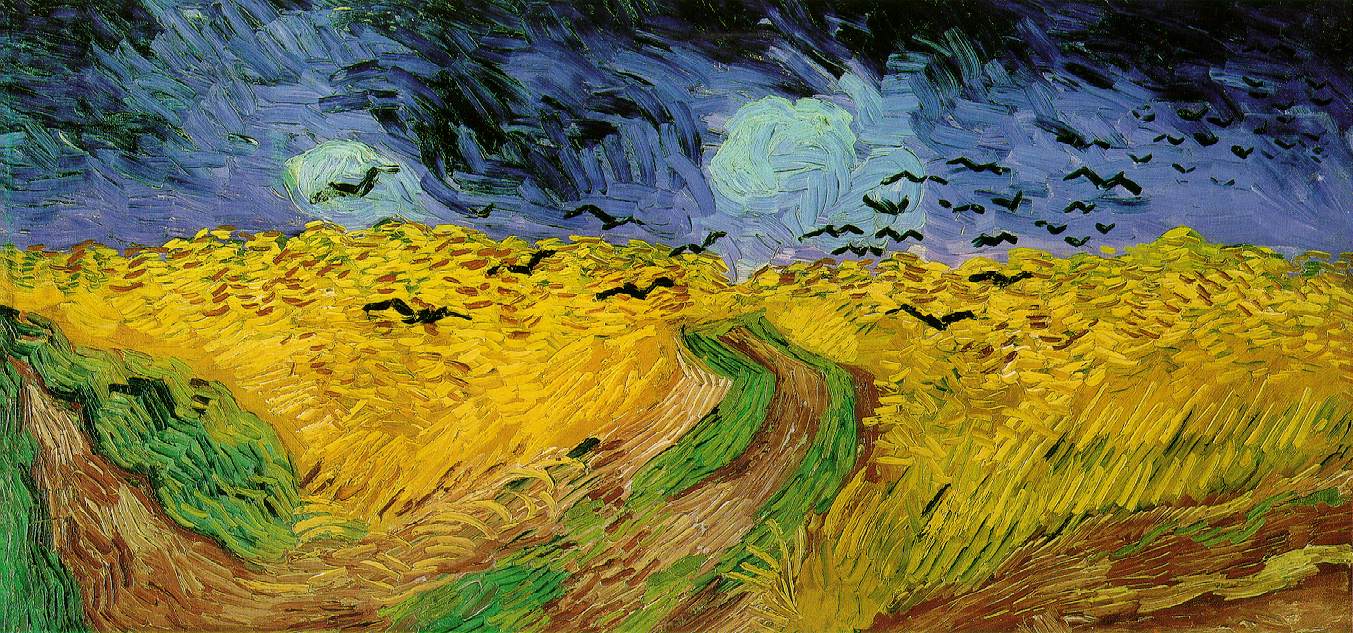
The painting suggests sadness and extreme loneliness without reducing itself to biography. Three paths split through the wheat and do not offer a clear destination.
The crows, dark sky and heavy field create pressure, but the wheat remains intensely alive. The image holds vitality and threat together.
Visual Analysis
The wide canvas makes the landscape feel panoramic and trapped at the same time. The paths open the field, while the sky presses down.
Crows break the upper space into scattered black marks. They are movement, omen and compositional rhythm at once.
Symbolism
The paths are central because they divide choice without promising arrival.
The crows are often read as ominous, but they also animate the sky and prevent the landscape from becoming still.
Technique
The brushwork is urgent and directional. Wheat, path and sky are made from different strokes that collide rather than settle.
The colour contrast between yellow field and dark blue sky makes the emotional pressure immediate.
Period Context
The work belongs to the Auvers period, the final seventy days of Van Gogh's life.
It should be read with the larger Auvers wheat-field group, not as an isolated suicide note.
Related Letters
Van Gogh wrote of vast wheat fields under troubled skies and the wish to express sadness and extreme loneliness. That letter is the key context for this page.
FAQ
- Is Wheat Field with Crows Van Gogh's last painting?
- It is among his late Auvers paintings, but it should not be treated simplistically as the single final painting.
- What does Wheat Field with Crows mean?
- It conveys sadness, loneliness and unresolved paths through a charged landscape of wheat, sky and birds.
- Why are there crows in the painting?
- The crows add motion and dark pressure to the sky, often creating an ominous reading.
Wheat Field with Crows. July 1890, Auvers — among his last paintings. The sky presses down, crows rise, three paths diverge. People call it a suicide note, but he only wrote: 'I wanted to express sadness and extreme loneliness.'