The Weavers
He painted the same proportional relation over and over: tools surround the person, and the person is still in motion.
-
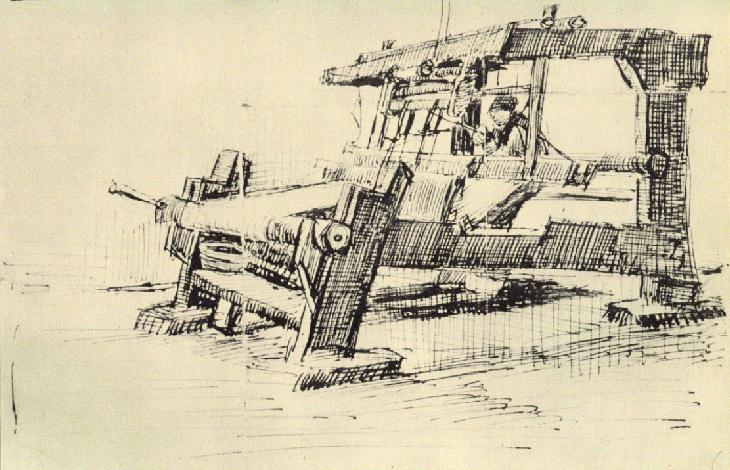
F24 Weaver Near an Open Window 1884 -
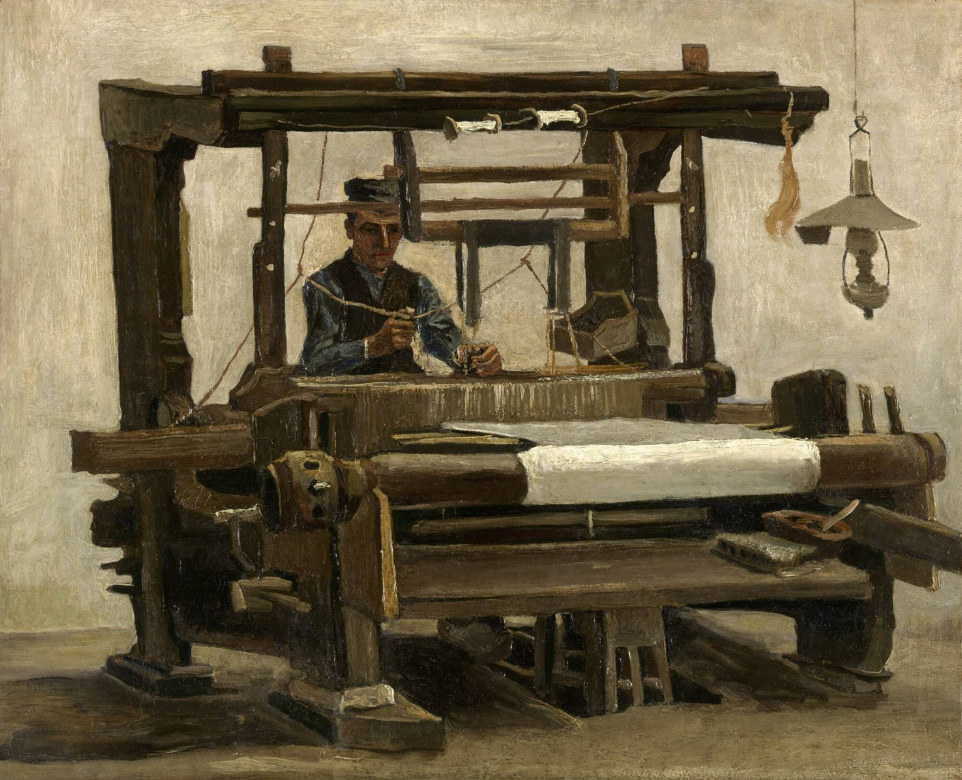
F30 Loom with Weaver 1884 -
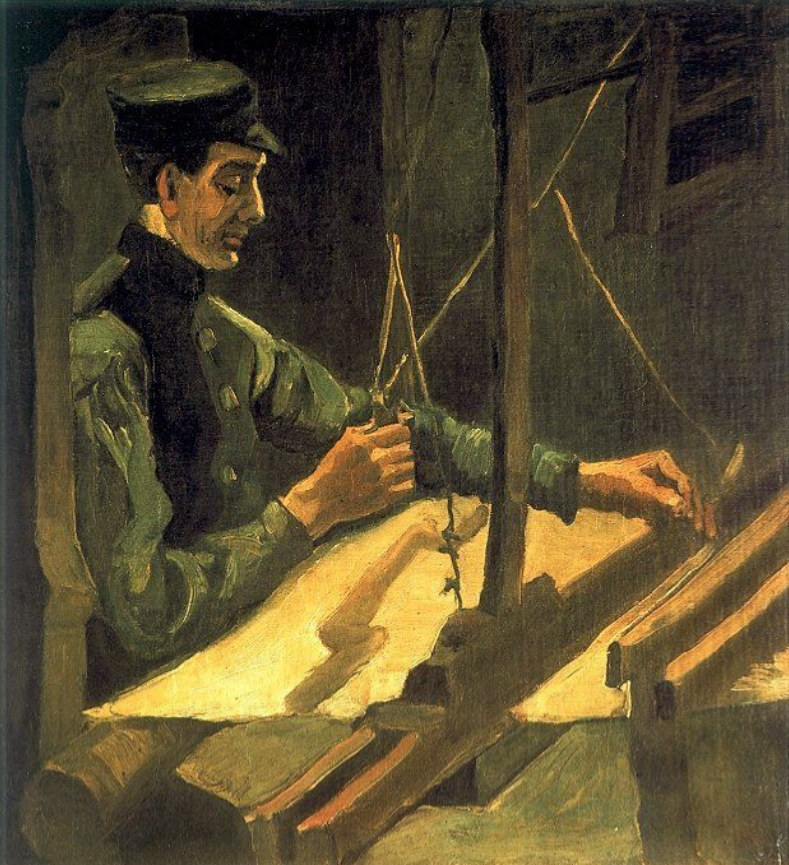
F26 Weaver Facing Right (Half-Figure) 1884 -
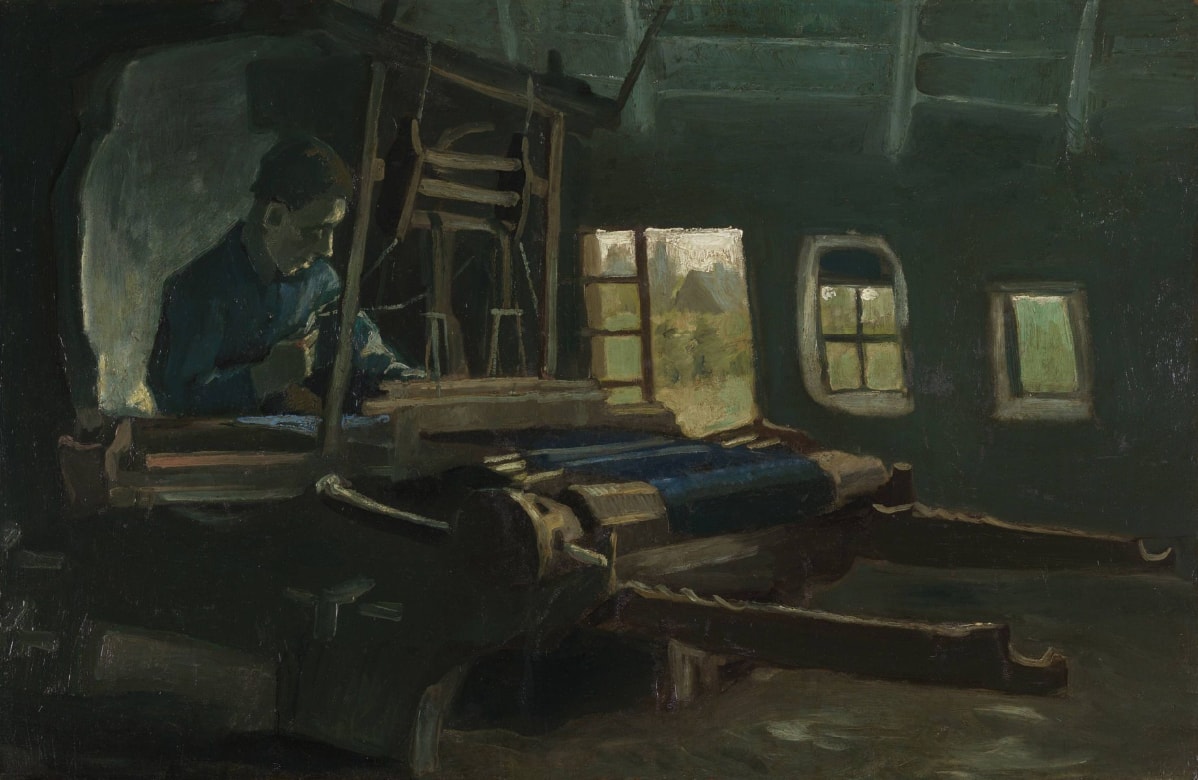
F37 Weaver: Interior with Three Windows 1884 -
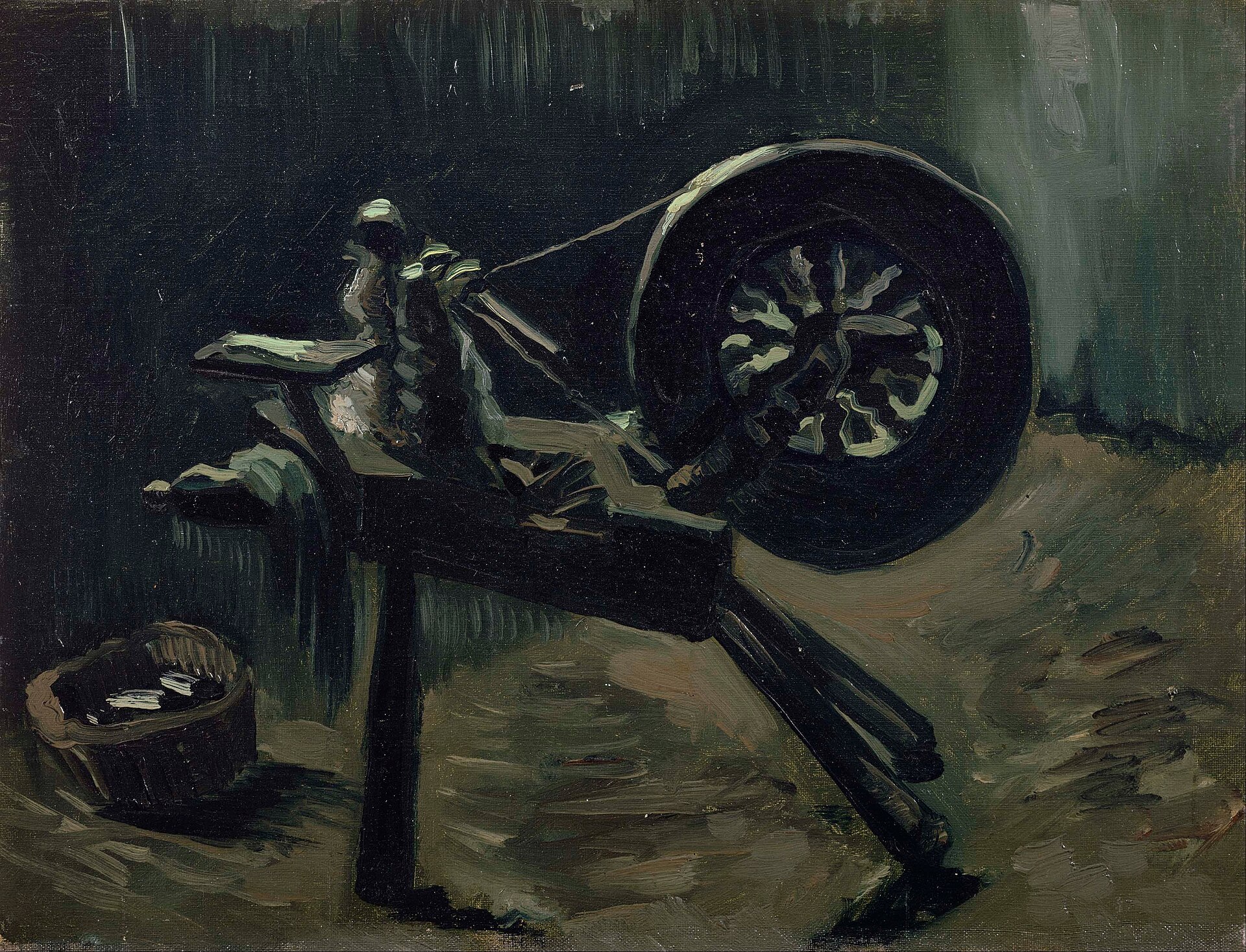
F175 Bobbin Winder 1884
Painting
Four oil paintings, plus drawings and watercolours — over twenty pieces in all; four oils shown here, four postures. The loom is a black oak skeleton, vast, intricate, filling the room. The weaver sits in the middle, smaller than the machine. The pigments are the colours of Brabant — burnt umber, ochre, dark green, coal-black. Almost no bright tones. He did not turn the weaver into a slogan of accusation; he repeatedly measured one proportion: how a person is surrounded by his own tools, and how he keeps a human motion inside them.
Letter
1884, Nuenen. He wrote: "Those weavers and that sort of people are actually more difficult than large figures." He described the loom in front of him: "It is an old oak thing that has turned brown, and in that wood there are all kinds of scratches and stains." To Theo: "I now have four weavers' looms that I'm working on." He painted them one after another, like field research. The idea predates Nuenen by five years: in 1879 he had walked through the weaving villages of Belgium and northern France, and what he first saw was an almost meditative atmosphere. Only when he settled in Nuenen — a village of four hundred and forty weavers — did he see the reality: a hard, poor craft life pulled by prices and orders. There was, he wrote, "often something agitated and restless" about them. The field research finally yielded sixteen full ink-and-watercolour drawings and ten paintings.
Place
Nuenen, a Brabant weaving village. The looms stood in the cottages beside his father's parsonage — one room, one machine, one family, a single oil lamp through the wet winters. He sat in those corners for months, stamping his feet when his hands stiffened. This was 1884, four years before colour, the winter before the Potato Eaters — the apprenticeship in darkness that the famous painting would graduate from.
Nuenen, 1884. He came from The Hague carrying his obsession with painting labourers; this time he went into the weavers' houses and stayed for months.
The loom fills the picture, the weaver seated inside the machine, almost becoming part of its structure. He made a dozen or more, adjusting again and again the proportion between loom and man — is the man working the machine, or has the machine shut the man inside it?
He did not resolve the question; he carried it onward, toward The Potato Eaters.
Events
- The Ferocious Reader · Letter 432
Reading Zola's Germinal and George Eliot's Adam Bede. Two novels of working-class life sat on his desk at the same time
- Synaesthetic Precision · Letter 435
Wrote a letter describing the loom in front of him: 'An old oak thing that has turned brown, with all kinds of scratches and stains in the wood.' Three plainest words holding the machine's age, weight, and smell
- The Colour Experimenter · Letter 436
'I now have four weavers' looms that I'm working on.' He began treating the loom as a continuous motif for research
- The Copyist · Letter 437
Sent weaver drawings to the painter Van Rappard for his judgement. He was now sending the weaver series outward as completed work
- Synaesthetic Precision · Letter 432
Wrote: 'Those weavers and that sort of people are actually more difficult than large figures.' Placing labourers at the top of the difficulty hierarchy — that is, at the top of research value
- The Translator · Letter 439
Roughly thirty weaver works in total during Nuenen — oils, drawings, watercolours — preparing the figure vocabulary for The Potato Eaters the following year
From the Letters
Die wevers en dat soort volk zijn eigenlijk moeilijker dan groote figuren, maar wat is het mooi in de natuur. Those weavers and that sort of people are actually more difficult than large figures, but how beautiful it is in nature.
Het is een oud eiken ding dat bruin is geworden, en in dat hout zijn allerlei krassen en vlekken. It is an old oak thing that has turned brown, and in that wood there are all kinds of scratches and stains.
Ik heb nu vier weversgetouwen, die ik onder handen heb. I now have four weavers' looms that I'm working on.
Letter Sources
Van Gogh letter records referenced on this page, linked to the Van Gogh Letters Project. vangoghletters.org