1880.08 – 1883.12
Redemptive Drawing
His first three years were almost entirely in black and white.
Technique
The first problem was how to make things stand. Pencil, charcoal, crayon and ink trained contour, weight and space; a homemade perspective frame turned landscape into a structure he could check again and again.
Causes
He began to draw seriously at 27 — with a latecomer's urgency to make up lost time. After failing as a lay preacher in the Borinage mining district, he transferred his mission from preaching to depicting: workers became the subject he had to get right. Theo sent him Charles Bargue's *Cours de dessin* — 60 plates — along with the *Exercices au fusain*; he copied the full set systematically. In 1882 in The Hague, his cousin-in-law Anton Mauve gave him a few months of direct oil instruction; the relationship broke down soon after. Colour theory had not yet entered his orbit. All available energy went into making a line stand up.
Representative works
- *Sorrow* (F929a / JH130, 1882): a drawing on paper of Sien Hoornik seated with her knees drawn up - *Worn Out* (F863 / JH34, 1881): old man, head in hands, drawn in Etten - *Miners in the Snow at Dawn* (F831 / JH8, 1880): among the earliest drawings with coherent structure - *The Bearers of the Burden* (F832 / JH8, 1881): continuation of the mining subject
Letter evidence
- Letter 158 (1880-09-24): "I said to myself — I will take up my pencil again" — the founding statement of the painter - Letter 215 (July 1882): compositional explanation of *Sorrow* - Letter 254 (August 1882): detailed description of the self-built perspective frame, with a structural diagram drawn in the letter - Letter 274 (1883): discussion of the light of the Drenthe marshes
Transition
At the end of 1883 he left Drenthe and moved back to his parents' parsonage in Nuenen. Colour was coming — but first would come black.
Curve Landing Points
Redemptive Drawing: pre-painting
Redemptive Drawing: pencil, charcoal, lithographic_crayon, reed_pen, ink, watercolor
Redemptive Drawing:
Redemptive Drawing: 50
Redemptive Drawing: 3
Representative Works
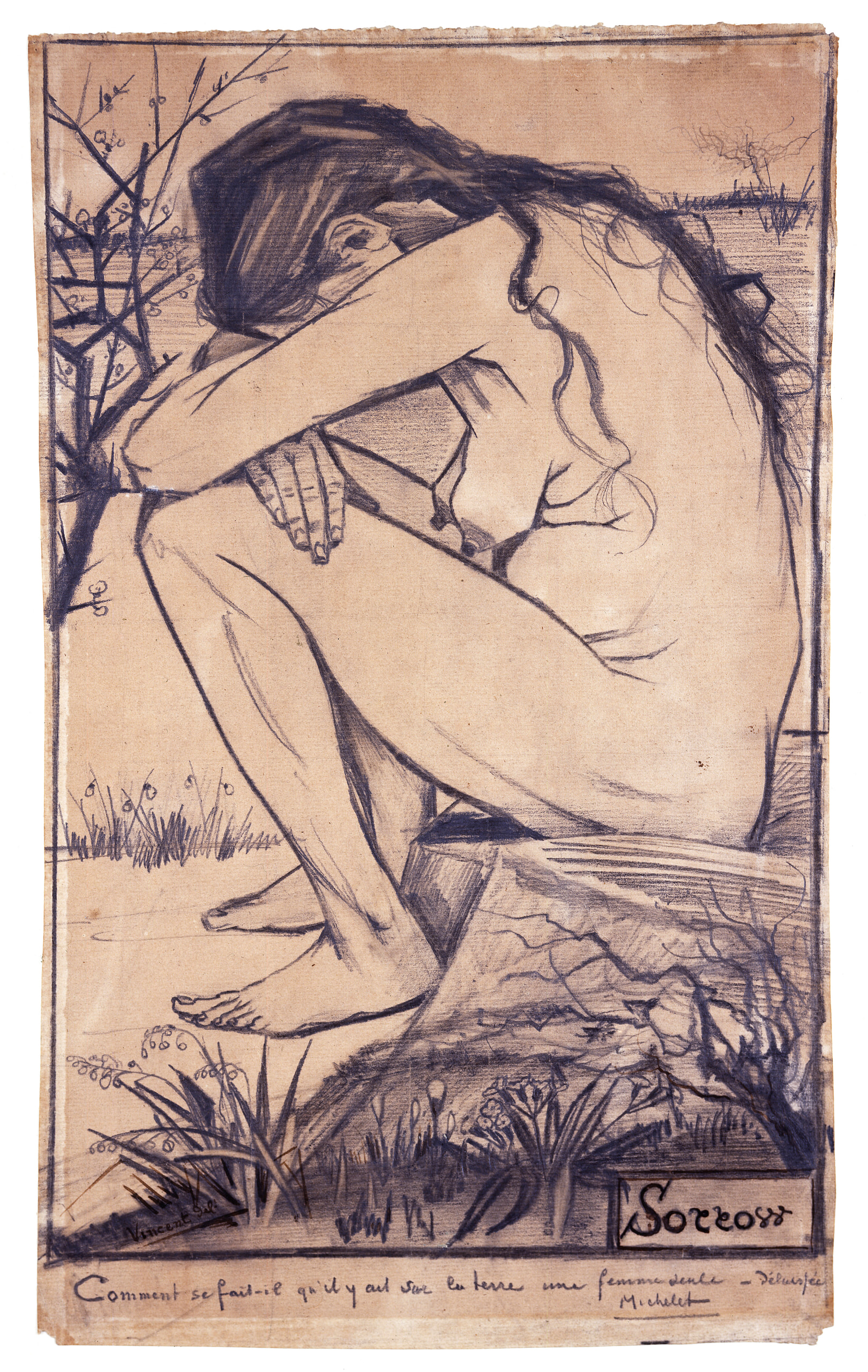 Sorrow Sien Hoornik seated, Vincent's most satisfied early work Open node · The Hague and Sien
 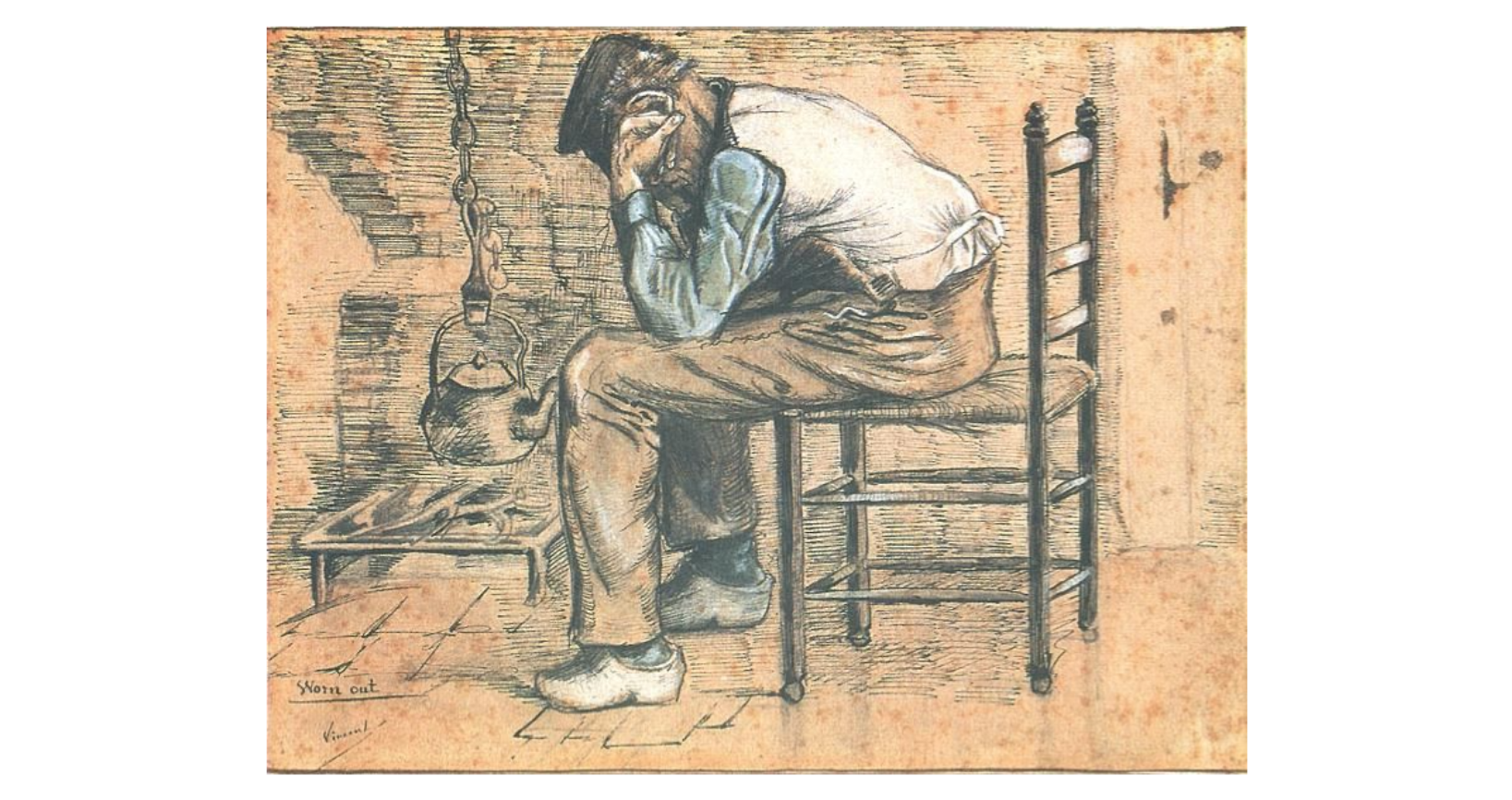 Worn Out Old man, head in hands Open node · Worn Out
 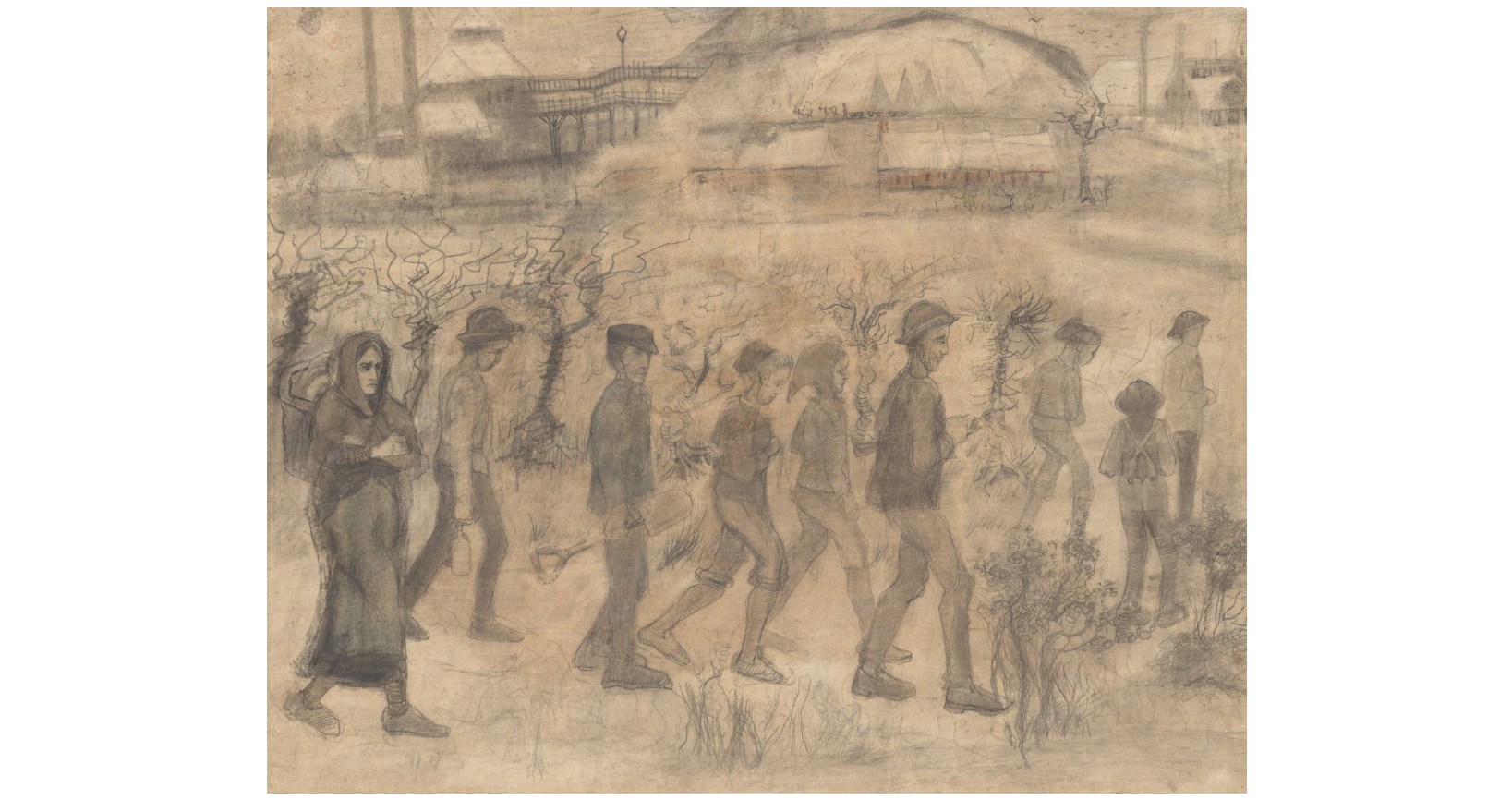 Miners in the Snow at Dawn Earliest structurally coherent drawing Open node · Miners in the Snow at Dawn
 Site curatorial model. Verifiable facts now carry source notes; estimated curves remain model values.